Liam Casey

pi.co-liam-casey-1

[topic]The Beginning [/topic]

Om: How would you describe yourself, Liam? Are you a businessman? Are you a creator? Are you a troublemaker? Are you all of those things?

Liam: A lot of those things, but mostly I think about creativity and about helping people bring ideas to the world in a physical form.

Om: That’s a big statement. Let’s just start with something simple. Why do you have three iPhones?

Liam: When I started the business many years ago, I was based out of Ireland but traveling to China and to the U.S. I had an Irish cell phone, and my telephone bill was crazy. Now my U.S. phone is the busiest. I spend a lot of time in the U.S., but I still travel a lot, so I have three phones. At the moment I’m going to probably two continents a week.

Om: Are you an international man of mystery? Some of us still don’t know what you do.

Liam: Yes [laughs]. You still don’t know what we do?! What we do is — In 1996, when I started the company, the opportunity was to take confusion out of the supply chain. [I started out] working (for Tricot Marine) in fashion and retail [in Cork City, Ireland].

My friend was working for a company where 80 percent of their business was computer hardware. I said, “Wow, you sell these tech products to all the big PC companies.” I was intrigued and wanted to know more. I’d also picked up a magazine called This Month in Taiwan. They had a trade show called Computex in May or June of ’96. I’d never been further than Paris.

I said to myself, “Hey, go check it out.”I spent 10 days in Taiwan, 5 at the trade show and then 5 at the factories. Around the third or fourth factory I thought, “This is similar to the fashion industry. You have raw materials coming into the manufacturing process. Then you have finished goods, and you have packaging, and then shipping.” For a while, I moved to California and where I learned about the technology industry.

I knew there was an opportunity to cut through all the confusion and find the production.I went back to Ireland and started knocking on doors, trying to get customers. Our first customer was AST Computer, and our first product was a unidirectional desktop microphone for a computer.

pi.co-liam-casey-5

Hardware, the Hard Way

Om: You started in the personal computer business, even when the internet was exploding? So you didn’t know about the first wave of the internet?

Liam: We watched it carefully. We saw it and made all of these modem cables [laughs]. One of the big challenges as the internet was taking off was that every computer had to have a modem. The RJ11 telephone jack just plugged into the wall and plugged into the computer like a telephone. Same in Ireland, and the same in Spain.

In Europe, there were probably 20 different connectors, all controlled by local telecom regulators. As computers were selling in these countries and they all had modems, they all needed this cable. The PC makers couldn’t ship the computer without the cable. They could build the computer and they could build the modem, but they didn’t have the cable. The cable became what we call the “flavoring” part. So all the computers were vanilla down to a certain stage, and then you added the flavoring. The flavoring was the important part. So we sold the modem cable and power cords.

From ’96 to about 2000 I started to add a lot of engineering. Back then you could do stuff in China in a day that would take you six days [in Ireland]. The first products came from Taiwan to Ireland so it was “foreign” to Ireland, but early on we went “foreign to foreign.” We were supplying companies in Singapore, Shanghai, Mexico — all over the world.

Om: In other words, not being too focused on the internet helped you at the time?

Liam: It was interesting as we watched the growth of the internet. We saw the 2000 bubble, and our business kept growing. In 2008, same thing. Business kept growing, because the fundamentals of our business are safe. It’s essentially global trade. What happened in the downturn — trade shifted to different geographies, and for us it was OK. We didn’t care about the geography: If business was there, we went there.

Lessons Learned

Om: What have you learned in the past 20 years that is applicable today, especially to the new tech ecosystem that is focused on physical devices and manufacturing?

Liam: Today the world is smaller and more connected. You literally can have a production line anywhere in the world and a consumer anywhere in the world, at the farthest-away point, and you can connect them. You can join them, and you can do it in a controlled way.

I can take a product from the production line in China to a consumer in San Francisco in 4 days, 5 hours, 14 minutes. We’re 3 hours from all the factories we work with, and we’re 3 days from 90 percent of the consumers around the planet that buy our products. The other 10 percent of people live where they live by choice. They’ll wait an extra couple of days. What we’ve learned is that inventory is completely evil. You should never have it. You should always be looking for it, not looking at it.

pi.co-liam-casey

[topic]Why Hardware Startups Fail[/topic]

Om: What do you mean when you say, “You literally can have a production line anywhere in the world and a consumer anywhere in the world, at the farthest-away point, and you can connect them”?

Liam: A key metric for the health of the company should be days of inventory. Sales into a channel should not be an indicator of health, because that is essentially money stuck in the channel. Getting a product into the hands of as many consumers as possible should be the goal of all hardware companies.

As a CEO of a hardware company, one of your worst nightmares is having demand for product in one geography and product sitting in another. A great outcome would be the ongoing sellout of a product with less than a week of finished goods anywhere in the world. Inventory should never stop moving from when it leaves a factory production line to when it is activated by a consumer.

We are close to that point now; we’re moving from an economy of “build to forecast” to “build to demand.” And the implications are pretty big. Warehouses of the future are the wide-body, long-haul aircraft. By eliminating warehouses and reducing fulfillment locations, you reduce inventory and you need to produce less product. That saves energy: energy to produce and transport raw materials and finished goods, energy to store and transport finished goods, energy to recycle unsold and excess finished goods. This is the future, and it’s why I’m excited about our next 20 years as a company. In 2016, we will have been in business for 20 years, and we know that the level of mass customization of products that we will manage will greatly increase.

Om: You have a different way of thinking about hardware than most people. On one hand, I can feel your enthusiasm, and yet you are a little skeptical and cautious about a lot of things, one of them being inventory. Where does all of this duality come from?

Liam: Some of my excitement comes from just engaging with entrepreneurs and creators and startups. As you go through the cycle of building a hardware company, there are a few moments of magic that are really important. One of those is that first prototype. You get the answer, you work with the entrepreneurs or the engineer to start up and they actually get that first startup. That’s an amazing height.

Where does that [thinking] come from? When I spent 10 years in the fashion industry, I could go to a fabric mill, buy 60 meters of fabric and take it to a manufacturing facility. Last minute, before deciding to cut the fabric to make the garment, I could change the pattern from being a jacket to a trouser to a suit, all using that same piece of fabric. That created creativity and flexibility.

I’m not an engineer, but I saw huge challenges for product road maps in the tech world. That’s what created a huge amount of this lack of innovation. Then we saw a change in 2008, when we saw people working with Arduino Linux differently. Today you’ve got Raspberry Pi. You’ve got Edison. You’ve got Galileo from Intel. You have Android and you’ve got 3D printing. You’ve got crowdfunding. These are what I call the new fabrics of technology. That’s creating innovation, because of that moment of truth when you give somebody the first prototype and they go, “Wow.” And, that’s when they get creative.

Why There Is a Hardware Renaissance

Om: How long would it take to make a prototype 10 years ago?

Liam: Months. It’s not even how long it would take. It was that you would never even think about trying to make some plan. We’ve run hackathons over weekends where people come out with great working prototypes. Then there’s all of this excitement and they have more confidence about taking it to the next stage and building a company.

I’m a huge fan of Y Combinator and what they’ve built over the years. I was in there once a couple of years ago, and they had the TechCrunch bump on the wall. Similarly, in hardware, there’s a lot of spikes, and there’s lots of drops. We get the calls usually when they’re at the bottom, the drop-off, asking for help. It is an exciting time, because you know how to help them.

We work with companies as they go through that process. What we try to do with the company is, when your VC is sitting in their Monday-morning partnership meetings and a company comes in to present, we would want them to look at the company the same, whether it’s a software company or a hardware company. Then to do that with a lot of work on the platform to get it right.

The biggest roadblock in Silicon Valley is that if you come up with a great piece of hardware and you’re working with a VC or industry experts, they’re going to tell you, “Oh, you have to go to the big box retailer and get them excited.” Now you have crowdfunding to get started. But at some stage, the company is going to scale and you’ll want to bring a bigger channel to market.

In the old world, the big box retailers will give you a contract; they want consigned channel inventory, potentially a deal where they can return inventory. They also want core marketing, and also want you give the money to be spent on advertising. They want extended payment returns, which is somewhere between 60 and 120 days. The right to return product. Accommodation for buyers. Everything. And they push everything back on the startup. That scares any intelligent investor in that startup.

Om: Right, even Amazon does that. You are suggesting that one of the biggest risks for hardware startups is that they have to take on inventory, which is essentially dead money.

Liam: I always looked at it like, equity should never go into inventory.

Om: But it’s happening more and more. What is the recourse?

Liam: When you look at companies that are fulfilling direct from close to the source of the product, [it’s clear it] doesn’t matter if the product is produced in China or elsewhere. Once you have your global fulfillment close to the production site, then you avoid the whole risk. In the fashion industry, it’s called “fast fashion.” Companies like Zara can turn products around the world in two weeks.

Logistics Isn’t a Four-Letter Word

Om: But Zara has its own stores, so it can predict the inventory for a demanded product.

Liam: They see the demand, they build the demand and they never repeat products, so they sell up.

Om: Is that what you want to do with Fab, to become the Zara of —

Liam: Technology. Wouldn’t that be fantastic?

Om: Do you think you will get to a point where you don’t have to make 1 million units? You can get away with only making 5,000 units of something?

Liam: Absolutely! We talk about building better business. That means making less products, not more products. You can come give us an order for massive quantities, but that’s not necessarily going to be good business.

Om: Inventory is obviously a problem, this three- to four-day shipping you were talking about. I guess that can work from China to America, right? That’s an easy process.

Liam: Actually, it can go anywhere point to point, around the planet.

Om: Will it go any less than that, or is three days the lowest?

Liam: We are able to do it in two days.

Om: That’s a lot of fossil fuel consumption, right?

Liam: We are always concerned about the carbon footprint. But look at all the warehouses full of products that never sell. What’s worse: $300 million worth of inventory that they have to scrap or a carbon footprint of air freight of just what’s needed?

Om: So you want to essentially go from a capex to an opex model?

Liam: Yeah, we only assess when it comes to the packaging, because we want to manage that out-of-box experience. We want to make sure when you open that box, the experience is fantastic. And we can control that. We are a fully stacked hardware company, end to end. You go to the lab downstairs and come up with the idea all the way through: production, packaging, delivery.

Om: Our conversation has been about manufacturing in China. Should I assume you are not much of a believer in renaissance manufacturing in places like North America?

Liam: Great question. There is a renaissance in prototyping, which is creating a renaissance in hardware. It’s not creating a renaissance in manufacturing. Maybe in the future it will change. When you look at the kind of products that we work with, the expertise and skill set is where it is. It is in China for the production, right?

Om: Yeah. I had a conversation with a guy a few months ago, and when I was talking to him about manufacturing, he said that there is a sense of delusion in North America that manufacturing is going to come back, because we have lost all the ancillary factories and the ecosystem.

Liam: Raw materials. The skilled workforce. I wouldn’t think that it’s gone forever. I think there’s opportunity. What they’re doing in Detroit is great. I think what GE has done with FirstBuild in Louisville is fantastic. But it takes strong individuals. It takes people who have passion and really want to do this. It takes people who want to try and be disruptive and to think different.

Om: You talk a lot about making the information around products and sustainability transparent. The tech industry is a huge consumer of global resources. Whether we have our computers running all the time, lithium in our batteries — whatever we are doing, we are impacting the planet. How do you think we as consumers and we as champions of innovation and disruption can talk about these things in an understandable way?

Liam: If you know the location of the factory that’s producing a product, you can measure energy use. You can track where the product is being produced and where it’s going. But you have to have the data to make improvements.

pi.co-liam-casey-4

Next Retail Revolution

Om: I have seen your sustainability report, which is fairly detailed and even lists the names of the people who were involved with making a product. It is a small but important gesture, and it reminds me of what Brunello Cucinelli said in our interview about the dignity of work.

Liam: Consumers care about that. But we have to show consumers a path to make a better decision. If you can help consumers do that, then they’ll do it. That’s why we only work with companies that are passionate about design and the consumer experience. Because if it’s a good brand, they will want to make sure their product is made in a responsible way.

Om: Do you think that manufacturers will have to become more transparent about where their products are made and that that transparency will become part of the retail ecosystem?

Liam: In a couple of years, you will go into a store. You will pick up a product. You will look at the back of the product. You will see a bar code on it. You will scan it, and a map will show you where the product was made. Then people can make a decision. If you scan it and it doesn’t come up, hang on a second. Where is this made?

Om: And you recently bought Fab. Why? You just wanted the domain, right?

Liam: We think the domain is great.

Om: Do you want to create a new Hammacher Schlemmer or the Sharper Image online essentially with that?

Liam: Yeah. But it has to have a strong design focus. And I don’t want to limit it to electronic products. We work with great designers that are creative. They want to bring products to market that are not necessarily electronics. It’s about finding those products.

You and I have a great conversation about needs and wants. I’m not interested in the needs. I’m interested in the wants. I’m interested in creating beautiful products that people have always wanted. We love doing this in an efficient way. Teaching companies how to do it.

Why He Doesn’t Live in One Place

Om: Let’s talk about some more fun stuff. You’re completely stateless, and you don’t own a home. Why?

Liam: I’ve spent the last almost 20 years traveling. I love it. It’s my life. I’m comfortable with it. Uber came along and made it acceptable for me not to have a car. I live in hotels. I don’t have an issue with that for now. When we were in New York, I didn’t have a return flight. I knew I was going back, but I wasn’t sure when. Knowing I’m going to get on a 12-hour flight sometime in the next couple of days is great. Travel energizes me.

Om: I find it pretty impressive. My dream has been to do that, reduce all my wants to so little that I can pick up and go whenever I want, wherever I want to go, and wherever I sit, that’s my home.

I think of the streets of New York as my home not because I own a place there. I was born in Delhi. But Delhi is not home for me. Delhi is a place where I was born, where my parents make home. New York is my home, mostly because when I walk the streets, there are memories associated with street corners. That’s my idea of a place. I don’t have a physical bond; I have a bond in my head. I go back to New York to find myself, and then I have to go somewhere else. I don’t think, “I’ll probably be able to live there.” I feel I need to come to San Francisco, but I don’t feel like living here all the time.

You are constantly traveling. We are all animals that have been conditioned to want more and more and more, and accumulate. You’re just a one-suitcase guy. At what point do you learn to live with so little?

Liam: Well, no, I do have a suite in a hotel in China somewhere [laughs]. Even more than one suitcase. I don’t have keys. Keys stress me out.

Om: The biggest problem if I lived stateless would be, where will I put my shoes? I love shoes, and that would freak me out. But seriously, what happens to relationships, friends and family?

Liam: I have three great friends. They say, “He’s just crazy, he’s gone traveling somewhere.” They understand it, that’s the way it is.

Om: My passing last comment is, nobody will ever get to know you. You will always be a mystery.

Liam: In what sense?

Om: I’m just telling you, my friend. You tell, you talk, you share everything, and yet, you don’t tell anything. That’s your superpower!

Photos by Cliff Englert 

pi.co-liam-casey-6

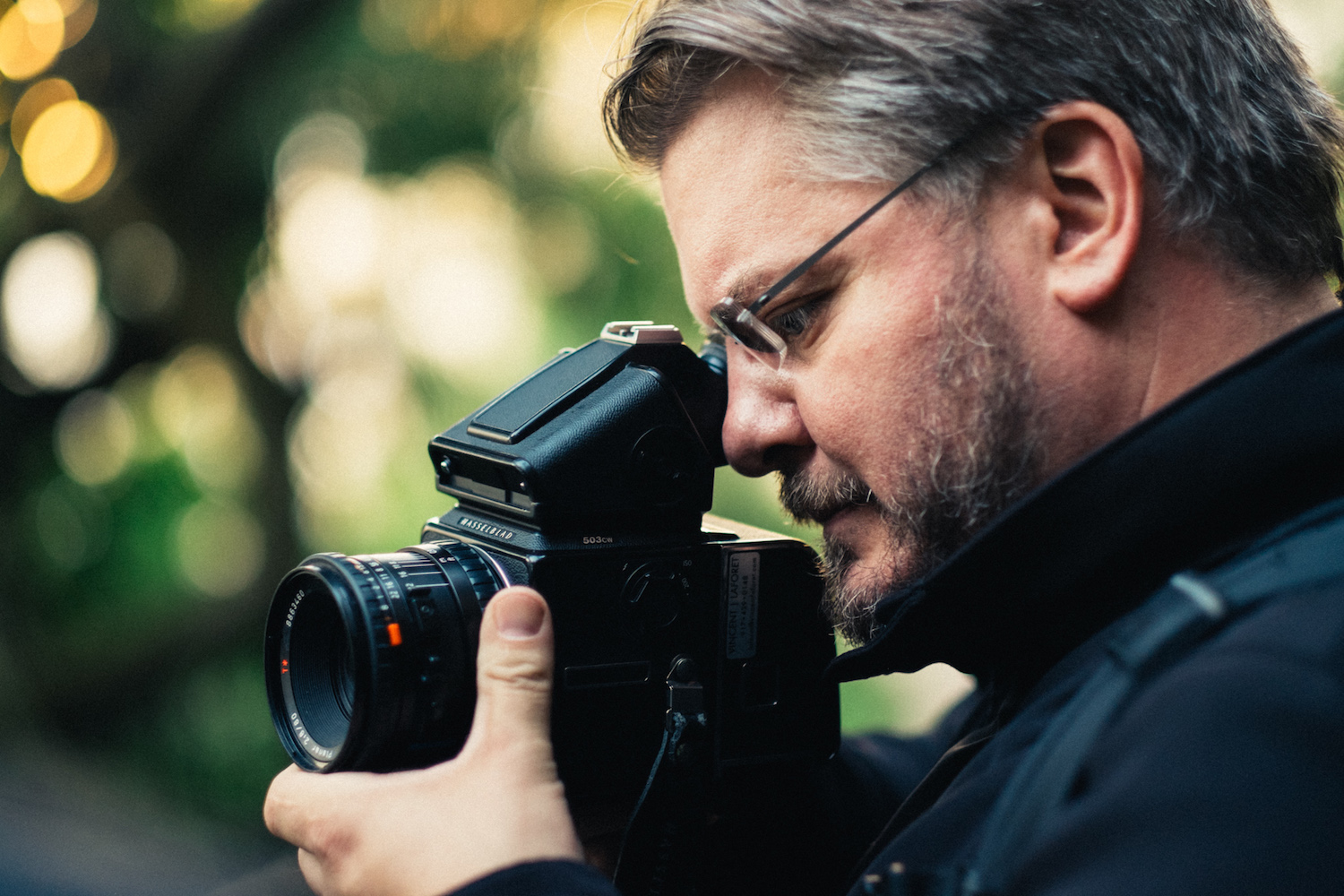
Vincent Laforet

Om: How long were you at The New York Times?

Vincent: I was at The New York Times for about eight years. Some pretty incredible years working with some of the best reporters in the world. Covered events like Katrina, 9/11. Climbed the Empire State Building’s needle. It was pretty fantastic.

Om: When you were in the news business, did you imagine a time where news would happen pretty much every millisecond, thanks to somebody taking a picture with their smartphone?

Vincent: In 2008, I wrote an article called “The Cloud is Falling.” As a young man, I was seeing the publishing industry and the internet coming together, how the current model was not sustainable. Being a staff photographer with a comfortable job, a company car, company gear, a great salary, and seeing the internet rising and distribution based on cell phones or the internet — I knew something was going to fundamentally change.

I went from my entire career covering news on a live basis — there was always that time that we had to process the information, whether to write it down and disseminate it the next day or a few hours later or minutes later at least. As a photographer, that time got truncated more and more.

I knew the time was coming when it would be live. It was a no-brainer. You saw it in CNN. Being a teenager, seeing the first Gulf War disseminated live, we all knew it was changing. It sure has now. The biggest realization for me was that, as a photojournalist, I could always elevate my skill and my level as a photographer — the highest level that I could potentially achieve — and yet there’s nothing I could ever do to compete with someone who was there at the moment when it happened. There’s no substitute for being there with an iPhone, a GoPro, whatever it is, a security camera. If you can capture the actual real event happening, nothing you can do after the fact can compete.AirVincent

Om: One of the great things about photography is how it shapes history, especially news photography. Time and time again we have come across photos which were essentially posed. Now everything is real and the pictures are real, and yet they’re not at times. How do you contextualize the magnitude of news right now?

Vincent: I think your question is really adept. Is there such a thing as a real event? The only real events that I know are the birth of a child, the death of someone that you love, the breaking of news as you’re there. That’s the value of having a citizen capturing an event in front of them: It’s unfiltered.

But what is real? Is a press conference real, is a press photo op real? People are told to show up here at this time and shake hands and do this and step here. It’s all fake, yet it represents something. When people take selfies, that’s not real either. That’s not a real relationship, when someone takes a photograph of themselves, with a celebrity or their friends. It is the moment [in] itself [that] is much more valuable.

[Photojournalists] did get to capture some real moments: Eddie Adams’ Viet Cong photo of the execution or Nick Ut’s photographs of the Napalm girl. Those are absolutely real moments in history that are hard to argue with, that changed the course of history, literally. Those two photos had a severe impact on the Vietnam War.

Since that time people have realized the power of photo journalism, and when people recognize the power of something, they want to control it. Ever since, we have seen more and more control of the image — or one’s image — to the point where it’s being curated by PR people and controlled. We are in an environment these days where everything is controlled, where as citizens we are trying to garner back our privacy from our Facebook pages and make sure we have control of what other people see.

Om: What is the role of news photography now? What does the professional news photographer represent now?

Vincent: The professional news photographer has enforcedly been severely diminished in terms of their impact because publications are dying. When I was a teenager in college, Time magazine carried an incredible amount of weight in determining who the next president could be. We would talk about what that columnist on Time or The New York Times used to write.

It seemed, at the time at least, to impact the way history unfolded. Now you’re reading a magazine and it’s thinner than five pieces of paper and doesn’t have the same relevance. Now somehow Twitter and a teenager could potentially have more of an impact than a 30-to 40-year veteran journalist.

Things have changed. Photojournalists are still extremely relevant. They still produce incredibly important work. The reality, though, is that everyone produces media these days. We all have iPhones, smartphones and cameras, and we’re documenting more than ever before. It’s getting harder and harder to rise above the fold.

VincentLaforet2

Om: I am old from a journalism perspective: I remember typewriters and newspaper type being set. At that time, there was an ability to focus, because there wasn’t diffusion of so much media. My theory is that because attention is fractionalized, news becomes even less and less impactful.

Vincent: The attention span of the public has always been in the two-to-three-to-five-day region. No matter how big the story was, it rarely made it past a week. But now I generally say that we have the attention of rats on crack. We are looking to sources like Storehouse or Twitter or Facebook or whatever it may be, Instagram, to constantly feed us with new information [that we can] forward to others in a consumer-oriented way. That is the trend, but I think the next iteration will be more curated content.

But I always like to look at the other side of that coin. Back in those days it tended to be white, 60-to-70-year-old men telling you what to consume. Whereas now a 13-year-old kid from any background, any race, any culture can have a voice. As long as you tell good information on a consistent basis, you will build a following.

Photojournalism will find a new home over time. This latest piece I did, the aerials over New York at night, is an excellent example. I was a successful photojournalist for 15-plus years. I worked for every single outlet: The New York Times, The New York Times Magazine, Vanity Fair, National Geographic, et cetera. Eventually I found that the photography business was not a sustainable model for my family. So I went into filmmaking and directing commercials.

Once in a while I would have someone call me to shoot a still assignment. After having shot this assignment for a magazine, I put [the photos] on a new outlet, Storehouse. And the next thing you know, this thing has gone viral. It’s been reported by well over a hundred media outlets from The New York Times to Al Jazeera to Esquire to Gizmodo to Flipboard, Yahoo News, you name it.

That’s what photojournalists need to do. People will always gravitate toward quality content, whether it’s visual, whether it’s a story that’s written well, whether it’s a combination of great storytelling, visuals, et cetera. Storytelling is as old as the cave drawings and the cavemen. That’s not going away.

Om: One of my early memories of magazines from America was LIFE magazine’s older issues that were not even published when I was a young man. When I saw those, I always used to think, “Wow! That is some clever photography.”

Vincent: We have this terrible tendency to idealize the past and to get nostalgic, myself included. Too many of us are waiting for a solution to be given to us, and too few of us are willing to actually try to invent a solution. Those that make their own solutions and harness technology and tools are generally the ones that seem to excel, because we’re the ones that are able to tell stories that are seen, for X, Y or Z reason.

laforetlunch02Om: I find that most of my peers don’t think about photos for their stories. I think about the headlines, the photos. Can I add voice? Can I add picture? Can I add moving pictures? Mostly because I feel that if you are on a live platform, why not use it to its logical impact?

Vincent: That’s a modern way of thinking. Back in the 1990s and early 2000s, you would have been called a heretic. That was multimedia, and most journalists are not visual people. It’s a different side of the brain. They don’t think visually. I’ve met some of the most brilliant journalists that are utterly visually inept. They saw the picture as a service that would make their stories look pretty and get them on the front page. The best journalists understood that the best photos would make people read their stories.

Om: When I was a young reporter in India, I had this one photographer friend, Anu Pushkarna. He would take the flattest pictures ever, but he was the bravest guy ever. If there was a riot or some other craziness going on, he was right in the middle of everything. It wasn’t art, but they were real. He would get hit on the head for taking a picture.The same event captured by some of the bigger-name photographers in India like Raghu Rai, the same perspective, it would be like, “Wow.” The pictures were what made the story better.

Vincent: It’s a perfect marriage. It’s like a movie, with film and sound and acting and directing and music. I wish there was more mutual respect between the different professions. I can tell you that the joke amongst war photographers has always been that most war correspondents work from their hotel rooms at the suite at the Ritz-Carlton, whereas the war photographer has to go where the bullets are flying.

AirVincent-1

Om: Speaking of which, you went up 7,500 feet. What did you learn from that perspective?

Vincent: I don’t know that I learned anything, necessarily. It reaffirmed to me that the power of image is still sacrosanct, that a series of images could impact millions of people across the world. Universally it’s powerful. People recognize the incredible beauty of New York City, the energy within it, the light screaming. On my end, I’d wanted to make that photograph for 25 years. I just didn’t have the technology that could do it. I didn’t have a camera that could capture dark or low, high images so well.

There is nothing intrinsically different about what I did on that series of images from what I’ve done in 15 years. It just struck at the right time, with the right camera, at the right angle.

Om: I always felt that looking at the world from above makes you think differently. My friend Chris Michel went up in one of the U-2 planes to get sense of what the world looks like from that high up. It seemed like it was almost a spiritual experience.

Vincent: Every time you take off in a helicopter, you realize. Or just look out the window on your plane when you are flying across the country or across the world, and you realize how much closer we are in terms of geography, how much smaller the globe is.

You can actually see the curvature of the earth from up there, and you start to realize that we are not that far apart. We’re not that different. We are all taught how there are these big oceans and these cultures divide us. But we’re not that separate from one another.

Om: I think I almost like feel [inhales dramatically], Where is the surprise?

LaForet5Vincent: One of my biggest lessons in life was that I spent 20 years of my career as a photographer, chasing the best image. Making the deadline, often landing on the cover. Always pushing it to the limit. Unfortunately I didn’t enjoy any of it, because I was so focused on the end result. When I left photography I made a promise to myself to actually enjoy the moment and the process.

There is an old saying: Enjoy the journey, not the destination. You’re like, “Yeah, yeah, yeah, whatever.” I can tell you, as a photographer, I did not enjoy the journey; I enjoyed the destination.

Now, since I’ve left photography, as I go back, I enjoy every single moment of the journey. Because you realize, it’s those visits at the restaurant with the owner, who is famous or not famous at all but who makes you laugh or has a story for you, who makes you the sauce by hand that you wanted. Those are the interactions you remember.

Photos courtesy of Tim Donnelly, Vincent Laforet, Pulitzer Foundation and G-Technology.

Brunello Cucinelli

Om Malik: I’ve been reading about you, and I have been fascinated by your progress and more importantly how you have conducted your business. Where did you find the inspiration to follow this path?

Brunello Cucinelli: From the teary eyes of my father. When we were living in the countryside, the atmosphere, the ambiance — life was good. We were just farmers, nothing special. Then he went to work in a factory. He was being humiliated and offended, and he was doing a hard job. He would not complain about the hardship or the tiny wages he received, but what he did say was, “What have I done evil to God to be subject to such humiliation?”

Basically, what is human dignity made of? If we work together, say, and, even with one look, I make you understand that you are worth nothing and I look down on you, I have killed you. But if I give you regards and respect — out of esteem, responsibility is spawned. Then out of responsibility comes creativity, because every human being has an amount of genius in them. Man needs dignity even more than he needs bread.

[In the past, people] didn’t know anything about their employer. My father or my brother didn’t know if their employer had a villa on the sea. Whereas with Google Maps, I can see where your house is. That’s where the world is becoming new. Mankind is becoming more ethical, but it is not happening because man has decided to become better than he was 100 years ago. It’s because we know we live in a glass house where everybody can see.

In order to be credible, you must be authentic and true. Twenty years ago, something might be written about you in a newspaper. Then this newspaper would be scrapped, and that would be it. But now your statement stays [online] for the next 20 to 50 years — who knows how long for. To be credible, you must be consistent in the way you behave. Someone can say to you, “Listen, two years ago, you said something different.” In a split second, they know. That’s where lies that wonderful future for mankind.


BrunelloCucinelli18

Radical Transparency

Om: So you are in favor of radical transparency?

Brunello: Yes, I am in favor of that, because that’s the way to become authentic and credible.

Om: Authentic and credible and open are wonderful ideas, but I wonder how you feel it all fits into today’s reality. Now every person edits the story they tell about themselves, carefully ensuring what the world looks at — whether it’s over Instagram, Twitter or Facebook.

Brunello: I’d like to focus on the positive. The positive side is that you must be credible. Because everybody knows the problem that I’m concerned about, the dangerous is what you’ve just said, Facebook and all that.

Like [Greek philosopher] Heraclitus used to say, Polemos is the father and master of mankind. Without Polemos, there is no discussion, right? It’s difficult to have a discussion, because nowadays human beings walk with a bowed head, looking down [at their phones]. Yesterday morning, a girl bumped her head in my face because she was not looking up.

I want to take a step backward. Who remembers the last email they sent yesterday? No one. Or the last text message. Emperor Hadrian used to say, The daily business, the daily life, the daily chores, kills the human being. I’m not interested in daily chores. We have now swapped information for knowledge, which is not the same thing. I do not want to know. I’m not online. I don’t even have a computer.

I am a great supporter of memory. If I remember things, I do not need to go back and check and revise. In this company, you cannot send emails after 5:30 PM, when the company closes for the evening. The day after, when you turn up for work, what are you like? You are a still person. You are better.

I do not want to be liable for intruding into your private life. Saint Benedict said, “You should look after your mind to study every day, then your soul through praise,” which is basically speaking to yourself, praying. “Then work, through work.” But the abbot is the one who basically assigns all the work; he is responsible for you even after your death. I do not want to assign work to you where I feel responsible for ruining or altering your private life.

BrunelloCucinelli6

Taming Technology

Om: How do you reconcile that with a world that is moving constantly and quickly, 24/7?

Brunello: Well, for example, we call our New York office and no one says, “Hi, how are you? How’s your day?” No one. If everything is so short and to the point, how much time is then left for your mind? [It should be the case that] if we need three hours to go deep into things, then we do it.

Om: So you run a business that is across the universe, across the planet, different time zones, different people. Isn’t that more of a 24/7 endeavor?

Brunello: No, it’s not 24/7, because here in the company, you start at 8 AM, and at 5:30 PM you are forbidden to work any further. No emails can be sent to more than two addressees, just one or two. No group mailing. Why must a single email be read by 10 different people, unless it’s the 10 people who are interested in that specific issue? In order to disperse responsibility?

The first time I was in New York, we had a tiny office, and they were emailing across it. I said, “No way. Just get up and go to your neighbor and ask them one thing, in one split second, in person.” First of all, you look me in the eye. You smell me, my presence. Maybe I take the opportunity to ask you about your family. Don’t you feel better than if you get an email? Maybe I smile and you feel even better.

The other day, I was writing some things that were important to me, and a message arrived. Who is able not to check the message? No one. Everybody is tempted. You go there for 30 seconds, then your mind is there, even though you were focused on what you were doing previously.

Here, no meetings with mobile phones. No one is allowed to bring them into the meeting room. You must look me in the eye. You must know things by heart. You must know all of your business with a 1 to 2 percent error rate. It is also training for your mind. It is also a question of respect, because I have never called someone on a Saturday or a Sunday. No one is allowed to do so. We must discover this, because if individuals rest properly, then it is better.

Do you know the word otium in Latin, meaning, “doing nothing”? The Roman people were all laid back. In all the pictures, they were all laying around. They were doing nothing, just staring. In the winter on a Sunday afternoon, I can spend six hours in front of the fireplace, just looking at the flames and thinking. In the evening, I’m drunk with beautiful thoughts. My wife says to me, “What are you looking at?” I say, “The fire.” We have to take a step backward.

Many years ago, I witnessed something in America. I was there for Thanksgiving. When it was time for lunch, my friend would get a dish and bring it to the children, who were placed in front of the television. They were absorbed by the television. I said to my wife, it’s something I can’t cope with. I’ve always said we must be on the cutting edge with technology. But your life shouldn’t change as a consequence.

Slaves to technology?

Om: Is it fair to say that you believe in technology as a tool and not in us becoming slaves to it?

Brunello: Yes. I have a phone. I think I receive 10 calls a day, because they know that I only want to receive the important ones. In Hong Kong, I walked out of the subway and someone was saying on the loud speaker, “Be careful, there’s a wall.” It’s basically what happened to the lady yesterday morning. We must really manage this kind of reality. We must rule it somehow.

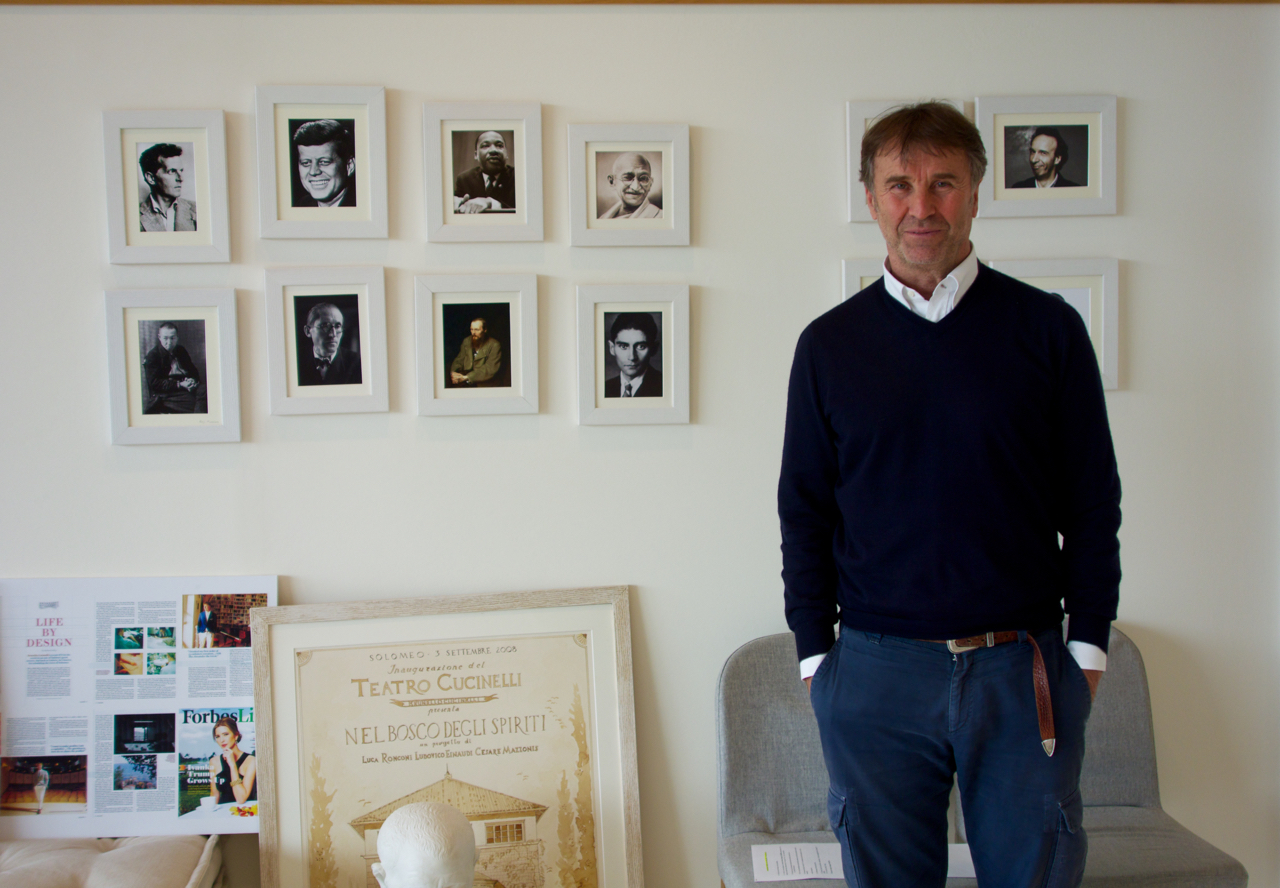
Om: What’s the correlation? All these people you are quoting are very interesting, but why mention them? Also how are they correlated to all these people whose photos you have on the wall here?

Brunello: Those are the ancient thinkers, philosophers: Socrates, Confucius, Constantine, Palladio. These people are the contemporary figures that left me with a different view on the world. Dostoyevsky, Gandhi, Martin Luther King Jr., Kafka, Kennedy and the Pope. At the end of the day, all these great people, what do they focus on? Human dignity. They all talk about being custodians in the world. Hadrian, the emperor said, “I feel responsible for the beauty in the world.”

Can I ask you, how old are you? I am 60 myself.

Om: 48.

Brunello: You are not far away from my mindset.

Jean-Jacques Rousseau was a great enlightened man, but he was the first of the Romantic movement, too. I think that in the last 30 years, we have tried to govern mankind through enlightenment, through the use of reason, our mind. This is no good.

This century is where enlightenment and romanticism must blend. A great idea that is born out of the mind and then goes through the soul — there is no doubt that the outcome is marvelous. If this idea is true, fair, beautiful, there’s no doubt that it is also a good idea. I think this applies to everything.

BrunelloCucinelli19

Om: Agreed.

Brunello: I spend a lot of time in the Italian café, and when we are in the café, what is that? That’s the Polemos I was telling you about. Discussions over time, debate about theology, economics, economy, religion. If we said, “When was Kant born? 1750?” and your mind was working in the meantime. Now, split second, Google it, and you know. There it is.

The mind no longer searches for things. For example, in what years was Marcus Aurelius emperor? When was that battle that we always talk about? What was there in that precise moment? What was going on?

In the past, say we were going to to meet up. I had seen you once before — your face, your body. But I didn’t know what it would be like to meet again. Whereas now I’ve seen you and you’re wearing your bikini. I’ve seen you everywhere. I do not want to deprive you of the surprise of the magic. Because then when you finally show up, you feel the smell of the burnt wood and everything else.

The other night at my place, there were 19 friends who have known one another since birth. We went through childhood, youth, everything together. The other night we were having this beautiful discussion about death. One of them got his phone out and said, “Look at this video.” It was one of those videos about jokes and stuff: funny, of course. Of course, the discussion was interrupted. I said, “Are we crazy? No, there’s no way.” In the end, we never resumed the talk about death.

Then you ask yourself, “How can I govern this? How can I manage it?” No one can actually be so strong that you are thinking, then a bleep comes and you’re not tempted to take a look. I don’t know anybody who can resist that temptation.

Cashmere Chronicles

Om: Can we talk a little bit about you and your career as a businessman?

Brunello: Yes, with pleasure.

Om: You dropped out of engineering school to design cashmere sweaters. What was the attraction to cashmere?

Brunello: I had read Theodore Levitt, the American, who used to say that developed countries were supposed to manufacture special handcrafted goods, because one day, new people would arrive who would make the same things but at a better price. The idea of doing luxury, “made in Italy” has always been with me.

Why cashmere? Because I was using something that theoretically never goes to waste. You never throw away a cashmere pullover. The idea of manufacturing something that you never scrap, you never throw away — I liked it very much. Mind you, I had no money in my pocket at that time. Absolutely nothing.

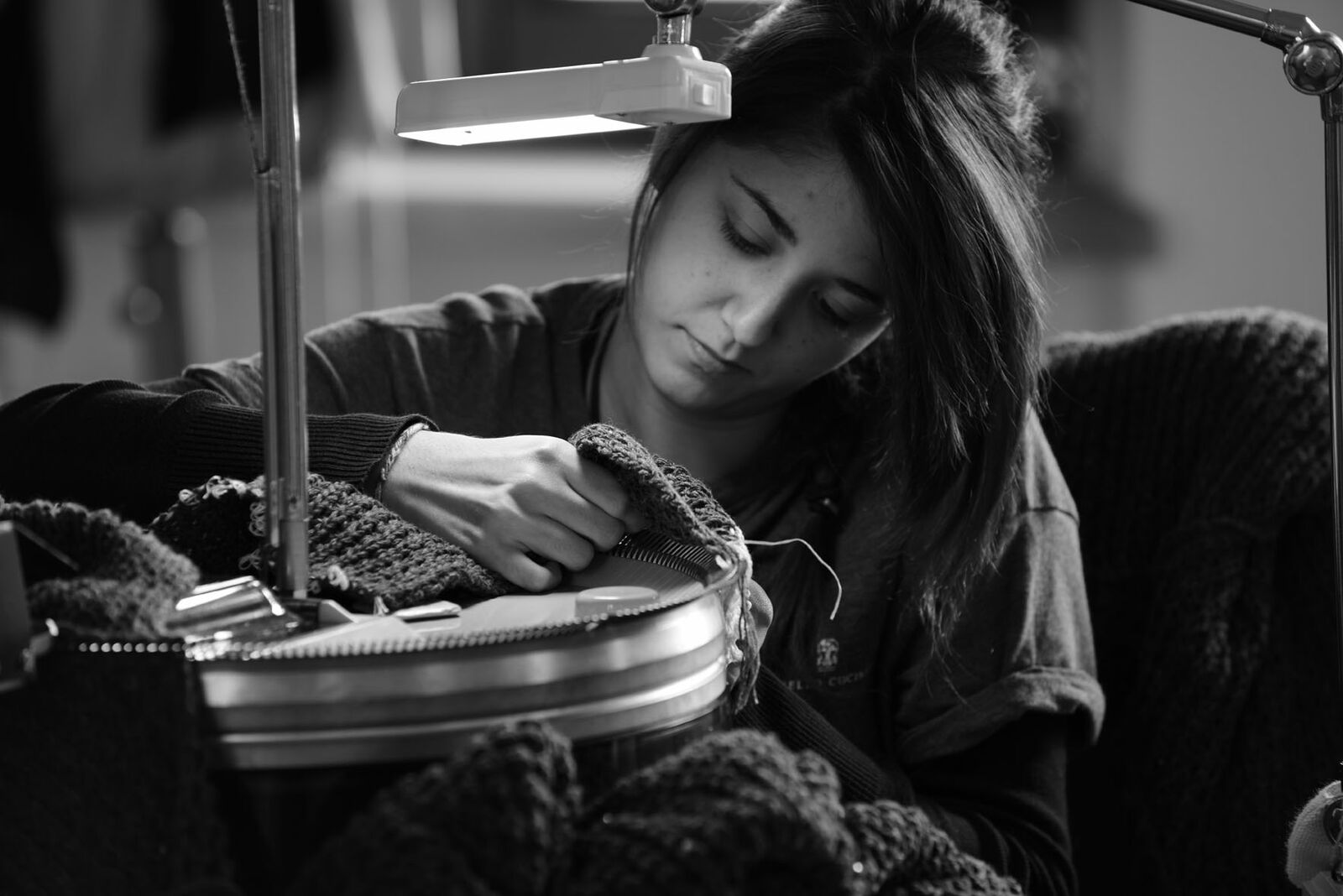
I had this idea of building a company with one or two people and giving dignity to work.

Om: Now we have a world that is changing. The idea of “brand” is kind of amorphous, and you don’t really know who stands behind that brand. I wonder if you have any thoughts about it.

Brunello: I wanted the brand to have my face. I wanted the product to convey the culture, life, lifestyle, dignity of work. We are a listed company, and I wanted to manufacture a product with dignity. I wanted a profit with dignity. Because the press all talk about the moral ethics of profit. Why can’t we have a dignified profit then?

Would you buy something from someone if you knew that the person, by making this product, has harmed or damaged mankind? No, you would not buy it. You wouldn’t even buy it if you knew that the company had staggering profits. Our cashmere blazer costs $3,000 retail, but the profit must be dignified. It needs to respect the raw material producer, then the artisans, then those working for the company. The consumer also needs to be respected. Everything must be balanced.

We need a new form of capitalism, a contemporary form of capitalism. I would like to add “humanistic” to that equation.

Don’t you feel that over the last two or three years? Don’t you smell it? There is an awareness raising, a civil, ethical point of view. The idea of community, dignity. Yes, it’s a strong sensation.

BrunelloCucinelli10

Om: I refuse to buy anything made in China, unless I know who makes it, and also I don’t buy anything which comes from fashion conglomerates. I like to pay for quality. The only challenge I feel is that for our approach to work, there has to be a certain amount of money, a certain amount of comfort in life. Without it, some people still have to work with the industrial society we are now in.

Brunello: My daughter refused to buy a pair of trousers for €19. Beautiful trousers. I said, “Why didn’t you buy them?” She said, “How much money do they think the worker actually made or was paid for that?” I think that if you make a product, you have to sell in that specific market. In India, it has a price; in America, it has another price. I’m fine with that.

There are some companies that give a lot of their money to charity. I’m not interested in that. Because first of all I want to see how they make their profit in the process. It is meaningless that they make a huge profit and then do charity.

BrunelloCucinelli16

Rise of the Internet Brands

Om: There is a big boom in internet-based fashion brands. Do you think that trend has the ability to influence the world of fashion and clothing?

Brunello: Yes, absolutely.

There’s luxury, absolute luxury, aspirational luxury and accessible luxury. Luxury is a handcrafted good or a place that is beautiful, well-made, exclusive. It must be exclusive; otherwise it’s not luxury. It’s nearly always something beautiful, well-made, true, and also useful and fair.

But what is this thing, “accessible luxury”? The two words don’t go together. Absolute luxury must be exclusive too. Everything must be balanced. You made it. The raw material supplier, did they earn the fair amount? Good. Do the people who work for the company earn fair wages? Yes. Has the company made a fair profit or an excessive profit?

I think this jumper is three or four years old. Ten years old. Five years old. Three years. Even if you stop wearing it 10 years later, it should still be there. At the end of the day, most of all, there is quality, a high degree of workmanship.

We went public, and we have more than 50 percent American investors as shareholders. Before going public, I said to them, “Are you looking for a company that grows very fast, that makes profits that are too high, in our view, quick profits? Do not invest in our company. Do you want a company that grows in a gracious way? That allows suppliers to grow alongside it, so that your artisans can grow as well as the company’s staff?”

You buy this product and you feel better, you feel at peace, because you bought a product that, although very expensive, there is work and respect for the work that goes into the product. I do not buy a specific product if I know you have made preposterous amounts of profit out of it. That’s exactly where, in my view, the new capitalism lies.

The world has changed dramatically over the last 15 years. Man must adjust, must be contemporary. Capitalism and capitalistic people must be contemporary.

Om: What do you mean by “the world has changed”?

Brunello: It’s open. We were saying before that I can use Google Maps to locate your home. I can see which car you drive, what swimming pool you have. I think that the world is completely different as a consequence. It is new. In a split second, you can have 2,000 people convening or rallying to a square.

Om: Let me give you a little counterargument. My theory is that we live in a world that moves much, much faster than ever before. In the Industrial Revolution, we moved at a certain speed and compressed time and spaces. The internet makes everything even faster, mobile. From my pocket to Italy to America to India is essentially microseconds.

The world is much faster, and there is a big change as a result. Whether it is fashion or cultural movements or political movements, we forget about what’s happening so fast. We had Putin move into Crimea, and it’s old news and nobody talks about it in the American media already. We are talking about something else now. The world is very different like that. That’s a big challenge we face as a human race.

BrunelloCucinelli2

Speed Kills?

Brunello: In 1220, Genghis Khan was boasting that in two days, he could do what the Roman army would do in 10 days. He was boasting about his speed. Man’s feeling has not changed, but the pace has changed.

Om: From a business perspective, has this connected planet helped you grow your business and open new markets quickly? Or not really?

Brunello: No. As far as business is concerned, I do not like things to go too quickly. I like to be swift as a person, but I don’t like things to be rushed lightheartedly.

What I have tried to do is manage the American market as if it were a domestic market together with Europe. I speak to the Dallas store as if it were the Venice store. Someone from San Francisco basically listens to the same music as someone from Milan. They wear roughly the same clothes. They have their iPad, their iPhone. Just think of how mankind has become more homogeneous.But true luxury lies in the fact that you are not too widely known.

I am fascinated by the time that we are living in, because enlightenment and romanticism are blending. We are rediscovering human dignity, plus the dignity of the territory, the community.

Om: You once said that running a company is simple. I wanted to know more about that. I want to learn the business principles that other people, other entrepreneurs, can learn from you.

Brunello: You must believe in the human being, because the creativity of a company — Let’s say you have a company with 1,000 people. Maybe we were told that there are only two or three genius people in the 1,000. But I think that if you have 1,000 people, you have 1,000 geniuses. They’re just different kinds of genius and a different degree of intensity.

We hold a meeting here with all the staff every two months. Everybody takes part in it. Even the person with the humblest tasks knows exactly what was the latest shop we opened. Everything is based on esteem, and esteem then generates creativity.

Everything is visible, when things go well and also when they go less well. When we are sad, when we are worried, when we are happy: If you show all these different moods, then you are credible. That’s why I say this is simple.

Om: Right now you’re a publicly traded company, but you yourself have a more a philosophical bent. How do you reconcile the need of the stock market with your outlook on the world?

Brunello: Finance is now going back to working along with industry while respecting each’s mutual role. In the last 20 years, finance dealt too much with industry, and industry dealt too much with finance. Whereas I myself, I’m an industrialist. I don’t know anything about finance. If you invest in me, you invest in an industry. I like it even better if you call it an artisanal industry.

As for my business plans, I have three-year business plans and 30-year business plans but also three-centuries business plans. I think that this is another good breakthrough in the world.

I haven’t come across one single investor who asked me to target a higher growth. Generally speaking, we pay our suppliers and staff 20 percent more than the average on the market. No investor ever asked, “Why don’t you reduce their wages? They’re too high.” I’m confident, because finance will become contemporary and modern too.

BrunelloCucinelli12

State of Modern Fashion

Om: I want your comments on the modern fashion industry. As an industry insider, how do you see all this internet-driven hype?

Brunello: I think that there are some finance people, the French ones, that are great at finance and have bought companies. This is one way. Then there’s a second way, the Italian way, where there are some industrialists with many enterprises.

They have a never-ending kind of outlook about their companies. Armani is just a witness to that. Basically, it testifies to this. They follow their own path, their own route. They can both be appreciated, but they’re two different routes. Then, of course, some of these companies might sell to the other side, maybe because the owners are old. Some of them go public. Some of them have private equity funds.

When you sell a company, you tend to say that everything is going downhill. Whereas I like to quote Heraclitus on this: While things rest, the world regenerates. Something is born, grows, dies, rests, regenerates and regenerates again. That’s why I’m not at all worried. These are just different routes.

Om: There’s a lot of talk of manufacturing revival in the United States. Do you think it is feasible? If it is, what are the lessons from Italy that the U.S. can take?

Brunello: I think that there is a trend toward going back to manufacturing there. People want to buy a “made in the U.S.” thing. You want to buy a French champagne, but you also want to buy something from your own country.

We have to rebuild the basis of all the skills. For example, the schools for arts and crafts. We have to start rebuilding. In order to do that, we need to give moral and economic dignity back to this kind of craft. Say you are a tailor. If you earn $1,200 a month, you are sort of ashamed to say that that’s your trade, because that’s the culture. We have to do the opposite. It should be that if someone sees you are a tailor, they say, “Oh, you are plying a very great trade, the tailor.” That’s the moral dignity I’m talking about.

BrunelloCucinelli11

Italian Pride

Om: We have a lot of good shoe brands: Alden, Allen Edmonds, and a bunch of others like Codie. They have done well in the U.S. One of the reasons you can have so many arts and crafts and artisanal stuff being made in Italy is that you have the whole ecosystem.

Brunello: Each of us specializes in something. Italy has strong industries. It’s ranked second only after Germany in Europe. There’s furniture, food and apparel. [The United States] will go down in history because of technology. Germany, cars. The French have champagne. Every country has its own identity.

Say I work for Apple. Maybe I have the humblest kind of job, but I’m not ashamed that I work for Apple. Because it is still Apple. Whereas here in Italy, you say, “I’m a tailor” or “I’m a waiter” and you still get that kind of respect.

That’s the nobility that we have to rediscover. That goes hand in hand with a comeback to the community, to the territory. In Italy, this is strong. The 35-year-olds, 40-year-olds, with their children, they’re starting to take a look at the community. They want to go back to living in the countryside. They want to buy good food, good fruit. There is something in the air.

Om: I’m fascinated that you have such deep passion for philosophy. I wonder how it has helped you as a businessperson.

Brunello: In everything, really. For example, take Marcus Aurelius, the emperor. In any possible mood that you might be in, you read a sentence by him and you feel better. Any philosopher helps you to raise your head and the world will look better. Respect the human being, and that will be better. Hadrian the emperor said, “I never met anyone who after being paid a compliment did not feel better.”

The true way to nurture your soul is philosophy. The true malaise of the human being — no matter whether Italian, American, Chinese — is the malaise of your soul, the uneasiness of your soul. This is stronger now than when my father was young or my grandfather.

I would like to try to somehow cure this malaise of the soul, even with the young people working for my company, because at the end of the day, you can be wealthy and still feel the same way. I know many people who own a fortune. The other day, a very loaded person said to me, “I’d love to be more serene.” This is true for rich people, poor people.

There are three things you cannot buy. Fitness: You have to keep fit, whether you’re rich or not. Diet: You cannot pay someone to be on a diet for you. I think that diet is the biggest sacrifice in my life. Then, looking after your soul. No one can possibly treat your soul but you yourself. This is something you can do through culture and philosophy.

Marcus Aurelius says, “You should go with the flow of mankind, you should live as if it was the last day of your life, plan as if you were to live forever,” and then he also adds, “You should be at rest, at peace, you should give yourself some peace.” Saint Benedict adds, “The sun should never set on our rage. Let’s go to sleep at peace with mankind.”

Let’s try looking after our soul while working. Do you know that we work 11 percent of our life? We can’t have everything revolve around work. Unfortunately, now in Italy, it is hip and chic to say, “I am so tired and exhausted by work.” My father was tired because he was farming the land. He would say, “I need some sleep, I need some rest,” but he did not have this kind of feeling.

BrunelloCucinelli8

This is the great kind of treatment that we have to follow on a daily basis. Philosophy prescribed this treatment to me. I don’t know if you know Boethius, who lived in 520 AD. He was King Theodoric’s right-hand man. Theodoric condemned Boethius to death. He resorts to philosophy for help. Philosophy turns up as a woman, not very young, but with alert eyes. She says to Boethius, “What are you complaining about in your life? You have had this, this, this and that.” This is part of man.

Alexander the Great conquered a country. The tyrant cut the noses off the people there. It’s just the way it is. It’s part of life. I do not feel anxiety. What am I supposed to say here? You see, I think that philosophy really is part of human life.

Meetings & Mail

Om: One of the challenges that I have as somebody who works in the world of technology — and a lot of us in technology, like founders and engineers, have — is that we tend to work hard all the time. That is just a human state. How does one get away from constantly working? What is your advice?

Brunello: Sometimes our meetings are done standing, without coffee, no buffet, everything quick. This does not mean that everything is treated quickly. If the meeting takes three days, then three days are devoted to it.

How can you work 12 hours a day? Where is your mind? Where does it end up if you work 12 hours a day? Maybe your mind only develops in a specific sector. Maybe if you focus on that, you lose out on family, you lose out on spirituality with yourself, time with yourself.

For example, the other day I was in Milan, and I met with two 55-year-old managers who work as investors. One said to me, “I work from 6:00 AM to 8:00 PM.” Sitting there, in front of a screen, I wouldn’t entrust anything of mine to him for 12 hours. Then, if you live in the city, you go back home, it takes one hour to commute. What about the morning after?

That’s where we have to find a different kind of balance. You think that you have worked one hour less, but the morning after, your rate of creativity is sky-high.

BrunelloCucinelli13

What is Success

Om: This is a challenge in modern society. We measure success in terms of, “We’ve worked 12 hours.” The entire society is rooted around the idea of more, and longer has become the measure of success. How does a young founder or a young startup measure what you’re suggesting?

Brunello: So, I am 60. I have decided to work seven hours instead of eight, because I’m starting to be old. I have not reduced the rapidity, not by one split second. Since I am older, though, I get tired and I need rest.

We went public, then all the banks came here, all the people, and we were working until midnight the first days. There was one hour with just a sandwich, one hour coffee, one hour discussion. I said, “From tomorrow, everything changes.” So everybody turns up at 8 AM, and at 5:30 PM everybody leaves. That’s the only time we have available. I do not want to see any time wasted. I do not want during the day to see funny emails or joke emails. So we were able to go public without being overwhelmed.

During the road show, the banks said to me, “You are supposed to meet eight to nine people in one-to-one meetings a day.” I said, “You must be crazy!” Am I supposed to meet someone for 45 minutes, and then another 45 minutes with someone else, then at 2 PM, I don’t know what I said or didn’t say? I said, “No, that’s not my way. I’m meeting five, tops, very focused, that’s it.”

We have to rediscover the quality of work. If during the day, someone texts, “Why don’t we go for a pizza on a Sunday?” I don’t receive it until after 6 PM.

Om: I guess you’re not on Twitter. [Silence.]

Brunello: No, I understand. You see, we can make things concise, and we have time for our family. When I say family, I mean your time, your private time. So tonight, at half-past five, that’s it, I’m finished. I go for a jog, I have a booklet that I carry with me, and when I come across a good idea, I jot it down.

Om: This is fantastic. I have so many more questions.

Brunello: I think we will have the chance, because you are a very interesting person to me, too. I will come and see you when I am in San Francisco. You have a view and outlook that is extremely modern. You are fascinated, nevertheless, fascinated by philosophy. I am fascinated by philosophy and by the world. I have always kept technology at a distance. I was always scared of being dragged away. So I try to be a bit obnoxious because I am scared of it.

Om: I want fewer interruptions in my day. I have eliminated a lot of things from my life. I’m on a declining scale of wanting things. Fewer and fewer things. I think that is one of the reasons I find your approach to life, a more philosophical approach to business, fascinating.

Brunello: A 58-year-old man committed suicide, a great Italian manager, I think last year, or a couple of years ago. He wrote, “I spent a whole life running, chasing work, without realizing, at all, of the great ideals, of great values of life.”

This is a question of balance. Those who come to me and say, “You know, I work 15 hours a day,” I say, “I am not interested.” I am interested in the quality of working hours, not the quantity. The brain of the human being. Do you think that during the first five hours of the day you are the same as you are in the last five hours? No way. You’re tired, and if you’re tired, you stop listening, and the decisions you make are risky.

Jenna Wortham

AMERICAN IDENTITY

Om: I read this piece in The California Sunday Magazine about Korean-American chef Roy Choi, and he talked about equality and American identity: the challenges, the rage and the anxiety of growing up. What was it like for you growing up, and how has it changed?

Jenna: I think about this all the time. I’m biracial, but I look black. That’s the identity people project onto me, and that’s fine and I just go with it. But how do you reconcile being in these different spaces, like being a woman of color and a woman of color who’s been writing about tech? I’ve always been in these environments where I am surrounded largely by people who don’t look like me. In many ways that has been advantageous, because everyone knows who I am in the tech world [laughs]. It has made my job easier the last couple of years.

But it’s also hard when you feel like you have a perspective that is not reflected in the places where you work or the stories people cover. You don’t feel like you can cover them and don’t know how to allocate yourself. There’s an appreciation of seeing or reading about other people that are like me in a largely white, male-dominated environment like media, music or literature.

Truthfully, that’s the experience of people of color who are working in any of these big niche areas. They are probably the only person that looks like them in their environment. Having access to those environments has been gratifying, or self-reinforcing. It’s like, “OK, this is how you aim for it. This is how you talk about these difficult issues.”

5

Om: I was chatting with Zach Klein [the founder of DIY and CollegeHumor], and he was talking about the idea of tribes going from online to offline, that instead of aggregating online, people with similar interests are coming together in real life and creating new offline groups.

Jenna: There’s this new global citizenship. Although, to be fair, we are talking about a select group. We are assuming they have [internet] access and can afford a data plan. Still, I am fascinated about this idea of what does it mean when you realize that you can look on Vine or YouTube and you are like, “Every kid in America has a bedroom that looks just like mine.”

If this is what the typical American experience looks like, does that lead to more marginalization? Or does it make us more comfortable with difference? I think it’s both; I think it’s good and bad. It’s exciting to think about what it means to grow up with that portal into each other’s worlds. Perhaps we can understand that, like, kids in Iran do the exact same things you do with their spare time, which is make dumb Vines or whatever. That’s powerful.

The most innovation is still happening online and is largely concentrated within ethnic groups. There are more black people on Twitter than white people. Is this just an updated version of exploitation of labor and black bodies, the same as at the turn of the last century? Because the makeup of Twitter does not look like the makeup of its management. In terms of people that work at Twitter, it’s a lot whiter than the people that use Twitter. That free labor is real.

I’m taking this class right now called Technologies of Feminism, and we spend a lot of time talking about whether or not software can be biased. It’s hard to explore in a print story. This is where my mind is right now. I’m thinking about how Facebook and Google are trying to get the rest of the world into their version of the internet. When you sign up somewhere in the developed world, do you sign up for Facebook’s version of the internet? Are you automatically ascribed to their version of data collection and privacy policies? Are we creating digital imperialism? Is this the new imperialism? I don’t know. These are the things I’m trying to understand.

Om: I have similar questions about Internet.org, Facebook’s stealthy way to control internet access in developing countries. So I am glad you are thinking about it. And there are challenges that are much bigger than that.

9Jenna: There’s a slow collective awakening happening right now. With the Sony email leaks, the message is that you should never email something you don’t want other people to potentially read. Other countries have been faster to realize that the notion of privacy is not as ironclad as we like to believe or tend to think. Nothing is actually private. Nothing is actually secure. We are way more vulnerable than we think. That is actually my piece for the Times Magazine that I’m working on, which is about the Eric Garner video.

We’ve been told if you self-document, if you capture everything, that if you capture something bad happening you’ll have the evidence, you’ll have the proof. That video was clear as day; it was verified by medical examiners. There’s a sense that technology is a panacea for all of society’s problems, but there has been a realization that it doesn’t matter. [Nick] Bilton tweeted after the Trayvon Martin thing: He imagined [what would have happened] if [Martin] had Google Glass, which was a profound thing to say, which I think he got shit for, but I’m not sure why. Now we know it wouldn’t matter, because you can’t disrupt a century of systematic oppression.

Om: You were talking about Twitter or Facebook growing off the backs of people who are not like the people who are running those companies. If you go back to the Industrial Revolution in the 1800s, the laborers who were making sweaters (or whatever) and other garments were all women and children. The people who were making money off them were all rich, male, white traders. There is a systematic history of using that lowest common-denominator workforce for the lowest possible price and then benefiting from that. That is what we’re seeing in the new service economy. (Editor’s note: I am referring to the so called share economy!)

Jenna: I’m trying to think about the ways in which the future looks like the past. We’re being told that anyone can run their own business when they decide to use Uber or become a TaskRabbit. It’s fine to talk about one narrative, but we also have to examine the other narrative, which is the much more unpleasant one: Who is benefiting and who’s not, and are they being exploited?

Om: Unfortunately the media reality of today doesn’t allow for that nuance. Everybody needs a 140-word tweet or a headline with maximum impact. Serious conversation is not happening, because even serious publications are not taking a deep look at the changes and instead end up being reactive.

Jenna: Print online ends up looking a lot like print offline, in the paper. That’s the problem. We haven’t realized that there is this middle area between reporting the news, like, commenting on the news. Not like I know what it should be, but we haven’t figured out that there can be this sort of middle area.

That’s the beauty of BuzzFeed, because it’s so big and they get to experiment. They are also doing this serious investigative reporting. They are doing a lot of fun stuff, which people kind of dismiss. To me that’s just as valid and totally fun and fine. It gives them a lot of area in the middle. The so-called lowbrow stuff pays for the so-called highbrow stuff.

Those two areas are taken care of. What else do we do? How else do we think about what we want to say and what we want to cover and how we want to do it? Those might not be the pieces that get the most page views, because they’re not crazy-long investigative stories or exclusives or the fun slideshows of 44 cat GIFs you can’t live without. It leaves them a lot of wiggle room to figure it out.

——-

2

MEDIUM, NOT MEDIA

Om: I always struggle when people say, “Oh, BuzzFeed,” and have a snooty approach to it. I don’t need to read it every day, but there are 150 million people who are checking it out, so there must be a reason. Those people are not idiots. You can call the publication whatever you want, but people are rewarding them with attention. Both BuzzFeed and Business Insider have identified formats that people like to use. Just like Vine has essentially become an art form in six seconds.

Jenna: Vine is a universe unto itself. Vine has its complete own visual language and literacy, and it’s incredible. I don’t even have that app on my phone, but I look at vines all the time. People either text it to me or I see it on Twitter.

The New Yorker had that cover story about Vine being the future of entertainment. It was a great story, but they really focused on how Hollywood is approaching the medium, as though Hollywood will somehow adapt to six seconds, when Hollywood is just going to always be Hollywood.

What’s really happening — and I’m still trying to figure this out — it’s something like the next MTV won’t be on a television channel. It’ll be moderated through Vine. Snapchat’s making all those content deals. It’s not about the short format; it’s about the ubiquity of the phone and the playfulness of the media. There was a line in that New Yorker story that said, “I don’t know that kids can watch anything more than six seconds.” That’s a gross underestimation of anyone’s attention capacity and also rude to suggest that kids or people who like Vine have no attention capacity. It’s really about the playfulness, the humor and the way things resonate on Vine. A lot of it’s self-referential, and it’s about that quick punch line. It’s all about comedy, which I think that story kind of missed.

Om: I am still surprised that many media organizations are unable to adapt to new media formats and, more importantly, new network behaviors. Everybody’s trying to repeat the past with the new network, with new devices and new tools. Why not make something brand-new? Six seconds are perfect for a comic effect, and that’s why Vine works. Snapchat works because using a selfie is way easier than texting or tweeting. I see how my nieces use each app, and they have no baggage from past behaviors. Shouldn’t media outlets be adapting for these new networks and new apps? It seems like we suffer from the baggage of the past and have a set process on how stories should be crafted. I guess that is the long way of saying that the stories should adapt to the medium and do so without cheapening the story.

w1280-1Jenna: There’s a huge opportunity to understand how people are consuming things with different purposes. Sometimes it’s to put a news event into context. Sometimes it’s for entertainment. Sometimes it’s for understanding. Stories can be told differently. There’s no such thing as highbrow or lowbrow content on the internet. You’re coming at it with different intentions in mind. You’re getting different value out of it.


I love watching BuzzFeed experiment with the slider tool, which they’ve mostly used for celebrity before and after, like, “Did this person have plastic surgery?” I also feel like you could see that with Brooklyn neighborhoods. “This is what this neighborhood looked like in 2013,” or “this is what this skyline looked like.” Anything with a time lapse means you don’t have to write 800 words about what you’re looking at. You can tell visually that we are talking about gentrification or economic development or urban renovation.

Om: We have a preconceived notion of media, that it should look like a paper or a magazine or a TV show. Why can’t we create a visual experience powered by check-ins, Instagram photos and reviews instead of a destination magazine? That is where the traditional media fails; they don’t really think, “Can we use a new tool to tell the same story?” Do you think that’s a necessary component of being a journalist, that you have to learn to use various tools to tell a story?

Jenna: Yeah! I have a journalist friend in Norway who has been using WhatsApp to report. It’s interesting to understand that there are lots of different tools at your disposal and ways to get interesting stories and widen your perspective.

There tends to be a little bit of dismissal of something like Snapchat, because it had this reputation of being a tool for teens or something that was used to send scandalous images to other people. But BuzzFeed and MTV and Vice are partnering with this company to start broadcasting stories. That’s something we should be thinking about.

Om: You often talk about offline and online and how people communicate. I like that with you: It is pretty much the same person, online and offline. That’s hard to do. Do you think we’ll ever come back to the point where we can converge into being the same person, both online and offline?

Jenna: It’s different for different people, because so many people use Instagram or whatever it is as their calling card. I watch my friends who are stylists or designers and they have to cultivate a lifestyle, or the appearance of a lifestyle, to get work. If you’re a party promoter, you have to seem very on the scene. That’s kind of cool, because it’s a new kind of resume. Sometimes I want to be more like that, and I’m too lazy.

I’m lucky because I have a job and I’m fairly well-established, so I don’t have to use that to build my reputation. But I just want to have fun and a little bit of intrigue. I’m scaling back how much of myself I put out online, because it’s easy to get drawn into it. Like, if you say something controversial on Twitter, you can get drawn into a long back-and-forth conversation. I get that that’s the point, but it is such a distraction. You have to make sure you’re getting out more than you’re putting in. If I was someone who was trying to build more of an image online, I guess I’d be invested in that, but I don’t know.

——-

4

JENNA’S STORY

Om: Where are you from, originally?

Jenna: I grew up in Virginia, right outside D.C., and in Alexandria. I went to college at UVA. When I graduated, I was ready for something different, so I drove out west with my boyfriend, to California.

Om: And ended up being a reporter?

Jenna: I always liked writing. I didn’t know how you transition that into a career. I wanted to write books, and beyond that I was like, “I have no idea how this works.” But I love magazines, and I love e-zines.

I was actually trying to be a doctor or work in public health. Then in my fourth year of college I took a class called Grassroots Publishing. We were putting out a feminist magazine, and I was like, “This is dope. This is what I want to do.” But I also wanted to take a little time off after school. I’d been waitressing in college, so I wanted to move somewhere interesting and be a waitress.

I got to San Francisco, and then I started interning at pretty much every magazine. I interned at San Francisco Magazine. I interned at Girlfriend Magazine, which is now defunct. It was a lesbian magazine. I wrote for SFist. I worked everywhere, and then I landed at Wired. And suddenly, I was like, “This is 100 percent what I’m interested in.”

Om: I had that moment too, as if I had suddenly discovered my tribe.

Jenna: At the time there was this idea of what it means to be a geek, that you’re into X, Y and Z. I watched Star Wars, sure. But I was also watching Facebook come up and thinking, “This is the new tech.” Everyone knows this now, but at the time it was clear to me that [being a geek] wasn’t about cultivating these niche interests, like comic books and certain kinds of films and certain sci-fi authors, all of which I was into. That’s not what it meant to be a geek. To me it was more about being interested in how people were communicating and interacting online.

I remember being maybe eight and at my best friend’s house, and his stepdad was using a BBS or some weird computer program. I was like, “What is this?” They were showing it to me. From that moment on, I was fascinated by the idea of using software to communicate. That’s always what my interest comes down to: how people are communicating with each other and how that plays out online and offline. The way we’re constantly using the internet as a medium. How it mediates interaction.

Om: When you went from all these magazines to Wired, what was that like?

Jenna: Wired was interesting because it’s trying to think ahead. When you’re writing about technology, you have to write about it in a way that’s going to be relevant in three months. That’s just the magazine-publishing timeline. You have to think about what your product will look like in three months. Maybe that shaped how I thought about always trying to have a fresher perspective and not just do reactive stories.

I’m always much more interested in the second-day story. At The New York Times we have day one, day two. The day one to me is the easiest thing to come up with, just sort of, “Here’s what happened, here’s why it’s important” kicker, and you’re done. But the day-two story is always more fascinating. I think about that with anything I approach, like, what are the themes that are interesting? But then what’s the broader, 50,000-foot perspective that no one else has thought of? Or the angle. Because that always has more currency, too, online. That’s the kind of thing that people want to spend time reading, anyway.

——-

Beyonce-Wallpaper-Sasha-Fierce

[topic]BONKERS ABOUT BEYONCE[/topic]

Om: Let’s talk about Beyonce.

Jenna: Oh, my gosh. What do you want to know?

Om: Everything. When did you become obsessed with her? When she was in the group, or was it more recent?

Jenna: More recently. Last year I wrote a piece for the Nieman Journalism Lab about the future of news, and I said the future of news is Sasha Fierce. Beyonce had released an album that everybody had bought, her visual album. People signed up for iTunes, which I hadn’t used in a year. I don’t know if I’d ever bought an album with iTunes, but I bought that album the second it came out.

She created a totally new visual diary. It was such a crazy thing. It was a premium product. It was more money than I’d spent on music in years. It was totally worth it. I still think that’s something we should all be paying attention to: how she commands attention. Because you know it’s going to be worthwhile. She always does something new and innovative. She’s interesting to me because I think now she’s more a visual artist than a musical artist. She’s not even someone who uses the internet. She creates a new language through her videos and through the sets she designs. I like her music fine, but I love her visuals.

I’m impressed with how much she continues to innovate, how much she continues to redefine what it means to be a pop star. Not to take this metaphor too far, but this is as old as the media business. She’s constantly reinventing what it means to make money and how to be profitable in what is essentially a dying industry. That continued makeover is fascinating, because a lot of artists aren’t able to pull it off. I’m in awe of her and how she seems to have managed to figure it out.

She’s like a meme artist. She has a spectacular team around her, and I think it’s all her too. She is good at understanding how to get things to go viral. When Sasha Fierce came out, even if you weren’t a Beyonce fan — she’s so good at getting her base level of fans to talk about her. Excerpt parts of her video are used, GIFs of her or whatever, so you can’t help but get curious about her. That kind of ambient prevalence is powerful. That’s even what got me into Beyonce, because I kept hearing about her. I finally said, “Why is everyone so obsessed with Beyonce?” Then I got Beyonce-itis. I was like, “Oh, I get it now.”

Om: Have you adapted some of the things she’s done in your daily social existence?

Jenna: That’s a good question. I guess I had been trying to. I would like to be that mutable. You know that if Beyonce’s putting something out, it’s going to be interesting and probably worth the time it took you to watch it and seek it out.

As a journalist, it would be interesting to try to cultivate that as a brand, or maybe as a subconscious association: “If you click on this story, you’re going to like it.” Or maybe you won’t like it, but you’re going to find it interesting. That is incredibly hard to do, but not a bad challenge. But it’s like, How to be everywhere and not be annoying?

——-

6

THE THIRD ACT

Jenna: It feels like I am in phase three of this arc of my career. I’m trying to get a little bit more in touch with the things that I’m really interested in: what it means to be a person in 2014 and also a person of color in 2014 and trying to think about those stories and tell them effectively, without being so explicit about it.

Om: As an immigrant, you turn a blind eye to a lot of things. You have a narrow vision of where you’re going. You don’t think about what happens. You block it out. But recently there have been so many public displays of anger around race. I find it challenging that we have a black president and we are still having so many issues around racism. That is a philosophical challenge. I don’t think our legislative institutions or our judiciary have understood that the internet changes the idea of protest. Even if it is short-lived, this has spilled over from the internet into the real world.

w1280Jenna: The bubble has popped. Not the tech bubble, but this idea that we live in this techno-utopian-post-racial world. That’s deflating, and we’re quickly realizing that yeah, the problems we face run a lot deeper and are going to be a lot harder to change.

In terms of how the internet has changed protesting, I’m hearing people on Twitter talk about, “Oh, we’re going to go march. We’re going to do this.” Is that going to change anything? Who’s going to show up? I don’t have high hopes. Then I’m tuning in on Instagram, and I’m seeing these incredible aerial photos of just thousands, tens of thousands of people around the world, around the country. I don’t have a TV. I don’t really tune in. I don’t watch a lot of the news unless I’m in a cab, which is such a specific version of the news. It’s not even the real news. To see LeBron James wearing the “I Can’t Breathe” shirt and to see those pictures from Washington Square Park — it creates this feedback loop of caring.

Om: Do you feel that as a society we’ve become so self-obsessed, so narcissistic and self-centered and that social media helps propagate that? We all want to be in the center of change in society and yet, when you look at it, you realize that self is not going to change anything. Maybe we have atomized our whole society to a point that we are not able to achieve anything? For me that was the big takeaway of it. We have proof, and yet there is no justice. How does that work?

Jenna: I don’t buy that the internet has made us more narcissistic. It comes back to the division between how we present ourselves online and what we’re doing offline. I know I’m in a minority, and I probably will get laughed at for saying these things, but I see selfies as a version of how you present yourself online. It’s become the norm for better or for worse. And it’s easy to look at it in aggregate and think, “Uh, everyone who’s doing this is obsessed with themselves” rather than thinking about it in terms of something like an emoji, which is just a thing you use to express yourself and how you’re presenting yourself online. I don’t know if that’s a bad thing.

Photos of Jenna Wortham by Wesley Verhoeve, a Brooklyn-based photographer and writer, who is currently chronicling the stories of creatives & makers who choose to live far from the big urban centers. You can follow his adventures at Oneofmany.co