Om Malik: Tell us about the company and the brand for people who may not have heard about Outlier.
Abe Burmeister: What we do at Outlier is try and build the future of clothing, really. We’re an online-only company. We’ve been doing it for nine years now. Outlier was a very accidental project. I just couldn’t find clothes that met the quality standard and the performance standard that I personally thought should exist. I thought I could just go buy ’em, but I couldn’t. I had this moment about 10 years ago where I was like, if I can’t buy these clothes, if I can’t find these things, I have to learn how to make ’em.
I rolled into the Garment District in New York, which is a like an ancient technology center — you know, the Silicon Valley of the 1900s or really late 1800s, when the sewing machine was invented. Ninety percent of the clothes in America used to come out of the Garment District, and so very few of them do now. It’s much smaller than it used to be, but there’s still a lot of life there. It’s a couple blocks from Times Square, so you’re talking about the heart of the city.
I started asking questions and eventually I developed a pair of pants that I thought were just better [than what else was available]. And because I knew a lot more about making websites than about making clothes, I thought, what happens if I put these things online? Will people buy ’em? You know, like maybe that’ll work, and somehow it did. People started buying ’em.
With any business story, no matter what anyone tells you, there’s massive amounts of hard work, brutal hard work, but there’s always some crazy luck, too.
It’s not somehow. They were genuinely better than what was on the market. They were different. I was really focused on bike commuting at the time. I was trying to get healthier. It was lots of fun riding around the city, but if you ride a bike, there are a lot of obstacles you encounter. You sweat; you might get rained on; your clothes fall apart. I was going through a pair of jeans every couple months. I built something that was genuinely a better product for what I needed at the time and it resonated with people. So that’s Outlier.
I also got really lucky, of course. With any business story, no matter what anyone tells you, there’s massive amounts of hard work, brutal hard work, but there’s always some crazy luck, too. I met my business partner Tyler because I was carrying fabric around and my coffee shop [barista] was like, “What are you doing?” I said I was making pants. She said, “That guy over there’s making shirts.” That was 2008, and we’ve just been [rolling with it] ever since.
Om: So both of you were making similar products, which was essentially pants and shirts for people who wanted to ride bikes to work and not look like slobs and also not wear track pants?
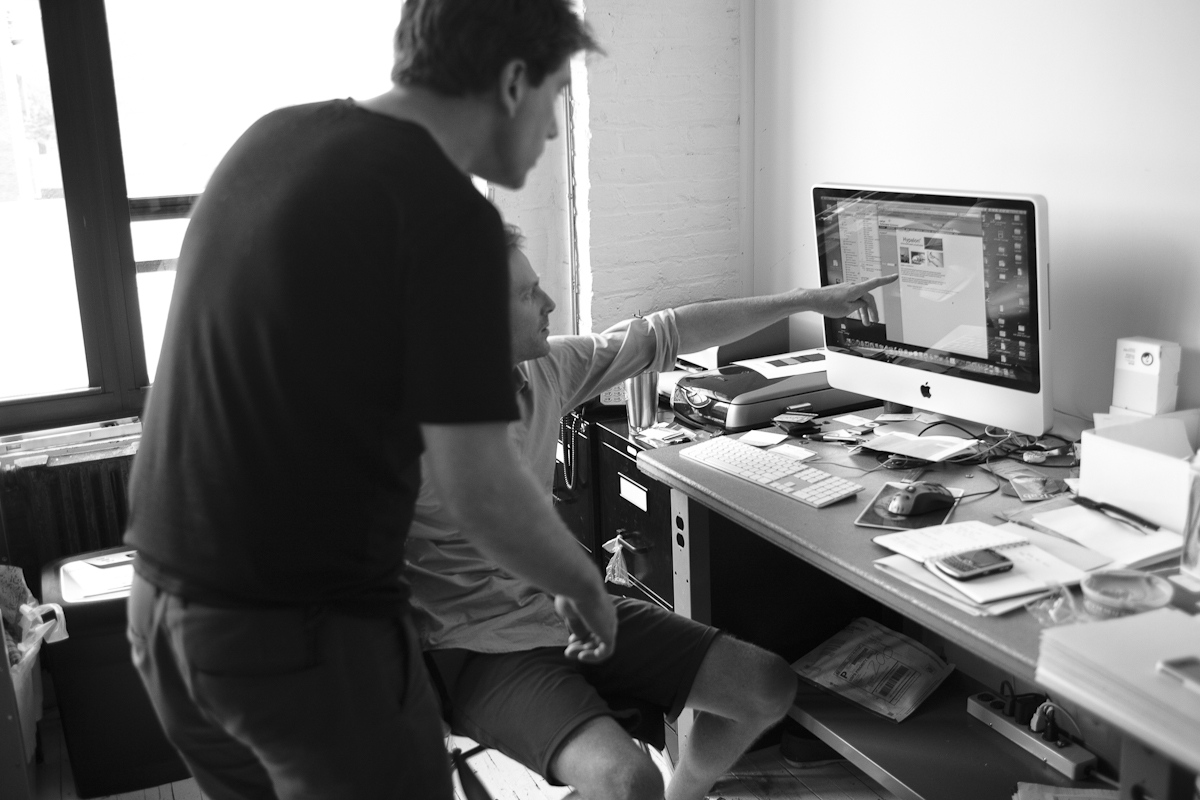
Abe: Yeah, exactly. I was a graphic designer and I had some clients where I could wear whatever, and I had some clients where I had to dress up and look really sharp, and Tyler had the same thing. He lived in Brooklyn and worked right across the bridge. It was only like a 15-minute bike ride to work, but the bridge is just high enough that you always break out into a sweat. So he would need to bring a change of clothes every day just for a 15-minute bike ride. He thought, this is really silly. I should be able to find a shirt that can handle a 15-minute bike ride without getting soaked and still look sharp. So he was working on that when we met.

When we sat down, we realized we were working with very similar technologies. It was kind of crazy. We met in, I think it was March, and by June we had filed incorporation papers. We were like, wow, we’re doing exactly the same thing. Let’s do this. Let’s make it happen.
Om: Now when you talk about doing all of this, there’s no family history of making clothes or anything like that on your side of things, right?
Abe: No. I have one uncle or distant uncle who apparently had a factory at some point, but we never talked about clothes. But other than that, there was nothing. It wasn’t like, here’s a family factory that I can walk into, or a textile mill. It was a surprise to me. It was a surprise to everybody.
Om: Wow. So you were in the web design business, but you are from New York, right? You’re a native New Yorker.
Abe: Yeah, born and raised. Born and raised in Manhattan.
Om: But you live in Brooklyn now?
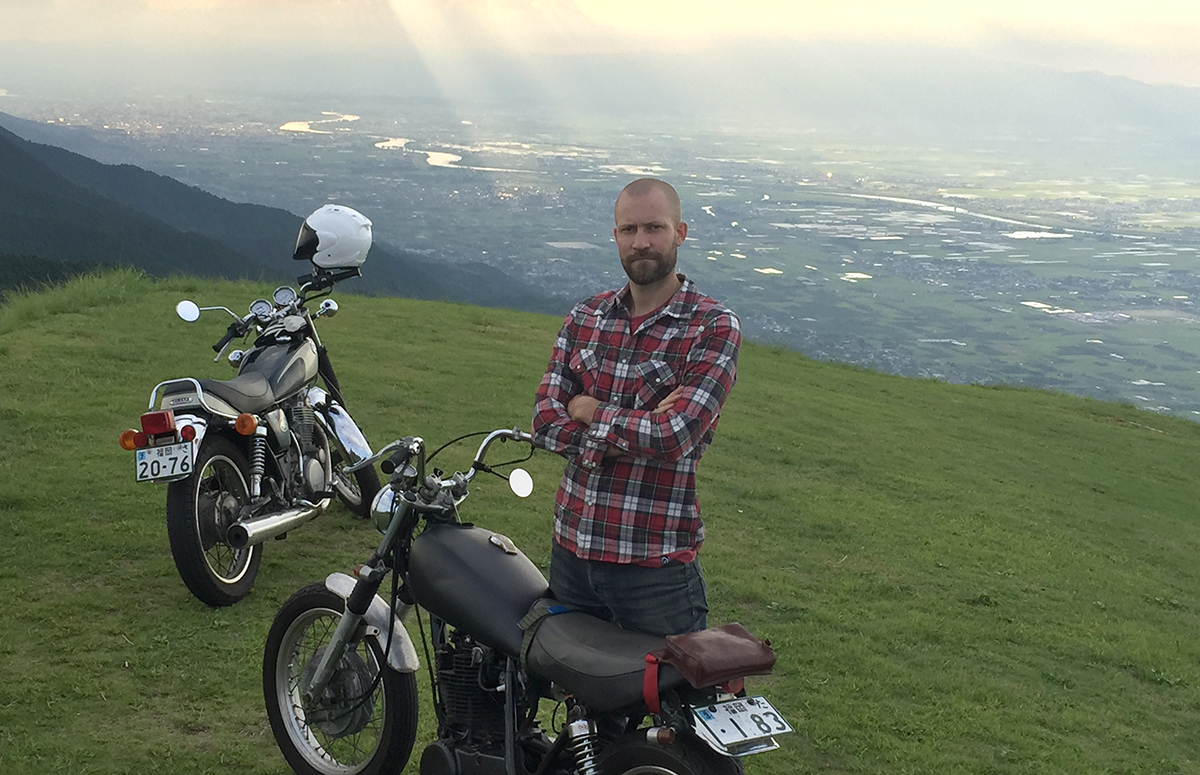
Abe: Yeah, I did the switch to Brooklyn. I miss Manhattan sometimes. It’s crazy now because I live and work within a 10 minute’s walk. So basically, a), I don’t ride bikes that much anymore because I don’t need to, and b), I spend a lot of time in Brooklyn and not very much time in Manhattan anymore.
Om: Cool.
Abe: But I still love Manhattan. It’s my home. It’s where I came from.
Om: Yeah, and you’ve been making these clothes for a while — you said almost 10 years now. What has changed in those 10 years, both from the perspective of your company and also from how the world perceives the clothes you guys make?
Outlier’s Formative Days: Then vs Now
Abe: Wow. I mean, at the beginning we were so bootstrapped. We started with $15,000 combined in capital that we had saved up and we’ve never raised money. Tyler and I own the whole thing, so there’s been a lot of growth from that initial $15,000 to where we are now. We’re at about 17 employees now. I don’t want to get too much into the numbers, but that’s all organic, bootstrapped growth basically. That’s a lot of change — a lot of turning around and being like, wow, wait… what happened?
But the industry’s changed a lot, too. It’s something that as a human, as a person, I’m super happy about. Some of the ideas that we had about clothing have been validated, not just by people buying our stuff but by other companies, very large companies, copying what we do in different ways. Some of them more blatant than others, but there’s definitely a sense of validation of the concept — without question. As a business person, it’s a little less fun, just because there’s more competition. We were in a very blue sky space for a while where nobody else did what we did.

It’s been a wild, wild time. We’re at this point now where billion-dollar corporations are basically releasing copies of Outlier clothes. You know, they put their own spin on it — especially when they’re that big and have legal departments and all that — but it’s been really interesting. When we started, there was very little technology in menswear in daily clothes. You know, the stuff that you could buy back then was very similar to what you could have bought 20, 30, 50 years ago, in terms of what it could do, right? The fabrics were the same.
Whereas, we take a lot from the outdoor industries — you know, a little bit from the military, or the equestrian industry. We are always looking for different angles into work wear — different places where people are thinking about how the clothing actually functions and how to make it better. Today, if you walk into, say, Banana Republic, or you go and buy a pair of Dockers or something, they’re going to have offerings that incorporate a lot of the things that we were doing seven, eight years ago. You know, making a pair of chino pants that has incredible freedom of movement, or making pants that dry quickly and resist stains.
There are ways to treat fabric that makes ’em a lot more resistant to stains, resistant to dirt, or water basically rolls off. That’s kind of transformative. You put that treatment on a shirt, and now, if you spill coffee on it, you can just kind of flick it off, right?
Om: Which is the great part about your journey — you’re seeing all of this become mainstream. And you’ve done it all in just nine years. You’ve become a big company compared to where you were when you started. What did you guys do to make it happen? I mean, a lot of people talk about bootstrapping their businesses. You guys have actually done it.
Abe: First off, we actually feel a lot smaller now than we did when we were tiny, when it was just the two of us and $15,000. You don’t have any sense of scale at that sort of level of naivety, which is actually kind of helpful for starting a company. Now we feel really small because we’re very aware that we’re surrounded by giants. But beyond that, yeah, I mean it’s a hard road. It’s a lot of 80-hour work weeks like you don’t stop. Every winter, because of the seasonal fluctuations, cash flow and stuff, we always go through these sort of traumatic periods, where we’re like, can we squeeze through? We know that the sales will come in the spring, or they should, but you’re in the middle of winter and nobody’s buying anything.
Still, you’ve got to buy everything for the next season, so it’s a lot of scraping by. Risk tolerance is really there. Without having a lot of capital, you don’t have that much of a buffer, right? But on the flip side, you can fix mistakes quicker, I think. It’s really easy to gloss things over with dollars.. When people get a big influx of capital, they start spending money. If they’re disciplined business people, then they spend it right, but it’s really hard not to get a windfall like that and not spend some of it on some dumb stuff. So [when you don’t have that sort of capital], you learn how to operate a profitable business — and that’s hard.
The Reality of Capital Investments in Apparel & Retail
Om: So when you look at all these companies raising tens of millions, hundreds of millions of dollars, and trying to grow their businesses — Bonobos, for example, famously raised a shit ton of money and there have been a lot of others — do you look at them and just say, wow, that’s just an incredible amount of money. And then look for what they’re doing wrong, compared to what you guys are doing?
Abe: I wouldn’t say they’re doing anything wrong. So it’s funny because, from a tech valuation standpoint, Bonobos didn’t sell for a huge amount of money. I think their investors walked away slightly profitable, but from an apparel standpoint, they actually sold for a very nice multiple. They sold for about a 2x multiple, which is a very good valuation for an apparel company. The back-of-the-envelope valuation for an apparel company is 1x revenue. So actually, Bonobos did really well for themselves from that standpoint. I’m not going to say anything bad about them except that it was never my goal to sell my company to Walmart.
I don’t foresee that changing at any point in the future. But the interesting thing with watching these companies raise a lot of money is we’ve never actually known what we would do with that kind of money. Obviously, you can spend it on a lot of things: You can hire people; you can buy tons of advertising, buy machines; there’s a lot that you can do. But we never saw something so special that we were like, oh, we need millions of dollars to do x now, right? A little extra money always helps, but it was never like, wow, we need this.
I think about Apple, how they raised venture capital money very early on, but they had a very specific reason. Steve Jobs was like, “I need an injection molded case for a computer.” It’s really funny actually when you think about it. You know, computers came in metal cases back then that you could just whip up in a small machine shop, and he was like, “No, it needs to be an appliance. It needs to fit in the home.” It was a reference, right, and so they needed to cover the injection molding costs and that’s why they went and raised capital.
We never hit that point. We’re happy with the organic growth we have and the level of control we have.
We are always looking for different angles into work wear — different places where people are thinking about how the clothing actually functions and how to make it better
Om: Right. But when you look at venture-backed fashion startups and when there is this much money, what do you think they do right and what do you think they do wrong?
Abe: Okay, I can tell you very explicitly, there’s a lot of failure in the e-commerce space and venture capital. I think the first thing I would say is that if you’re on the VC side and you’re looking to invest in one of these companies, or you’re running one of these companies and are looking for investors, you cannot put venture capital into inventory. There are no exponential returns on inventory. Once it’s in inventory, it’s this physical thing, it’s sitting there. You’re never going to get venture returns from a physical product that you just bought with somebody’s money who’s looking for a 10x, 100x return, so you need to put the money towards something that can generate the kind of return that a VC needs, right?
Technology is obviously part of it; if you have a new way to get to market, a new way to make things, I think that kind of investment makes a lot of sense, from a venture capitalist’s standpoint. But the other thing is that there’s other money out there. Even some of these big ones, like Bonobos, yeah they raised some VC money, but they also raised money from investors that were looking for different types of returns. An apparel investor is never going to look for a 100x, 1,000x return, they are going to want 5x or 10x, in five years or something. Even doubling that is a pretty solid outcome for some of them.
The Rise of Technical Apparel
Om: Gotcha. Now, you’ve been in the business of what I would call technical clothing, and the world around it has changed. Suddenly, whenever I’m walking around Manhattan, I see that technical clothing is now part of people’s wardrobe, like the usual, or what I call the classic clothing. What happened? Why did these things become part of our daily consumption so quickly and so pervasively?
Abe: I think on one level it’s just generally better, and there was this lull in the industry because nobody was doing it. Menswear was so conservative. The difference between what was possible and what was available was quite large, so once you open that crack up, it’s very easy to be like, oh wow, this is actually a better shirt. This is a better pair of pants. And once you experience something like a four-way stretch in a pant, or you realize that your jeans don’t need to wear out that quickly, or that your clothes don’t need to get that dirty, you don’t really go back.
At first, we started trying to build apparel for bike commuting, but we weren’t really hardcore cyclists, so we were never really a bike brand. We were kind of uncomfortable with that, but what we loved was all this fabric that was out there. We realized that there was this technology that was just kind of sitting there unutilized, unused, and we built a use case for it. Some other people were involved as well, and once it was out there, it was kind of obvious.
It’s classic technology in that sense, where if you create something that genuinely performs better than what was there before, people are going to accept it. And once they accept it, why would they go back?

Om: So what other things are you seeing now as you look forward into the future? What should we be paying attention to as consumers and enthusiasts of technical clothing?
Abe: The thing that we’re super excited about — we pushed pretty hard this year and we’re really excited — is something called warp knit weft insertion fabric. It gets a little bit technical, but essentially, the core distinction in all fabric is that a fabric is either a knit or a woven. It’s radically different, the ways that they’re made, and they behave differently, too. It’s the difference between a t-shirt and a button-up — a t-shirt is knit, a button-up is woven, and they behave very differently because of the differences in how the fabric was made. With this warp knit weft insertion, you have technology that brings both worlds together. It’s technically a knit fabric, but it behaves a lot like a woven fabric.
We’re really excited about it and what’s amazing is that it makes dramatically more breathable clothing that’s still opaque. You could make very breathable knit apparel the old way, but it’s kind of sheer and transparent — like a super lightweight sheer top that might end up in a womenswear piece that’s layered or just as something you could see right through. We’re able to make opaque pants that are meant to be worn in the kind of weather where you’d normally wear shorts — they’re so open to the air but closed to the eye. It’s pretty remarkable material. As best I can tell, we’re the only people in the apparel side of the business using this material at all, so we’re first to market. The market’s huge, so maybe there’s somebody else who can make this claim too, but it’s something we’re really excited about. We’re calling it injected linen, and it’s pretty amazing.
The technology [behind this material] is crazy — we just saw demonstrations using the same technology to make carbon fiber concrete, which is a whole other universe. With this weft insertion technology, they’re able to make carbon concrete that’s about 80% thinner and has the same strength, so it’s a really radical change in construction materials that may or may not take off. We’ll see, but that’s super exciting.
It’s pretty much inevitable at this point that China’s going to become one of the world’s main innovators within a very short time period.
Om: That’s pretty cool. Where is this innovation coming from? Is it coming from the US? Is it people in China trying to invent new things? Is it coming from Europe? I’ve always been fascinated by all this innovation in fabrics, technical fabrics and such, and I have literally no idea where it’s all coming from.
Abe: It’s global. It’s superglobal. This warp knit weft insertion technology I’m talking about, the company that makes the machines is German, but the company that we work with that developed an apparel-grade fabric is based in Japan. So you’re having innovation just flying around the world, essentially. The Germans are super at it, the Italians are super at it, America has pushed super hard in certain things. America’s really good with cotton because there’s a huge cotton industry, so cotton gets a lot of attention in America. Did you know America’s the second largest fabric maker in the world? Nobody knows it, because the fabrics being produced here don’t really go into apparel. They are the kind of fabrics that cover farms and make mile-long conveyor belts, things like that or for the military.
Japan is super innovative and there are interesting developments happening in China, too. Traditionally, China has been focused on production, on the cheaper side, but that’s changing very, very rapidly. We’ve seen some really innovative stuff coming out of certain Chinese-European partnerships, where it might be a European scientist paired with a Chinese production facility, and the funding is coming from who knows where probably from both parts of the world. It’s pretty much inevitable at this point that China’s going to become one of the world’s main innovators within a very short time period.
Fabrics of The Future
Om: There’s one material I’ve been extremely fascinated by, the stuff you use for your bags and your backpacks. Tell me more about that.
Abe: So Dyneema is the world’s strongest fiber, and it’s super light, too. It’s used to tie up Panamax cargo ships, the biggest boats in the world. It’s 15 times stronger than steel and it floats on the water, so if you want to tie a boat up and anchor it, you use Dyneema.
What we use is actually a Dyneema composite, so it’s Dyneema combined with a few other materials. It was developed in the ’90s to win the America’s Cup [sailing race]. They wanted to make the best sails that they could; there’s a lot of technology that goes into winning America’s Cup. This fabric came out of it. They built a better sail that was, lighter, stronger, stiffer. The company that made it stayed in the sailing world for almost two decades and eventually sold the rights to make sails out of it to a big sail company, but kept the rights to make the material for any other use. They had realized that it could be used to make bags when we stumbled upon them. I guess it was seven or eight years ago when they were starting this process.
Nobody was using it except for these really, really niche hiking companies focusing on ultra-light gear. It’s a super intriguing material. It’s incredibly light and it’s quite strong. Because it’s so light, it’s comparable to most typical bag fabrics in durability. It’s not necessarily more durable. If you use lots of Dyneema you can make an indestructible bag. It’s very stable and it takes on character, so we were really fascinated by it. It took us a long time to be able to work with it because it requires a lot of construction. It’s not like you need to build a whole new process for making it, but every time you cut it, when you sew it, when you want to tape it — you know, when you want to seal the seams — every little process behaves differently. So it took finding the right partner and really learning the ins and outs of this material to get it there, but it’s fascinating. It makes these really light and stable bags that kind of pack up into nothing and feel like nothing when they’re empty, and then you fill them and they actually carry quite well.

Om: Man, I’m obsessed with those things. I know you guys make them. I have a friend, Jan Chipchase, he’s nuts about these bags, so I have one of his company’s duffel bags. I carry it around whenever I travel into the cold places I go. What fascinates me about the material is its lack of weight, adaptability and the strength. I think manmade materials are coming into their own. I’m pretty sure there are more out there that will have an influence.
Abe: Oh, definitely. One of the things that we’re really fascinated about is when natural and the manmade materials come together, and we’re actually doing a denim experiment this spring. We’re calling it “end of the world denim.” We’re using Dyneema fibers and also cotton, so we’re trying to get the best of both worlds. It’s really interesting because the early uses of synthetics — the basic polyesters and nylons that you’re familiar with — are not very sophisticated. When you look at them under a microscope, you’re talking about very simple fiber constructions, whereas cotton is a plant. Things have evolved; there is much more going on.
We’re at this point with synthetics where people are starting to use them in much more sophisticated ways rather than just the straightforward, we’re gonna take this nylon, this plastic, this polyamide, and just stretch it out until it’s a yarn. That’s your basic nylon, and it’s strong, but it’s not exciting beyond that. But when you start working with it and treating it and trying to figure out what happens when you shoot hot air at it in a rhythmic pattern, what happens when you chop it up into little pieces and then twist it back together, you end up with much more sophisticated materials. They wear nicer, they feel nicer. It’s a fascinating world.
We’re also looking at a lot of blends of nylon and wool, where the nylon is chopped up into little pieces and twisted together with the wool, and you end up creating something that amplifies the good characteristics of wool but is a lot stronger.
Om: Do you feel that because of climate change and all of the other things happening around us that we might actually have to go in the direction of technical clothing, as cotton and other fabrics become more difficult to grow and water is increasingly a precious commodity?
Abe: Wow. That’s a tough one. I mean, traditional cotton and even organic cotton tends to need more water, and cotton also grows where food crops are grown, so cotton’s a really tough one when you look at it from an environmental perspective. Something like wool is sort of the opposite. You might look at wool and think, wow, the wool production uses so much land, it’s really intensive, but it’s land that almost nothing else can use. Sheep will graze on the side of a mountain. You can’t really turn that into cropland or harvest anything from it. So you’ve actually got a very efficient transformation of the sun’s energy into this beautiful fabric, just by sheep hanging out on the side of a mountain, eating some grass and living their lives.
But, yeah, cotton could hit a crisis one day, there’s no question about it. It’s grown in the same sort of soil that you can grow food. It uses a lot of water, and when you take the chemicals away, the water use tends to increase. There are people working on rain-fed cotton, so in theory, you could set up an entire cotton system that doesn’t require any irrigation, but where you can do that is limited, and how far they can take it, and how much they can scale, is in question.
Om: I definitely think about all of these things. I think that culturally we need to shift away from mass consumption towards buying fewer things, but things that last longer. I don’t think our planet can keep supporting this kind of excessive consumption. Fast fashion may be interesting and nice, but in the end, the cost of fast fashion is being borne by the planet. We may pay less, but it’s still coming out of our pockets, we just don’t know it yet. If I could basically put my entire wardrobe in a duffel bag, and look good and be elegant and still be comfortable, to me that is the ideal. That would be my utopia. So back to your process. All of these new fabrics and materials, how do you find out about them? Do you go study them, or do people come to you? Have you invented some of your own hybrid materials?
Abe: We’re developing quite a few materials now, which is amazing. That’s a new thing in the last few years. But yeah, we also hunt, which is fun. I’m actually flying to Paris tomorrow to go to a European fabric show, called Premiere Vision, which is actually more for the high fashion side of the business. So when we go to a show like this one, we’re looking for things that might have a technical edge. We’re also going into the outdoor industry and looking through their supply chains, looking for the stuff those vendors might make that already looks and feels the way it needs to be to operate in an urban context. And then we go deep into places where it’s much more technical, and people are making really industrial fabrics.
Once we stumbled upon a fabric that was really fascinating. When we asked the rep what it was used for, he was like, “Well, yeah. They use it to make suits for cleaning out the inside of nuclear power plants.” Crazy, right? We didn’t actually end up using it, but it was fascinating. It’s these edge cases where the needs get really powerful, so you go to these shows to discover very specific and fascinating fabrics. We look in history books too — we’re not just purely about the newest thing. We actually use some of the world’s oldest fibers too, and sometimes, in the right use case, they’re actually better.
For example, there’s something called ramie, which is possibly the world’s oldest fiber. It’s very similar to linen, but it comes through Southeast Asia and it’s amazing in the humidity. It sucks the moisture away from your body and you’re completely dry and comfortable, even though the air around you is really super humid. There’s no advanced technology here at all.
In Good Company
Om: Tell me more about what brands you think are doing interesting work and why we should be keeping an eye on them. I mean, of course, Outlier is at the forefront of a lot of these things, but who’s making great t-shirts? Who’s making other great clothing? I’m talking about independent brands, not the big giants.
Abe: I mean, we don’t discriminate in that kind of way. There are people that do really interesting stuff and there are people that don’t. There are some obvious companies that we get compared with — you probably know Arc’teryx in the outdoor space. They’re master craftsmen and they still own one of their factories. They use a lot of other factories too, but now they have their own factory and they have a level of expertise where they can do things with certain fabrics that nobody else can do. Stone Island is another one that we look at a lot. It’s an Italian outdoor company that’s built very involved processes to work with technical materials, but also has a lot of interesting visual techniques. They do all of their own dyeing and really push the technical aesthetic level in fascinating ways.
There’s also stuff in the womenswear space that I think is actually more impressive technically, something like Spanx, you know? That’s patented like crazy, right? That’s technical advancement right there. Victoria’s Secret actually does like lots and lots of technical development. Nobody ever knows it. And then there’s a couture designer I love, Iris van Herpen, who does just stunning work. It’s art, right. It’s couture, it’s fashion, it’s amazing work with new technologies, working with scientists at MIT to develop ways to 3D print garments in wild computer-generated patterns, and working with new materials and new techniques. In terms of basics, you know best cotton tee. I’m a big fan of Dave’s Army Navy in New York City. That’s the first place I’d go.

Om: Yeah, man, those places are vanishing fast these days. Kind of sucks.
Abe: But there are still brands like Carhartt. We have huge amounts of respect for those companies that are in the space where performance still matters but price matters a lot, too, and they’re able to generate really high-value clothing that’s durable and works, right? It does what you need it to do and it’s not going to break.
Parting Words of Advice
Om: Before we go, I have to ask you, what’s your advice to other people who are, let’s say, thinking about starting a company, like a clothing company, or are trying to grow as the bootstrap business? What are the things they should be doing or paying attention to?
Abe: The first thing you have to know is why you want to be bootstrapped. I’m very happy that we’ve taken that path, and the reason we did it, really, is control. We thought that part of the reason other people weren’t doing it, and why some of those materials were available, is because they were getting too much pressure from their investors. We made a very conscious choice that we were going to try not to get capital and keep that level of control. On the flip side, if your company needs capital, it needs capital. You can’t be too stubborn about these things.
But if you want to [start a business], and you’re bootstrapped, you’ve got to be profitable. There has to be more money coming in at the end that is going out because it’s going to go right back out. It won’t feel like you’re profitable because it’s all going back into inventory and salary and different places, but you’ve got to make sure that there’s enough money in the bank. Everything you make has to sell, essentially. You don’t want to sit on inventory. Inventory is death. That’s one of the hardest things about running a clothing company. You need enough inventory so people can buy stuff, but if you have too much, you’re basically going to go out of business, because all of your money’s sitting in a very illiquid asset. It’s trying to figure out how much you can do in a day while still getting enough sleep to stay alive.
Om: Well, I think you’ve done a great job of staying alive and making great clothes. I hope to speak to you again soon, and please keep doing what you are doing.
Abe: Thanks, I appreciate it.
Credits: Photos (from top to bottom) 1, 3, 7 by Emiliano Granado. 5 by Naveen Selvadurai. Others courtesy of Outlier NYC
SaveSave
SaveSave
SaveSave




 OM: Passive consumers?