K.K. Barrett

Om: When you are working on a movie and creating its environment, you are essentially creating a world. You have to imagine it, create it and bring it to life. Where does it start? How does it start?

K.K.: It starts with story. I was on a movie and we kept having story meetings and story meetings and story meetings. I said, “The problem is, there’s too much story.” They were trying to tell stories that didn’t relate to the main story.

Let’s say you’ve got a story in the ’60s. So many things happened in the ’60s that affected where we are now. If you’re telling a story about a single person, maybe the war doesn’t affect them. Maybe civil rights didn’t affect them. Maybe the death of the president didn’t affect them directly in this story that you’re telling for an hour and a half.

Those things affected the world. There’s no question about it. If you focus on what you’re trying to get across in this specific instance and it has to do with the emotions of people, make sure that the outside forces are affecting this first-person story. If they’re not, leave them for another story.

Om: Great point. There seems to be so much going on right now: tweets and Facebook and Instagram and this and that. I still wonder, What is storytelling in this day and age? Is it the same old fundamental story of one person, one thing or one idea?

K.K.: I think all of those things are a desire for human connection. Either pay attention to me, or look what I discovered and I would like to share. That is always the human story, when sharing is connecting with another person and sharing the connection you’ve had with excitement. And then you know something together, and you’re experiencing it together.

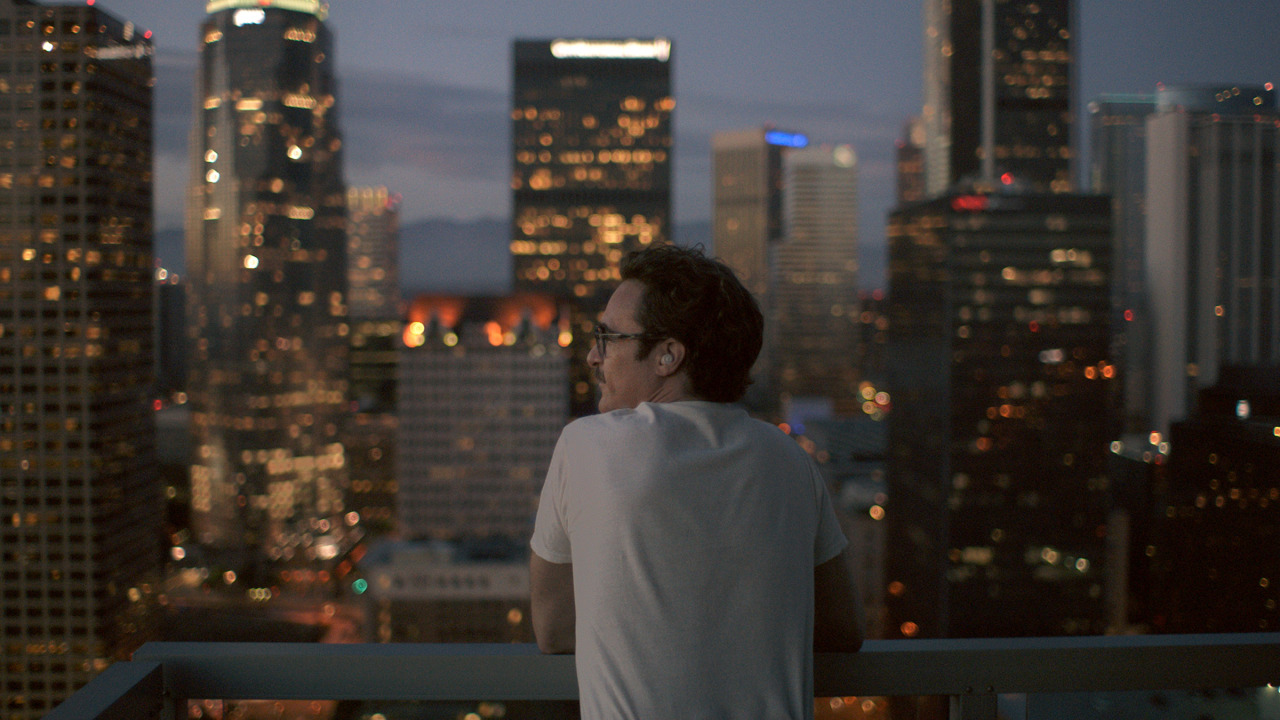
Her2

Om: In your movie Her, there was so little of this so-called social world, or what we call the “online social web.” Why?

K.K.: It didn’t matter. It wasn’t part of our story. We weren’t trying to tell the story of the future. We weren’t trying to tell the story of technology and apps and interconnectedness, except where they appeared.

That was Spike [Jonze]’s doing. He edited his story to say, Well, how can we keep reflecting back on his [the lead character’s] human condition? We can show that he attempts to hook up with somebody verbally online. Samantha was the surrogate of a physical presence. But you’re still dealing with the replacement of a human and the difficulty that it’s never the same.

Those connections happened through apps that we’re familiar with, but it wasn’t the story of those apps. It was the story of the attempt to be connected with another human.

Om: Does that attitude apply to online dating as well?

K.K.: There was a parallel between him safely trying to fulfill his need with meeting somebody else that he takes an online date. It doesn’t go so well, but I know lots of people that have, and it’s gone fine. It’s a funny thing that it exists, and some people take advantage of it and change the way we interact and how frequently we meet people, and other people don’t. I was talking about it as an example of the character’s experience in trying to go through these different options and still feeling like he was missing the human connection. And yet by Spike making his operating system humanized, he did feel connected to that, where he didn’t feel connected to some real humans.

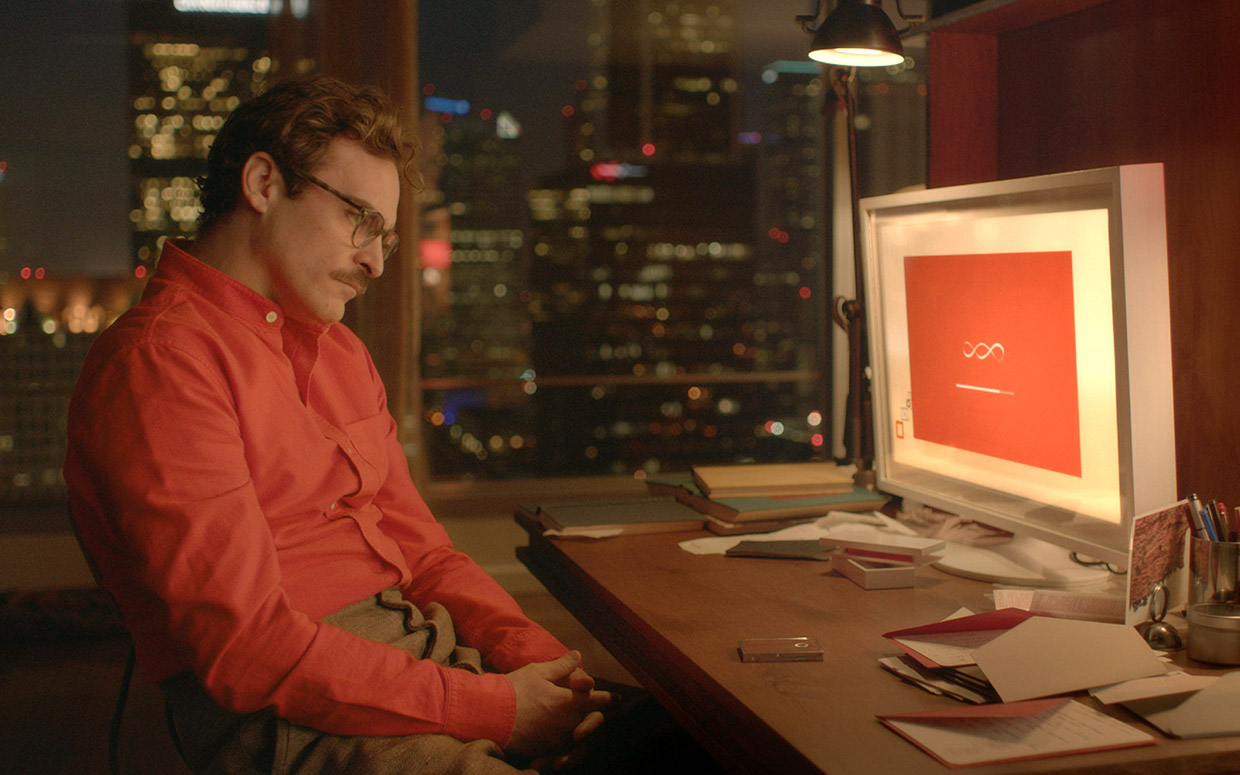
Her

Om: I was unsettled by the movie because it felt pretty real. At some moments I felt like we should have this now. It would save so much of the trauma that comes with online dating.

K.K.: I think I was joking that [online dating] is a surrogate to him, and it’s a surrogate for being with real people. It is real. People talk to people they’d never meet [in real life over] mail all the time.

Om: How does your creative process work? Because you’re not working with the familiar, and every new movie is different.

K.K.: It is always different, but it’s funny that I approached Marie Antoinette and Where the Wild Things Are and Her the same way. If you took the names of the locations and the eras and the problem-solving and the props away, I’m still trying to get to the simplest form of communication with every solution and yet still add some wonder and make it seem fresh to get your attention. And then also frame the human condition within the story.

Sometimes I think of it as sculptural. It’s like I’m painting in the background, but I’m never unaware of the story, which is the human element. It’s not just an abstract instrumental.

Om: The challenge right now for everybody, including me, is that all this noise in the ether has started to eat away at the ability to focus our attention. How do you stay focused and pay attention and listen?

K.K.: I’m not on Facebook. I’m not on Twitter. I have three email accounts: one for business, one for real letter writing for personal friends and another one for billing and the house. They get attention in different ways. I always respond and pay attention and keep clean my letter-writing to friends, and work has to be attended to in a different pace. You choose how often you engage.

Om: That’s a good way of living life. I took a two-month sabbatical from everything. It brought me back to normal a little bit. Unfortunately I can’t walk away from Twitter and Facebook. That’s part of my work life.

K.K.: Why, though?

Om: Because that’s how you engage with your readers now.

K.K.: You try to get them to pay attention.

Om: Right. Like, “I just wrote this, you should read this, let’s talk about it.”

K.K.: Do you feel insulted when they don’t want to read it, like you haven’t gotten their attention?

Om: I feel like I have failed to do my job.

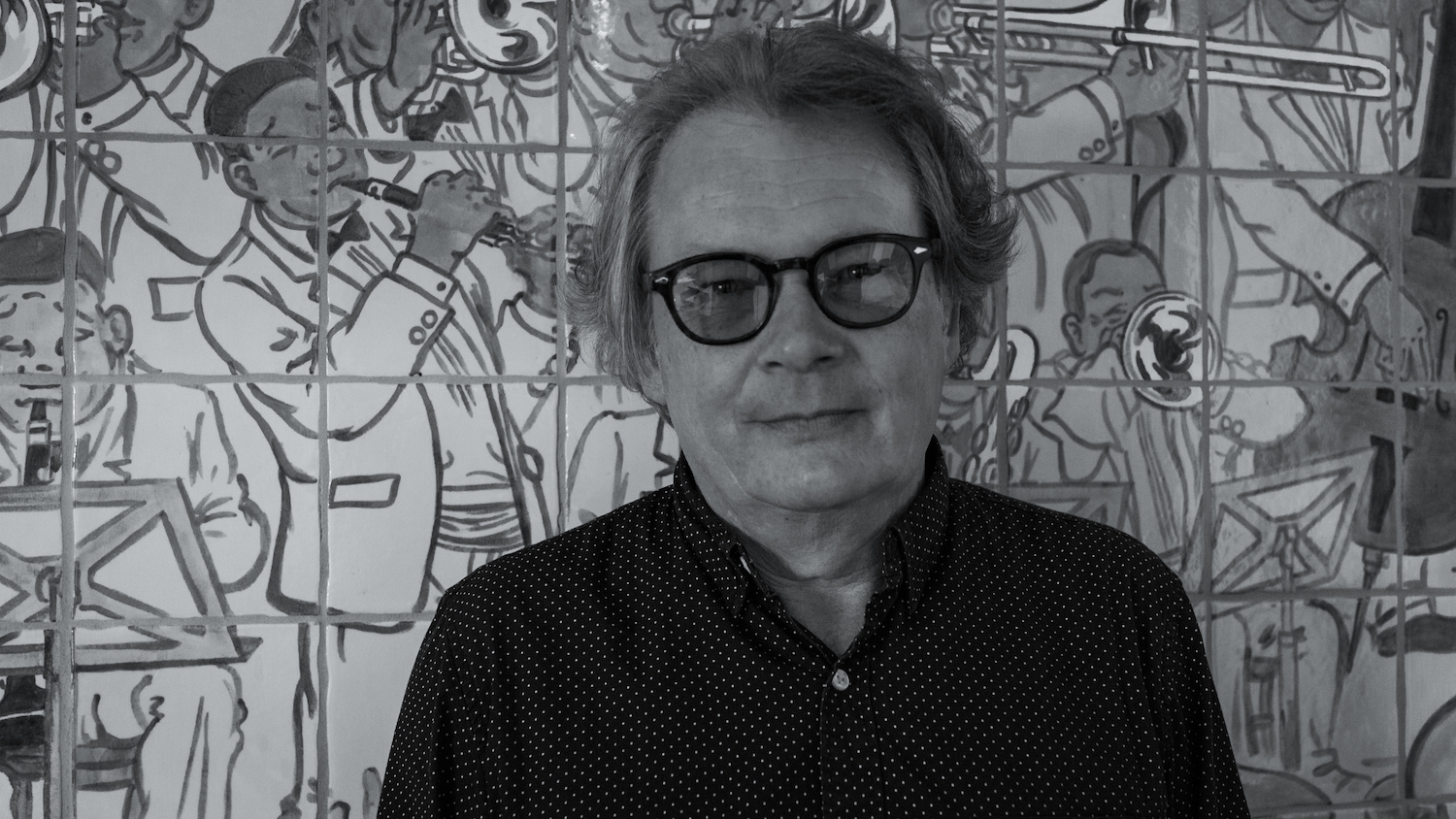
KKBarrett-05400

K.K.: It’s more failing to do your job if you haven’t brought them attention on something that will enrich their life, rather than just information. TMZ is full for information and it gets attention, but it doesn’t enrich your life.

Om: What do you make of the comments about choosing Scarlett Johansson as a lead actress and also the fact that Her could be the road map for technology’s future?

K.K.: I think it’s an armchair quarterback’s game to play “what is the future?” You can ask yourself, “What would you like to have, and what would you like to change?” All of that is avoiding the question of what’s wrong with now.

Are you paying attention to now? Why is everybody so hungry for the future, and why is everybody thinking that it’s going to be a dystopian future in storytelling? Why is it always so negative? It’s always going to be worse than now, or it’s always going to be so much easier than now. Why don’t we make it easier now, rather than wait for it? That’s a lazy disconnection.

Why don’t you live like you want the future to be right now? Tell yourself what it is, and then change your position now to be in that world.

Photos of K.K. Barrett by Om Malik. Still from the movie Her courtesy of Spike Jonez/Her/Warner Brothers

Her1

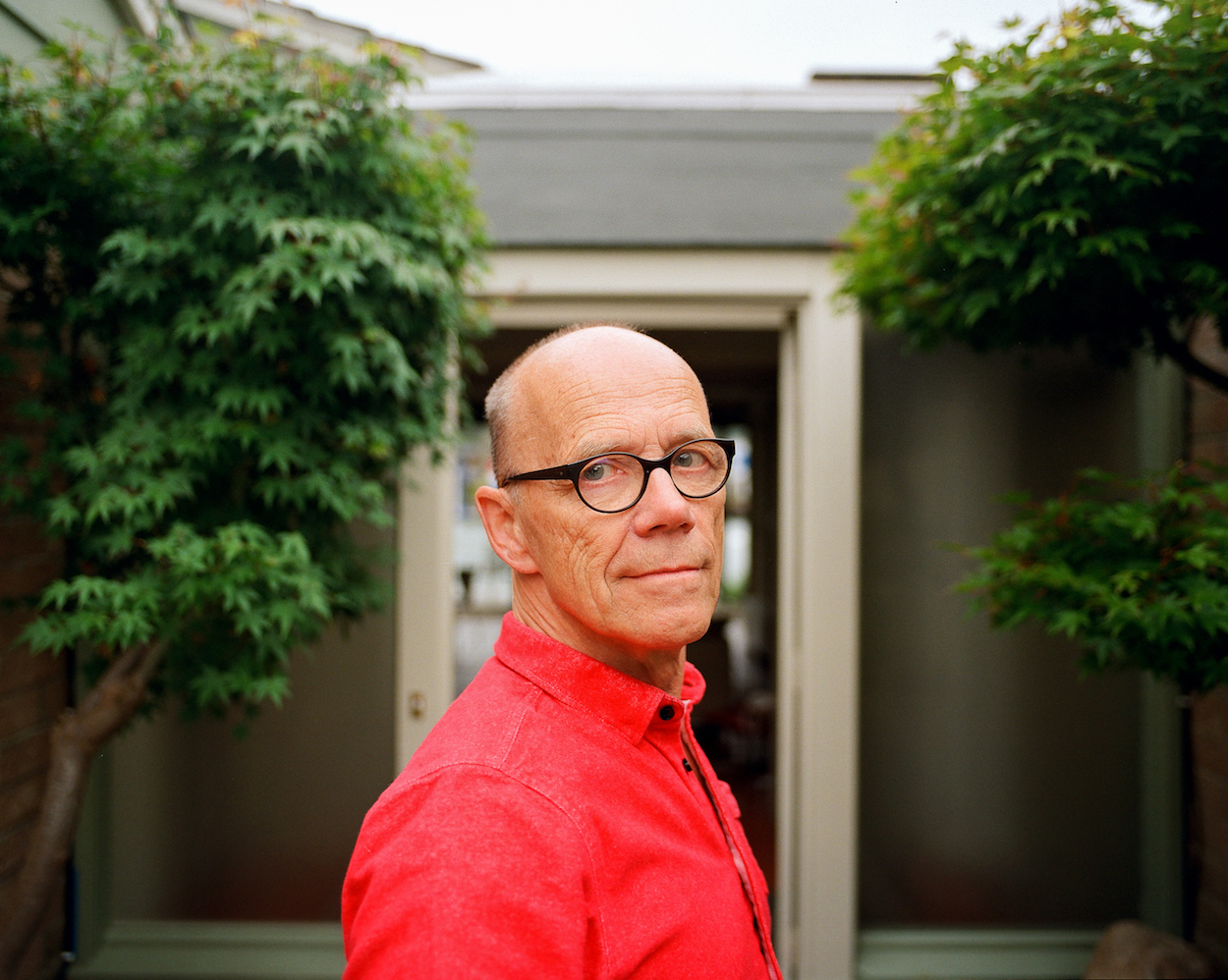
Erik Spiekermann

Life Story of a Legend

Om: Erik, I know you are a guru of typography and you are from Germany. But I don’t know much about how you became who you are. Would you mind telling me more about yourself?

Erik: I grew up in the north near Hanover, which is a boring part. Both of my parents went there after the war, even though they came from elsewhere. My father was a truck driver. After he came out of the war, there wasn’t much else to do. He was a mechanic by trade, but he was in the navy.

The “type” thing started early. We lived next door to a printer who was a good friend of my mother’s. This neighbor had a print shop. I used to go in there as a five-year-old. I would get the narrow pieces of paper that they would cut off whatever they were printing, and I would make long drawings.
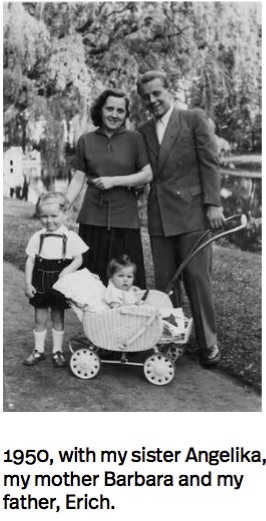
Erik-Young-3A print shop in the old days had a specific smell. It’s ink, petrol and paper and stuff. That’s one thing that I remember really well, hanging out at that shop and seeing all the machinery. I didn’t know what it was at the time.

Anyway, we moved to Bonn, then the capital. When I was 16, my dad told me to go to Berlin [to avoid getting drafted]. My dad had been in the navy in the stupid U-boats. He said, “I don’t want any of my kids to ever wear a uniform, because just fucking Nazis,” as he put it, “stole the best years of my life.” He was one of the few people who survived. Out of 100,000 U-boat guys, only 10,000 survived. He was grateful. He said, “My sons will never wear a uniform.”

So off I went to Berlin at 16 and lived there on my own for a couple years, which was pretty cool. I had little odd jobs. I worked at print shops. I did chalking on the sidewalks and played music. I had to make my own money. My parents didn’t have anything.

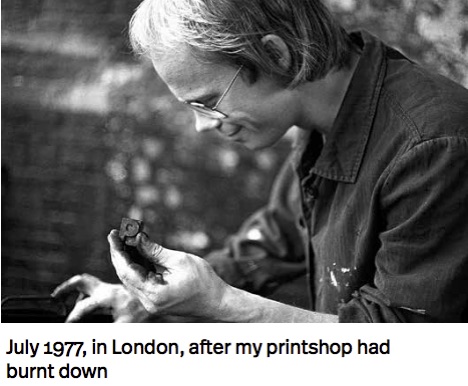
I had always been drawing. I had a little tabletop printing press when I was 12. That’s how I got into the printing part of design. I collected all this equipment in the late ’60s, because everybody was throwing it away. I had this pretty large letterpress shop. Then, for various reasons — I won’t go into it. My wife was English. We got chucked out of the house. So we decided to go and live in London. This was in ’73. Eventually I brought my print shop over there. We went for a vacation, came back, and the place had burned down. There had been a fire next door. Some guys were welding cars. My whole printing press, which was supposed to be my livelihood, was gone.

If you’re a printer and you know about type and type settings but you haven’t got equipment, what are you? A graphic designer. Because I could sketch. Instead of doing my own printing, I’d get somebody else to do my printing. Because I know so much about typesetting, I was a consultant for some typesetting companies in London. That’s how I got into type. I also knew the Berthold machines well, and the advertising business in London used those machines. Also, I was metric, and the Brits were trying to go metric, so I had an advantage.

Erik-Spiekermann-3

Design Back in the Day

Om: What was London like in the 1970s, from a creative standpoint?

Erik: It was great, because there were a lot of things happening ahead of the curve of the rest of Europe. London has always been a creative capital, and in those days new technology was moving into society. The whole corporate design business was actually invented. I mean, it came out of there. There was Landor, but I worked for Wolff Olins, and the two of them, Michael Wolff and Wally Olins, certainly invented the idea that you could have a studio of 60 people and still do cool work. I learned that business and design — or business and creativity — aren’t opposites. They need each other.

Om: Now we talk about “experience design” as part of the business process. Was it like that in the ’70s? Did people think about design?

Erik: It was mostly communication, [something to] enhance their business. It would give them the upper hand, or another value. The word “brand” hadn’t been invented, but that was what we were doing. We were creating and shaping brands, and the good companies saw it. Those are the ones who are still around today. We did work for Audi and VW in the late ’70s, because at the time they knew it was important to be branded properly, internationally.

Erik-Young-2

Om: When you started MetaDesign in 1979, what was the design process like?

Erik: Because we were German, we were very much about implementation. Making sure you had rules that you could actually follow, because it was monolithic. There was no internet. The English were good at concepts, and then they lost it. That’s actually a good combination, the English with their creativity and their weird ideas and then you get a German to make it work. To tighten all the bolts.

On English Eccentricity

Om: Why do you think the English have weird, creative ideas? I mean, Jony Ive is another example of that. It can’t be the beer that makes them weird.

Erik: No, the beer is lousy. It’s because the Brits are all over the place. There’s the Celtics, the Irish, the Scots and the Germanic part, the French part. The language itself is an amalgam of many languages. Their culture is a total mix of other cultures, but then it’s also preserved because of that island. Everything in England is idiosyncratic. I don’t know how they ever managed to have their stupid empire. I mean, how did the Brits conquer people? That’s another issue, I know, especially with you. How did they rule India, for Christ’s sake? For 200 years.

Erik-Spiekermann-1

Om: It’s like why companies become big, right? Microsoft became big not because it was exceptionally brilliant. All its competitors were stupid, like Netscape making bad decisions upon bad decisions. Now Google is not full of super geniuses; it doesn’t have a grand design. I think a lot of its competitors didn’t quite measure up, so it is winning.

Erik: But I think half the English creativity comes from the fact that they have always been an international country. There’s nothing there in Britain. They had a bit of coal and a bit of steel, but it’s not a country that has a lot of resources other than the weird people who went all over the world and brought back — I mean, they had immigrants there. The first black people I saw were in England. We didn’t have any black people in Germany in the ’60s. They were all Jamaican bus drivers in London in the ’60s, when I first went there. Indians? We didn’t have any Indians in Germany in the ’60s.
Erik-Young

We had nothing. We killed our own Jews and we had no immigrants until the Turks came in. So I wasn’t used to foreign cultures, and in London, everybody was foreign. London’s been like this for a few hundred years, though the Brits wouldn’t admit it. The fact that you go and have a curry. A curry is an English meal. It’s just as English as bangers and mash.

I think that’s part of it, by definition having been a mixed place whose people have traveled and started colonies and brought English to other countries.

Om: They make good shoes, though.

Erik: Totally. I used to have English cars all my life. I still have English bicycles. I wish they hadn’t ignored their industrial background. I mean, they invented the Industrial Revolution for chrissake. The Germans only invented chemistry when it came to it, but the British had the mechanics down. They invented the first steam engines. They lost that, for various reasons.

They’re still good at making certain things. Maybe it’s because they can’t make things on a large scale, maybe that’s why they are so creative. They start things they never can finish.

We go the other way around. We’re not creative in Germany; we’re good at making things. Too good. We always make things 120 percent. You buy anything from us, it’s always over-engineered.

Design Changes

Om: Back in 1979, when you started MetaDesign, was the process still manual? No computers, right?

Erik: I got my first Mac in ’85 ‘81. I was ahead of the curve. A lot of my clients were from the typesetting industry, so I was quite computer literate, as much as you could be in the late ’70s. Linotype code was like HTML.

Om: When did you see the transformation of design business to the computer?

Erik: In 1985 I had the job to design a new typeface for the German post office. I went to Linotype to talk to them about digitizing my sketches, and they had a Macintosh. I had seen photographs but not held one. So I lifted it up and put the little floppy in, and then I borrowed this thing and went over from Frankfurt to Bonn, to the ministry.

I went in and told these guys, “This is typesetting & is the future. And this floppy, which I have in my shirt pocket, has the typeface on there.”

They looked at each other and went, “This guy’s gone mad.” But I knew intuitively, just like with the first smell of printed paper, that this was the future of my business.

I bought this first Mac. I was the first graphic designer to own one in Germany. My friends in the business thought I had gone mad, because it was crummy compared to a piece of typesetting equipment. You had the stupid bitmaps and the tiny black-and-white screen; it took forever.

Those floppies in there? [Imitates grinding noise] I didn’t even know, but I felt this was going to be the future for our business. I stuck with it, and then I did some work for PageMaker in Seattle in early ’87.

I did some work for Apple in ’86, ’87. I got the first LaserWriter as payment, which at the time was like 20,000 marks. It was more than a Golf, the car. I did a lot of work for Adobe, and I got free Photoshop and stuff. My instincts had been right.

I knew everybody, and so we started FontShop in early ’89. We were the first-ever distributor of fonts. Everybody else sold their own fonts, and we sold everybody’s. Our first catalog was 800 fonts, and then it quickly grew to 330,000. And the Font Book, the last one that came out in 2008, was 1,600 pages. And then we stopped printing, because there’s no point printing anymore.

Erik-Spiekermann-2

Om: How did you react to the internet when it came out?

Erik: It was a godsend. We started MetaDesign in San Francisco in 1992, and by 1993, when the first browser came out, we designed our first website. We designed a website for IDEO at the time. We did a lot of early websites in 1993, 1994. We worked for Apple. We did some flat interface for them. We did icons for Apple, we did stuff for Adobe, stuff for HP. We worked for all the high-tech guys, so it was obvious that we had to have computers.

One of our challenges was to always have the best equipment. We never saved money. We always bought the best equipment: the most expensive computers, the most expensive printers.

We made our own color printer in 1990. We bought a Canon 100, and I knew from Adobe that they were working on a RIP, which Adobe wouldn’t admit. And the Canon guy said, “No, no, it’s a copier.” And I said, “No, I can make it into a printer.” They said, “No way.”

I had these two Dutch guys who hacked a printer driver. We physically soldered it, our own self-made hack to the Canon 100 copier, and made it into a printer before there was anything on the market. I always had some hackers in there, because I wanted to have the coolest shit. We had an A3 color printer, which nobody else did, that I could drive off my Macs in April 1990.

Om: It must have been frustrating for you in the late ’90s when the internet was exploding, because the typography was so bad.

Erik: Yeah, but it was obvious then. Everybody was complaining, but I said, “Just wait.” I said the same 10 years ago, and I say the same now about e-books.

There’s a tendency for human beings to interface with things that are pleasant to us. It’s taken 600 years, from Gutenberg to now, for the book to achieve the shape that seems to be optimal for our eyes and hands. Everything that is electronic will achieve the same standard. It will be a different substrate, but there is obviously something in it. Otherwise it wouldn’t have survived for 500 years. The same goes for the screen. I knew it wasn’t going to stay as bad as that. In ’91, Adobe published ATM, Adobe Type Manager, when some of the bitmaps went smooth and there was anti-aliasing. I know it has taken 20 years, but now it’s as good if not better.

The typesetting you get on the computer these days is way better than anything that had ever happened in metal before. It’s a thousand times better. It doesn’t mean people do it as well, but they can. The tools are the best we’ve ever had.

Photoshop! When I saw my first Photoshop demonstration, in ’87 at Adobe someplace, I thought my world had just opened up. You could put pictures on the screen and manipulate them. I remember that picture so well. There was a guy in a raincoat on some square in Italy with pigeons around him. They took this guy and gave him a motion blur so it looked like he was walking on the computer in real time. I thought I’d died. I knew that this would not only change my world but also expand it tremendously. It’s a threat, but disruptive technology’s what we thrive on.
Erik-Spiekermann-5 

The Future of the Screen

Om: Now we have a lot of new things out in the market. For example, Typekit came out. Where do you see web design and tablet design going?

Erik: As always, things are in flux. A lot of things haven’t found their final form yet. Like I said, the book took a few hundred years to find its final shape, which hasn’t been improved on since the 1600s: The binding is still the same. The printing is still the same. It’s gotten better, but the principle hasn’t changed.

The same is true for the computer: The interface is there to stay. But we’ll have a flat screen that’s backlit. Tablets haven’t found their final form, our intelligent phones haven’t found their final form. But all these things will coexist, and they’ll also be developed until they have found 100 percent of what they’re good at.

Right now we’re doing things on certain machines that we shouldn’t be doing. We shouldn’t be reading long text on a standard phone. It’s stupid. We do it because it’s there, but that’s going to go away. The iPad already moved that over. None of these things have matured yet, but they all give a promise. Some of them will disappear.

Om: Do you think content consumption is defined by screen size?

Erik: There are physical limitations as to certain size. It’s nice to read 10 words a line, 50 to 60 characters. This is science. This is not me. This is something that we like, the way our eyes move in little segments. There are physical limitations to our eyes: the curvature of our eyeballs, the space we have in front of us, the distance from the eyes. That’s human, and no machine can ever change that.

There’s a certain size that looks good to us. There’s a certain contrast. Total black and total white is horrible. That’s why books are nice, because they’re not totally black or totally white. We like a little softer.

I download all my German papers. They either come as PDFs, which is pretty stupid, so you have to zoom around, or they come as dedicated apps. What it cuts out is coincidence, happenstance, whatever you call it.

Whether it’s The New York Times or especially the Frankfurt Allgemeine paper — a big, large format, twice the size of this — I open [the paper version] and I find things that I wasn’t looking for. On the screen, you have to have a hierarchy, because you can’t fit so much. You have to look for something. Whereas I open the [printed] page and I will find something I wasn’t looking for, I would have never looked for. I wouldn’t know what to look for. I find things that I wasn’t expecting, and that is enriching. I only need a couple headlines to know it says Ukraine or it says Sochi and I’m done, but the stuff that enriches me is the stuff that I wasn’t expecting.


If I read The Economist, which I designed myself, of course, I will go to the contents page, because there I can find all. Opening up and relaxing and finding shit, that’s one thing that is prevented by the constraints of the screen.

We have different physical demands and psychological, mental, emotional demands that can’t be met by one machine nor by a book nor by a magazine. That’s why all these things coexist, and they will coexist in the future.

Waste Not, Want Not

Om: What do you make of the whole internet of things and all these connected devices?

Erik: There’s a great promise as much as a threat. For me, the great promise is that a lot of things that are not happening in this country and other countries — for example, transport. People get stuck in two hours of traffic jams and stuff; it’s horrible. One guy sitting in a car crossing the bridge is stupid. It could be four people in there, right? And the same goes for buildings. The same goes for anything that 90 percent of the time isn’t being used. That’s one thing I have great hopes for, that whatever equipment we use will be more accessible and therefore more cleverly used.

It also means that, of course, the industry will be selling less of those things. Not everybody needs a car anymore. What’s going to happen to the car industry? Which my country totally depends on. The younger people in Germany don’t buy anymore; they use Zipcars or Car2Go or bicycle, trams, taxis. They are pragmatic about transport. There’s going to be a big revolution in transportation in America.

I think we are going to see a lot of change in the next 10 years there. You have an app; you know when you can get on the bus or in a car or bicycle. You don’t have to chance it. So you can plan your day without having your own car. That’s a great promise.

The same goes for the waste of energy that happens in our houses every moment. All day we are heating up water that we use once a day. The issue is with the stupid tanks here, which we don’t have back home, heating a whole house. Then there’s lighting streets, lighting bridges, lighting stations when there is nobody there. All that stuff will go away — that’s my great hope. It’s going to take at least 25 years, another generation.

Om: In a conversation a couple of years ago you were critical of Apple’s use of Helvetica Neue. I wonder now that we are in the mobile age, Why aren’t we inventing special mobile-first fonts?

Erik: We have some, just Apple chose not to [use them]. Steve Jobs loved Helvetica, and they put it in there. It’s rubbish. I designed the Mozilla typeface called Fira, which is meant for mobile. It does way better on screen than Helvetica. Mobile fonts are doable, but for some reason are behind there.

Om: Why do you think no one is doing it?

Erik: It’s ignorance, because these are engineering companies. Essentially, so is Apple. Jony is a mate of mine, and he is a good designer, but he is more of an engineer. He is surrounded by these kids in their twenties, and they go for whatever is trendy. For some reason there is nobody in management to tell these guys to go to us for some advice.

They’re all bound by these 25-year-olds who pick whatever is trendy. [The mobile app] hasn’t got into their culture yet, but it will, I’m quite sure. User experience and user interface are becoming so important. In the end, that’s going to make successful products.

Advice for the Next Generation

Om: If you were to give advice to younger designers, web developers, web app makers, what would you tell them?

Erik: Learn as much about our culture as you possibly can, by reading, by traveling, by involving yourself in things that go on. But don’t become an artist. Don’t think, “I’ll do it intuitively.” You have to learn if not to code at least to appreciate code, to understand code. Because code is what nuts and bolts were a hundred years ago.

If you don’t know anything about mechanics, you can’t survive in this world. If you don’t know anything about how a computer works or code works, as a communicator, which is what a designer is — the interface between machines and man, that’s what we are. We are the interface, we interpret what the machine says into visible language. If you don’t understand how the machine works, you’re going to be laughed out of the room by the engineering guys, because you can’t communicate with them.

Om: Do you feel satisfied with your career and what you have achieved so far?

Erik: It’s difficult, because I never thought I had a career. I never had any plans. I just did shit because it came up, and I got out of MetaDesign on bad terms. There was a major design issue that we all disagreed on, and I left. It’s still going, but it’s not me anymore. That was a major black spot in my history, as it were, that I never managed to finish that.

But other than that, yes, whatever I’ve touched, I’ve never made a loss. I’ve created work for a few hundred people. A few hundred families have survived because I have had ideas and I’ve started businesses. In that way I’m quite proud. But I can’t measure my advancement, my success or anything, because I never had a young self who said, “I’m going to make a million.” I never sat down and said, “I’m going to do this.” It just happened. It’s chaotic.

A few years ago Eye Magazine realized that everyone they talk to in Berlin worked with me at one time. So they had this chart of about 600 people that work on their own or have their own studios or whatever, and they all worked with me at one time. That’s been my major achievement, that I’ve empowered a couple of generations of designers in Germany, America and Britain.

Photos courtesy of Erik Spiekermann by Cliff Englert and Erik Spiekermann.
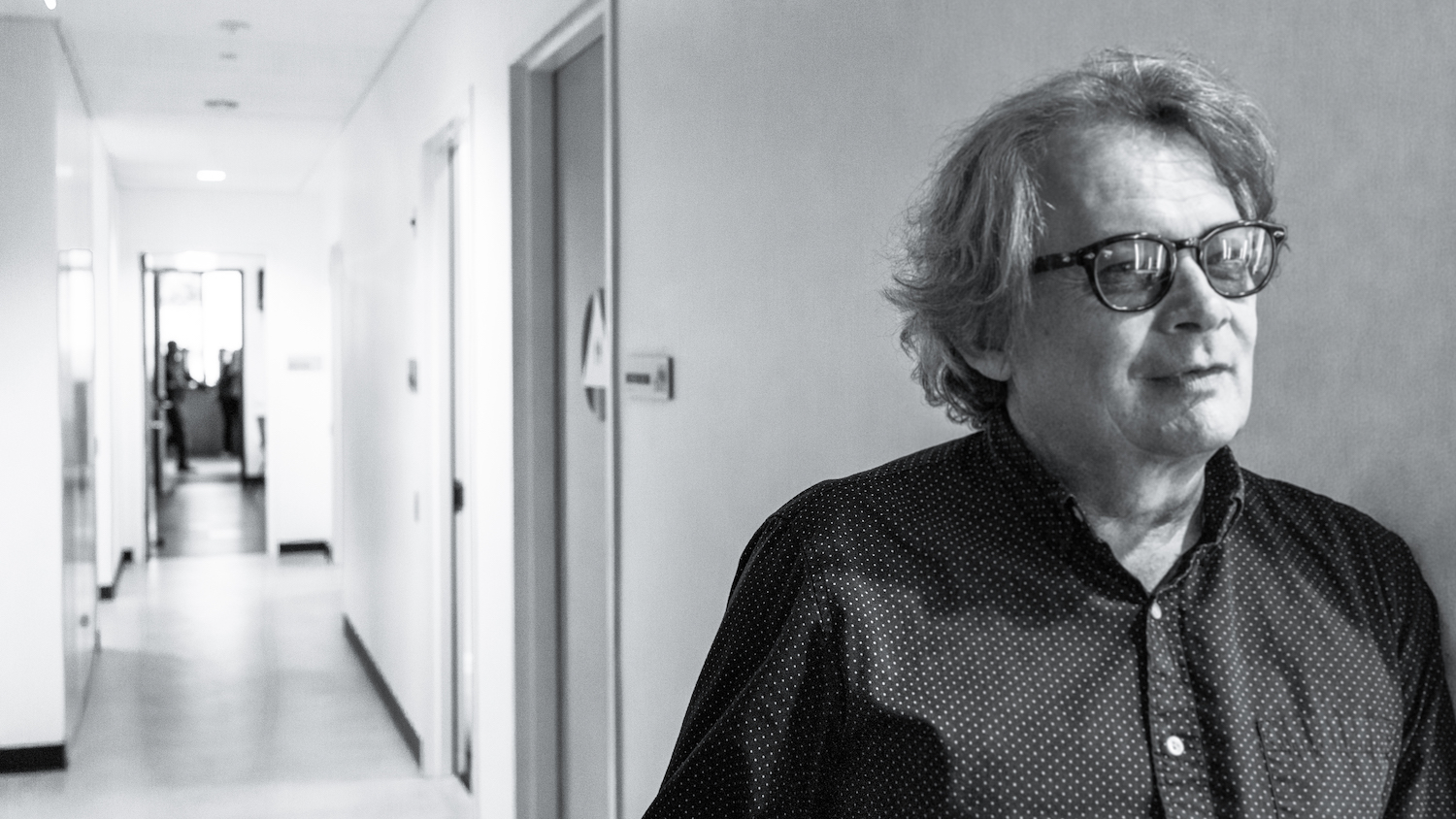
Jennifer Magnolfi

[topic]Architecture as Art[/topic]

Om: Tell me a little bit about yourself. Have you always been fascinated by buildings?

Jennifer: I don’t know where that started, but I know it’s been there for most of my life. I was fortunate enough to spend many years in Europe, specifically in Italy, when I was a kid. It was difficult not to be enamored with these incredible structures, most of which, in Italy, are churches or historical structures which have in many ways withstood the test of time. Some of these structures are feats of engineering in their own right: incredible cathedrals, truly massive domes. Others are ordinary places where you would imagine people spent their lives. They lived in these places, they potentially worked there or they had their own business, or in some cases we’re even talking about humble places where people worshiped.

I was one of these curious kids who used to take things apart: My dad’s television or any gadget in the house was fair game. I saw buildings as interesting engineering systems, without knowing the word for “engineering.” What always fascinated me is that these buildings — it’s a lot more than the engineering systems. The ones that are awe-inspiring, the ones that withstand the test of time, are able to capture a collective expression of a time.

Buildings are different than other forms of cultural production. They’re different than art. Two-dimensional art, for example, or sculpture or music, even. The reason they are different is we live our lives in them. We live in these environments.

My interest has led me to understand this expression in the 21st century, where, for most of our lives, we live in digital space. The world is changing to create the basic building blocks of a digital society, which means that many of the things that shape our lives — our memories, our pasts, the way we connect with others, the way we create new ideas, the way we are inspired and sometimes the way we learn new things — doesn’t only happen by walking through the physical world. It also often happens by interacting with the digital world.

We are in the middle of the second decade of the 21st century, and we are at the beginning of understanding this physical digital convergence as it impacts buildings and design.

Om: We had an agricultural-based economy for a long time, and then industrialization happened and we had an industrial economy. Between those two big movements, what have you observed in various buildings and how they reflect those eras?

Jennifer: You have a macroeconomic driver that brings a new technology into the world. Society organizes itself to introduce that technology and that capability into other aspects of daily life, whether it’s by building infrastructure or by developing services or products that leverage that infrastructure. And after that, something happens that begins to organize the way people work in that context. Often the spaces are direct reflections of the way people need to work.

To make an easy example, take the United States after the war [World War II]. You had an emergence of white-collar workers and the need for people to develop knowledge. That effectively also produced quite a lot of paper: Paper was how people communicated, decisions were made, things were recorded. At the same time you had a development where the technical structure of the building itself would allow for large, open plans.

The convergence of these two contexts, where workers were shifting from the plants and the factories into the office and buildings were able to now open up large floor plans for space allocation — the technology emerged to serve that context. That is what we call the cubicle, or systems furniture. It was a tool to allow people to literally move through space in an organized way by creating hallways, corridors and clusters of people. Also to allow individual workers to organize their work, which at that time had to do with typing machines and eventually telephones.

I’m always asking, What are those key technologies that change, that cater to this new emergent need that then is addressed by a design solution or an architectural solution? This is only one of the more recent cycles in history.

Mad Men Office, AMC Networks, Office Spaces in 1960s
Sterling Cooper office in Mad Men, Season 2. Photo courtesy AMC Networks. Photo credit Carin Baer/AMC

[topic]Sweatshops to Startups [/topic]


Om: In the Garment District, garment factories, essentially sweatshops, are now being converted into startup labs. It’s ironic that those places are now being retrofitted for a whole new generation of companies and workspaces. Sometimes everything comes full circle, doesn’t it?

Jennifer: Yeah, it’s interesting. There is an aesthetic sensibility that the startup community connects with when it comes to those spaces. I don’t necessarily think that there is a connection to the activities that happen in those spaces, but there is something that’s appealing. You can see that also in Detroit and Chicago, an attraction toward these older buildings that create loft-type environments as they’re marketed but are effectively large buildings with high spatial volumes with a lot of light. Because the buildings were industrial by nature, they’re also designed in a way that’s honest in terms of most of their systems — for example, the electrical and fire protections systems are exposed.

That type of transparency is well aligned with the values of our generation, which aspires to have systems that are designed for transparency, openness, sharing, co-creation. I don’t think there is ever a conscious connection to those expressions. It’s more subconscious. Spaces and buildings have the ability to communicate certain qualities, which we then experience when we inhabit them.

Herman Miller, Office Space, Work, Offices
Photo courtesy Herman Miller


Om: Do you believe we are at the end of the cubicle era? Can you elaborate on that and how it relates to this emerging digital economy?

Jennifer: The technical name for the cubicle is “systems furniture.” It was developed in 1968 as a modular tool that would allow a worker to have, ergonomically, a sound way of organizing their work as well as their day. As I mentioned, it was the tool that allowed organizations to organize their workforce as well as their spaces, their real estate assets.

I don’t prophesy the end of the cubicle in itself. That will play itself out based on larger commercial forces. But the last decade suggests we work in a different way, because we interact with each other in a different way. We do that in a digital space, the very way in which we construct new knowledge. We create new ideas. We learn about new things. We connect with each other for professional or personal reasons or for simply gaining new information or data, and it happens in the digital space. Those types of interactions and that type of user experience bear a certain design DNA. As users, we choose physical environments that support our digital work.

In my work, I don’t focus that much on the end of the recording itself but on the effects of programmability. By definition, a digital environment is programmable. That effect demands a different set of performance requirements in the physical space.

[topic]Programmable Workspaces [/topic]

Om: What do you mean by “programmable”? I have a different idea of programmable, which is network-centric and software-centric. Are you saying “programmable” as in there is no permanent desk space for workers or the office adapts to the needs of the moment?

Jennifer: This notion of programmability is derived from computer science language. Originally, the notion of programmability was from an R&D perspective. In R&D at Herman Miller, we worked on this notion, What is it about the way in which digital space is constructed that is applicable to the physical environment? The spaces that we are working with need to be designed for a different set of performance attributes.

The change in workspaces is driven by networks — wireless, wired and social networks, which have transformed society in the last decade. There is now a lot more complexity in how we design workspaces. We need to find ways to integrate information and data systems with people to create sophisticated interactions between humans and machines. These requirements were not present even 10 years ago, but they are now normal.

Om: Are there best practices for this new world? What should a young startup be thinking about in terms of an office?

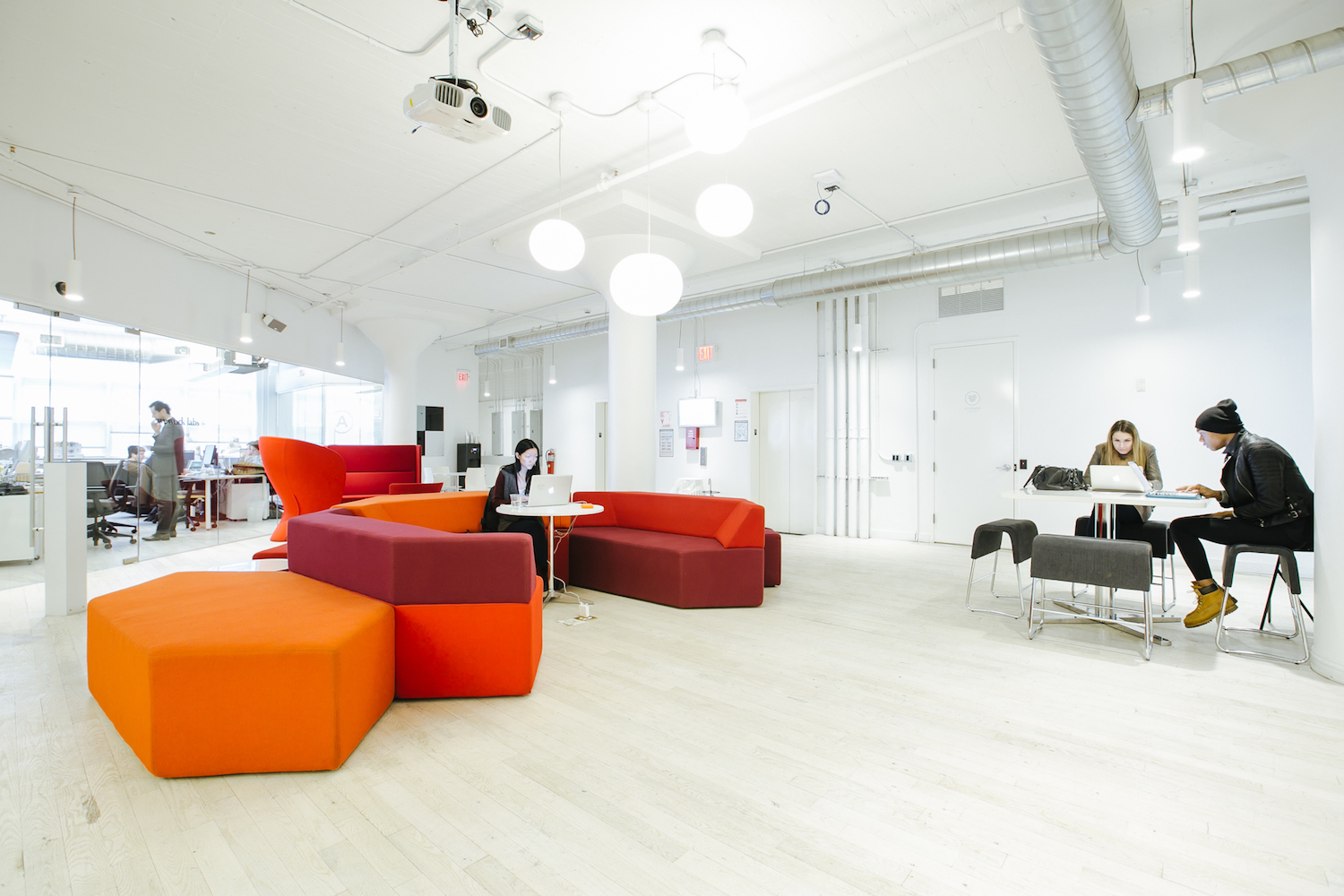
WeWork, Future of Work, Office Spaces,
Photo courtesy WeWork Soho West, New York City

[topic]New Office Space [/topic]


Jennifer: The best practices are emerging from the world of coworking spaces, hacker spaces, maker spaces — environments that are designed around core principles of openness, sharing and co-creation.

Those types of environments create a wide variety of rooms for group interaction. They have building blocks of space that are specific to either one-on-one interaction or small-group interaction or large interaction, and all of them have the ability to connect to your data in a way that’s more social and more public. The environments themselves are informal in terms of the culture of the space. Most young startup environments are simply focused on the activity itself, the bandwidth and the ability to connect to the network.

Another layer that is new is the role of community manager. It came from online communities, but it didn’t exist in the world of office spaces. There wasn’t a job description. To some degree, for larger corporations, there still isn’t. But there is a new role that emerges in these contexts. The person becomes the linchpin of an environment, and their role is to curate physical interactions as well as the digital conversations of the community with the purpose of accelerating productivity, learning, engagement, the things that are important for that startup at that time.

Mod.Work, CoWorking, New Office Space, Work
Photo courtesy Mod.Work, a coworking space in San Francisco


Om: Are there any new office furniture companies that cater to this environment? There is an opportunity to create new furniture and new accessories, don’t you think?

Jennifer: Yes, for sure. There are companies or even products that have been designed for this new type of worker, the startup mobile worker of the 21st century, who is constantly connected and mobile.

We used to define “work” by crossing the threshold of a physical building that we called “the office.” Once we did that, we entered into this mindset that we were at work, and we were doing work. Today that same passage happens when we connect to our work-related data on our smartphones or other tools.

Our cities can be seen as a workplace, especially in urban cores, where you have a workforce that’s a lot more mobile and a higher concentration of startup and technology workers. But I don’t think it’s only a city phenomenon. It’s more of a structural shift in the world of work. People are beginning to look at environments that would not be traditionally considered workspaces, like hotel lobbies. The Ace Hotel in New York, for example.

Or even real estate developers are beginning to reinvent, in their residential buildings, entire floors dedicated to shared workspaces. Older buildings are being readapted as startup clusters of incubators. Workers choose where to work based on their specific needs at a much higher rate than they could before. Now, that doesn’t mean people do that every day of the week, but it certainly is more of an option.

The products are very much emerging that are addressing this new world of work, and they are different expressions of space that all of a sudden we can transform into a workspace, in real space and real time, as long as we’re connected to our digital workspace.

Om: What do you think of the development of a concept like WeWork from a wider cultural perspective?

Jennifer: WeWork and coworking in general point to a deep structural shift in work culture, characterized mainly by two elements: a consumerization of the workplace and the emergence of a new set of values around work and the office that are more aligned with the 21st century worker. Workspaces that can deliver on both of these elements resonate greatly with today’s work culture.

Historically, workspaces were designed to communicate hierarchy, confidentiality and organizational structure. The design DNA of spaces like WeWork and others resonates instead with net­ culture and is built on values like openness, sharing and co­creation. The work experience is organized to communicate and reinforce these shared values and, in successful cases, this is achieved at scale, operating almost as a “work platform” that supports a wide range of companies of different sizes and across multiple industries.

Jennifer Magnolfi, Office Space Guru, Naveen Selvadurai
Photo by @Naveen


Om: Do you think we will see some of WeWork’s design concepts translate into the wider workplace?

Jennifer: Yes, in some ways it’s already happening. The innovation in the real estate business model (e.g., shorter lease terms, new contracts and insurance terms) and the corollary innovations in the way spaces like WeWork have to be designed and managed (e.g., formalized community manager roles in the office, distributed amenity spaces for all) are an appropriate response to a culture of work that is changing.

In the last few years, design professionals and manufacturers within the commercial-office-interiors industry have been exploring how to integrate elements of coworking into more-conventional corporate workspaces. This has taken many forms, including new furniture and product lines and different approaches to planning, as well as some new services inspired by the way early coworking communities used apps to optimize their work experience. Considering the relatively small total square footage of coworking spaces versus more-traditional workspaces globally, or even the relatively small number of coworkers, this level of interest is significant.

Photo Courtesy: FuseProject. Yves Behar designed new modular furniture for this programmable office concept for Herman Miller
Photo courtesy Fuseproject. Yves Behar designed new modular furniture for this programmable office concept for furniture maker Herman Miller.


From an interior design perspective, WeWork in particular has a distinctive feel. One of its signature design elements is the use of demountable clear glass walls with black frames to divide members’ offices. This simple functional move allows WeWork to easily reconfigure the office layouts as the customer’s needs for space or location change. Most importantly, however, it allows light to pass through most interior spaces, giving occupants auditory privacy inside their own offices while creating the shared visual effect of sitting in a large, open ­— and busy! ­— community workspace. Another consistent design element is the informal but high­-end styling of the workspaces through a broad mix of design pieces, be they furniture, wallpaper styles or decorative elements, all curated with great attention to detail to create a lively yet professional setting.

These elements of the design concept are easy to replicate or reproduce. More difficult to replicate, however, and in my opinion more unique to the WeWork experience, is its speed and focus on experimentation. In practical terms, WeWork’s ability to interpret and quickly package through space or services what startup culture or small businesses need from a workspace or a work community (i.e., product and membership offerings) has been key to its appeal and growth.

Examples are combinations of access to different types of environments and fellow community members and services that support a range of needs for different stages of growth,­ from simply designed phone booths to elegantly furnished community spaces to talent or skill search and recruitment to client-facing event spaces to honesty markets to purchasing healthy snacks through the app to discounts to HR and group health benefits. All of these are possible and relevant once a certain scale is reached, and they should be seen less as features of a new kind of office concept (although they are) and more as live experiments into a rapidly evolving workspace model that reflects what users need most:­ constant learning and flexibility to manage constant change.

WeWork, Office Space
Photo courtesy WeWork

[topic]Workspace Is Social [/topic]

Om: Is the economic reality of smaller businesses that can be scaled with technology going to have an impact on how we view the office?

Jennifer: Physical space plays a significant role in staging the conditions for learning, collaboration and building a shared culture. This is unlikely to change in the near future, but it’s easy to see how the design requirements for offices are evolving.

If we look at images of offices in the 1950s and 1960s, what they reveal about the office is quite interesting. Echoing the layout of factory floors and the management principles of the time, the production of information in the office, a task achieved largely through paper, was structured in a linear fashion. All of these factors contributed to a model of the office that effectively lasted for decades.

Much is different now. Most workers are mobile, they organize themselves as networks, and the production of information along with most companies’ shared knowledge is digital. However, one similarity remains: The office is changing, because the nature of the problems that are solved in it is changing.

From a design perspective, a workspace is a social and technical system that can serve several needs for a company. One of its most important functions is to stage how people collaborate to create value. In my work, I see two specific and generalizable needs for which physical space is crucial: One relates to speed and scaling, the other to how teams approach complex problem-solving. Both variables are key to how we perceive and therefore design the office.

The first space variable relates to the scenario you mention. For example, in a startup or small business context, knowledge-sharing and acceleration are important team dynamics for scaling. Spaces are designed to emphasize socialization, ­fostering “collisions” between people and creating interactions that increase learning and convey energy and, ideally, optimism. This happens through a specific design approach as well as the operations and management of the space. (Background music in shared areas, office tours with prospective members, meetups and social events after hours are not uncommon occurrences.)

Photo Courtesy: FuseProject. Yves Behar designed new modular furniture for this programmable office concept for furniture maker, Herman Miller
Photo courtesy Fuseproject. Yves Behar designed new modular furniture for this programmable office concept for furniture maker Herman Miller.

Until recently, this kind of energy was seen in few work contexts, notably in Silicon Valley offices circa 15 years ago. In most other contexts, an office constituted a necessary operational expense, often a long-term sunk cost. Today many workers and companies can choose a “workspace product or package” based on what kind of value it will provide them. Once all the practical aspects linked with managing an office facility are removed — like scheduling cleaning services, restocking printers, upgrading Wi-Fi — the choice of workspace becomes a more nuanced decision, and, thanks to monthly membership terms, arguably a lower risk.

Many recent graduates, particularly those working in technology ventures, perceive the workspace as something that can change fast ­or is changed ­as a team grows, with relatively little investment by a company. For many of them, scaling the business is de­coupled from increasing the size of the workspace. Once a company reaches a certain scale in terms of physically co­located employees, they may “graduate” to a dedicated office,­ sometimes a different address altogether. This way of perceiving the office would not have been possible a few years ago. Now it is simply a reality.

Om: What are the social implications of working wherever we are? Not at the technology level, but at a more human level. How does this impact the whole society? It’s like, if you’re working everywhere, when are we social? When are we enjoying our families or relationships?

Jennifer: It’s a time of profound transformation, and I agree with you: Those are the important questions.

We create our own structures and our own social norms. For example, we know how this will work with technology, how it’s acceptable in the social media space to be connected to people that are your colleagues at work as well as your family and friends. They’re convergent. They’re all in the same space, and it’s all the same experience. Similar types of adaptations are going to happen, even how we organize our time, as well as how we organize our workspaces in our cities.

There is an opportunity to redefine many things as well as to recapture certain values and certain things that are potentially important for people. I don’t see that the future is going to be a place where we are constantly working and we’re constantly connected and we are losing our sense of self or our sense of our family values or our connections. But I believe we are redefining the richness of those, and the place that they have in our lives.

Related and Recommended Links:

  1. 1. Fuseproject’s Herman Miller public page, where you can check out the new collaboration-centric office furniture and design
  2. 2. “Away from My Desk” by Jill Lepore, The New Yorker
  3. 3. “Innovating in the Workspace” by Jennifer Magnolfi, Fast Company
  4. 4. “Is This the Office of the Future or a $5 Billion Waste of Space” by Andrew Rice, Bloomberg BusinessWeek
  5. 5. “Living in the DisneyLand Version of Startup Life” by Nitasha Tiku, BuzzFeed News

Yves Béhar

What Is Connectedness?

Om Malik: Recently I heard a talk by industrial designer Sam Hecht, and my big takeaway was that all of these industrial designers are still designing products from the user experience standpoint, but none of them are thinking about connectedness.

Yves Béhar: For me, whether I look at a non‑connected product or a connected product, they’re always connected, but they’re connected to the human experience. There are no electronics except for quartz movement in this new watch or the furniture system for Herman Miller: They are highly connected to what people want to do emotionally. They’re highly connected to those pent-up desires.

The connectedness can be technological or otherwise. But most importantly, that connectedness has to be what design preoccupies itself with: the human experience. Technology preoccupies itself too much with speed, with efficiency, with features. But design preoccupies itself with the human experience.

Om: Now we as a society are increasingly used to speed and being connected all the time. To think about design without that thing in the back of your mind, I would say that is half the experience, not the full experience.

For example, when I looked at Nest, it felt like a complete product. But the minute it didn’t work as effectively by being connected, it lost some of its beauty. That is becoming a reality now, especially as more and more things have chips in them. What’s to say that this new watch doesn’t become a smart watch? The quartz could be replaced with a chip.

A Watch Is Not Just a Watch

Yves: The idea behind this watch is to draw you into it. A problem with a lot of analog watches but also digital watches today is they keep you at the surface. It is always about the typography. It’s about the brand expression. It’s about digital functionality. But there’s nothing that gets your eye to go inside it.

You have to get a mechanical watch to get into it. That’s why people love to look on the back of their mechanical watches. But how can you draw the eye into the experience or the product? To me, that’s what good design is about. It draws you into itself for itself’s sake, not because it’s just connected. Sometimes objects that are connected push you out of that. It’s all about that connectedness. It’s not about what they actually do and perform for you.

IMG_6994

Om: You’ve been designing watches for quite some time. How has the evolution of thinking behind a watch changed in 15 years?

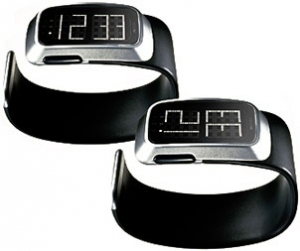
MiniMotionYves: When I worked on the Mini Motion watch, I was all about the digital display. Specifically, I was interested in the ability of a display to switch from horizontal to vertical, to give you a choice. It was the first display that switched directions. It cost us nothing, because it was purely graphic design. We programmed the numbers within the display to be about the same proportion, and then we just allowed with one button to turn it. Of course, we wanted it to be motion sensitive, but that was in 2002. We couldn’t do that then.
But I was really interested in the digital interface and giving the digital interface intelligence or adaptability to a user’s needs. The other thing I was interested in is, How do you put a watch on without a strap? With the Mini watch you just slapped it on. It became the starting point of how we built the first Jawbone bracelet, the Up and the Up2. It was a complete invention of how to do it.

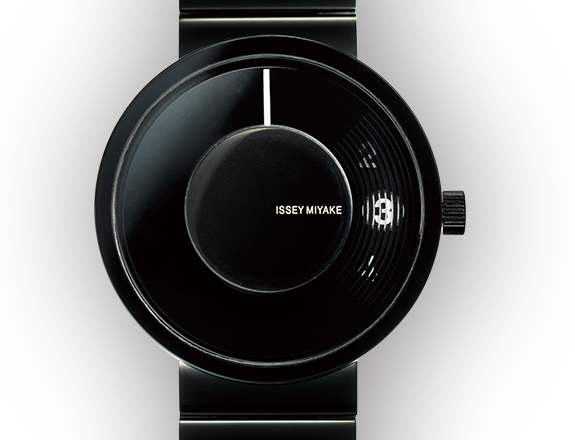
vue-watch The first [MiniMotion] watch was invention. The second [MiniMotion] watch was metaphor or idea. Then the idea for Issey Miyake was, it has to be Japanese from a brain-neuron standpoint. They have to go, “Ahhhhh!” They have to make that sound when they see it. It has to tap into the Zen part or the cultural part of Issey Miyake’s brand, which is always about discovery and material invention. He’s more of an industrialist. He designs the machines and extrapolates what could be done out of a new material, a new machine that folds or presses that material.

What I thought about is, which was nearly impossible, “What about if the only number I need is a number that is now? If it’s 6 o’clock, the only number I need on a watch is the 6 o’clock number. I don’t need the other ones. The other ones are useless. And at 7 o’clock I only need the 7 o’clock one.” We devised a way for the numbers to appear and disappear as time passes.

It was also metaphysical, because it was about communicating the passage of time and making people realize that 3 o’clock is going away and now 4 o’clock is coming on. It had this passage of time movement to it.

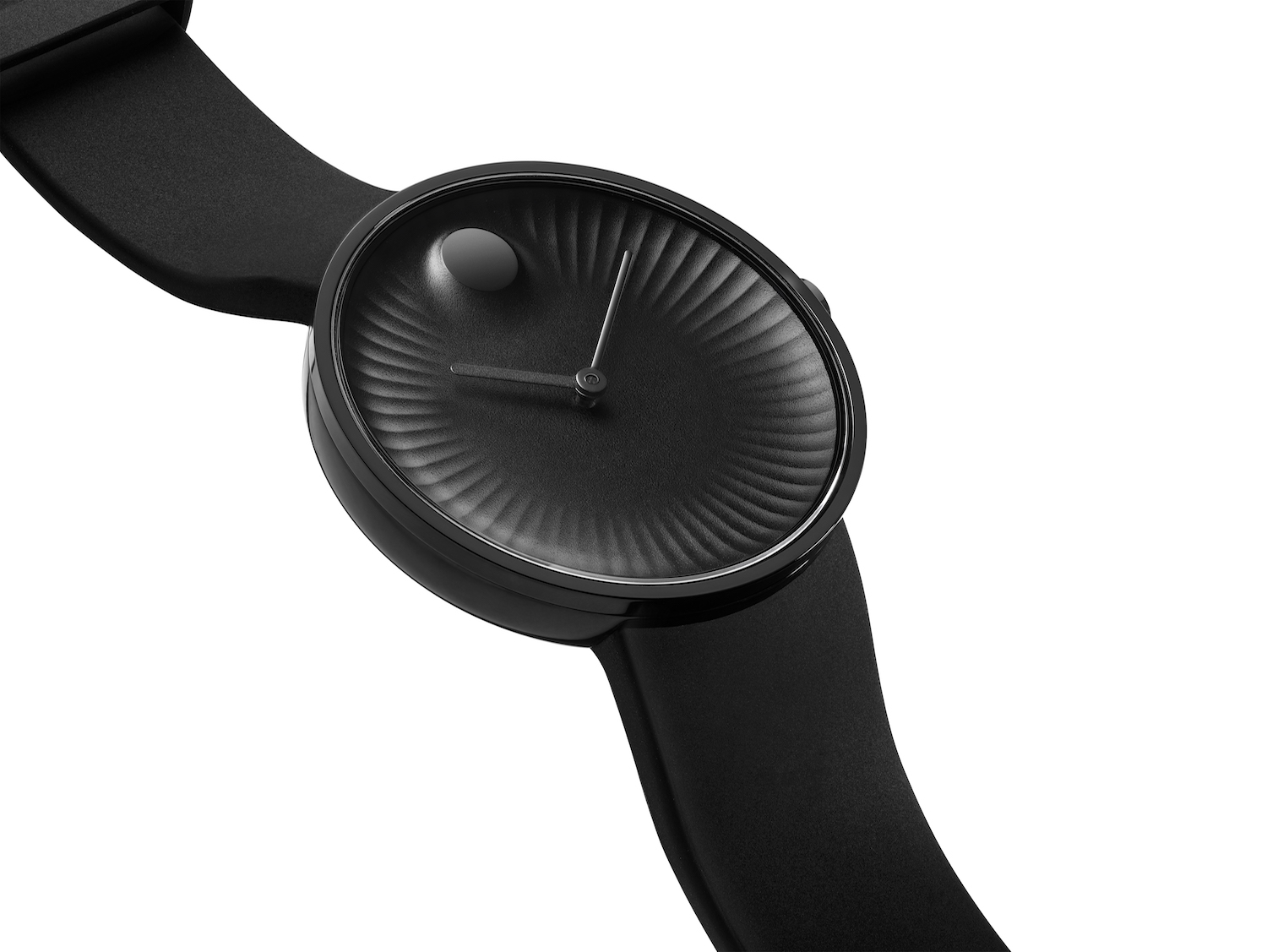
That was the second watch. The third watch is about depth and three‑dimensionality and a nod to a modernist icon of the 20th century.

IMG_6990

Time Is Invisible

Om: One of things that I like about this watch, especially the black one, is that you can tell who makes it. It has that look that makes you say it must be Movado. Especially just the time face, and not the chronographs.

Yves: The one element that I really loved from the original watch, the Nathan George Horwitz design from 1947, is the metaphor of the sundial, or the “Museum Watch” as it’s called, which is the sun at 12 o’clock. But I felt that the icon would be stronger if it was being applied as a flat piece within the watch against a three-dimensional surface. A part of just a surface that communicates everything. It communicates the time. It has little ridges to tell you time. It communicates light and the way light changes as you move it around, and it has reflectivity and movement. At the same time it has a little bit of that branded element. But all within a single surface.

In design you try to do a lot with a few elements. But look at how many elements are inside your [IWC] watch. There’s 50 separate little things that are applied in different ways that are machined and sculpted and turned into a design.

In this new Movado watch there is a single element, and it’s supposed to do everything. It’s supposed to do the emotional side, the sculptural side, the branded side and the whole aesthetic. Inside this watch, you picked a white one versus a black one versus a blue one. With one part how much could we do, how much could we express?

This slideshow requires JavaScript.

Om: Some of the watches you’ve designed seem more in tune with the commercial needs of the brand. But this one is pure you. It’s beautiful.

Yves: That’s why I was excited about this project. It was an opportunity for me to return to a simpler time, if I may say so. I was cramming batteries and sensors into the smallest possible space and beating engineers up all day long so that something beautiful could emerge out of the mess and the complexity that technology brings to our lives. In a way, it’s the opportunity to be pure and just think about the most emotionally primal elements. How do we assemble them all together?

movado_group

Om: There’s no branding on this watch. How does a company that spends millions of dollars every year on branding say, “OK. We’re not going to put our name on it”?

Yves: We made all the prototypes, just to explore the shapes, without thinking about the size of the “Swiss Made” or the size of the “Movado,” because to me that’s the thing you do almost at the end. Then when the CEO and I looked at the final prototypes, he was really emotional about it. We didn’t even really discuss it. I didn’t know if I had permission to not put the name on it. I thought maybe legally you have to put the brand name on the face, or “Swiss Made.”

I just said, “It looks so beautiful. It almost doesn’t need anything else.” He was like, “Oh, yeah. We don’t need to put the brand on there. We can put it on the back.”

I was like, “Really? We can do that?” It was a fun moment, where it felt like two kids doing a misdeed. [laughs]

IMG_6991

Om: Are watches your favorite things to design?

Yves: It’s hard. I don’t know. I like to design things that people use every day. I like to design things that are not once a month or once a week but to design things that you have to live with. That’s why the Jawbones — it’s always something that I felt passionate about. There are a few products like that, things that you’re going to be wearing every day, feeling good about every day.

The Process

Om: How did you design this watch? How did you go from meeting the CEO of Movado to where it is today?

Yves: We spent a few months agreeing on how we were going to do it. They hadn’t worked with an outside person, an industrial designer, since, really, that famous watch in 1947. We had to figure out how we were going to do this together, because it has to be a partnership of some sort. Then it was mostly sketching, drawings, then making quick prototypes.

For me the way something like this works is iterative. How thin can you make the edge, the bezel? How deep can you actually make this dish? Because if I couldn’t go at least this depth the concept is dead, right? How can you make this dish so that it’s deep enough to have this kind of reflectivity? Can the hands actually go over the dots? Now the hands are actually floating a little higher. We had to work with their engineers on changing the parts that are attached to the movement. And the movement itself, so that it is stable and it won’t break when it’s at that height.

movado_2There is a lot of, like, “OK, we have an idea. We’re excited about it. We think there is potential.” Then you go explore that it’s within the parameters of your imagination, that it actually can have this depth and this look. But you don’t know.

It’s a heartbreaker when somebody comes back and says, “It can be this depth, not more.” You’re like, “I don’t know if it’s going to work.” Then you machine it in the work.

We machine in aluminum. I knew I wanted to use aluminum, and I knew I wanted to machine aluminum. Because that’s the only way to get this kind of precision, this kind of definition of the ridges and the domes and these different finishes out of a single material, out of one piece of material.

Om: That is one thing that I love about these quartz watches, which are $300 to $1,000 watches: There’s a lot of interesting design in there. People playing around a bunch with the watch-face design. It’s a more affordable watch, so you can be experimental.

Yves: Yeah, take more risks. I want to consume things that are experiments. It needs to be something that you don’t know if it’s really going to work. But you hope it does, and you want to be a supporter. You want to help someone forge their dream.

It’s hard to find a new expensive product that I want. There are some great historical pieces that I want. But it’s hard to commit to a brand-new product that is just launching, a luxury product, let’s say, if it’s not an experiment, if nobody’s taken any risks, if it’s just right. Just right is boring.

IMG_6992

The Watch Collector

Om: Which watches do you like, apart from yours?

Yves: I have a couple of Pateks.

Om: No, no. Amongst experimental-design ones.

Yves: Oh. All the Lip watches from the ’60s. Lip is the guy who did the TGV train. Of today, you mean? I like Omegas. In a market in Thailand I found the first Omega Seamaster that was digital. It doesn’t have a digital display; it’s an analog display. It looks like a complete volcano. Every surface of the watch goes to the top. Then there’s a circular dial. I supported the first ana‑digi watch I ever saw. Then I also liked the electronic mechanical watch, that Swiss brand.

Om: One of the more ironic things about the Apple Watch is that more people are interested in watches now. We thought that Apple would crush everybody, but now more people are paying attention to the idea of a watch as a fashion accessory.

Yves: Also as a sign of personal style and belief. That’s the issue: Some of these digital products, they don’t give you the opportunity to express yourself, even when there is range. I’ve always been a big fan of range. We were probably the first ones, with Jawbone, to do a range of different headset colors or different Jambox colors and finishes and colors and textures. But most technology products come in one flavor.

When things move to the body — your eyes, your wrist, your feet, the bags you carry, et cetera — that is so important. There is something so visceral about our need to express ourselves through the objects we wear.

Photos by Om Malik. Watch sketches courtesy of Fuseproject.