Doug Weber

Om Malik: Tell me a little bit about yourself. How did you end up in Japan?

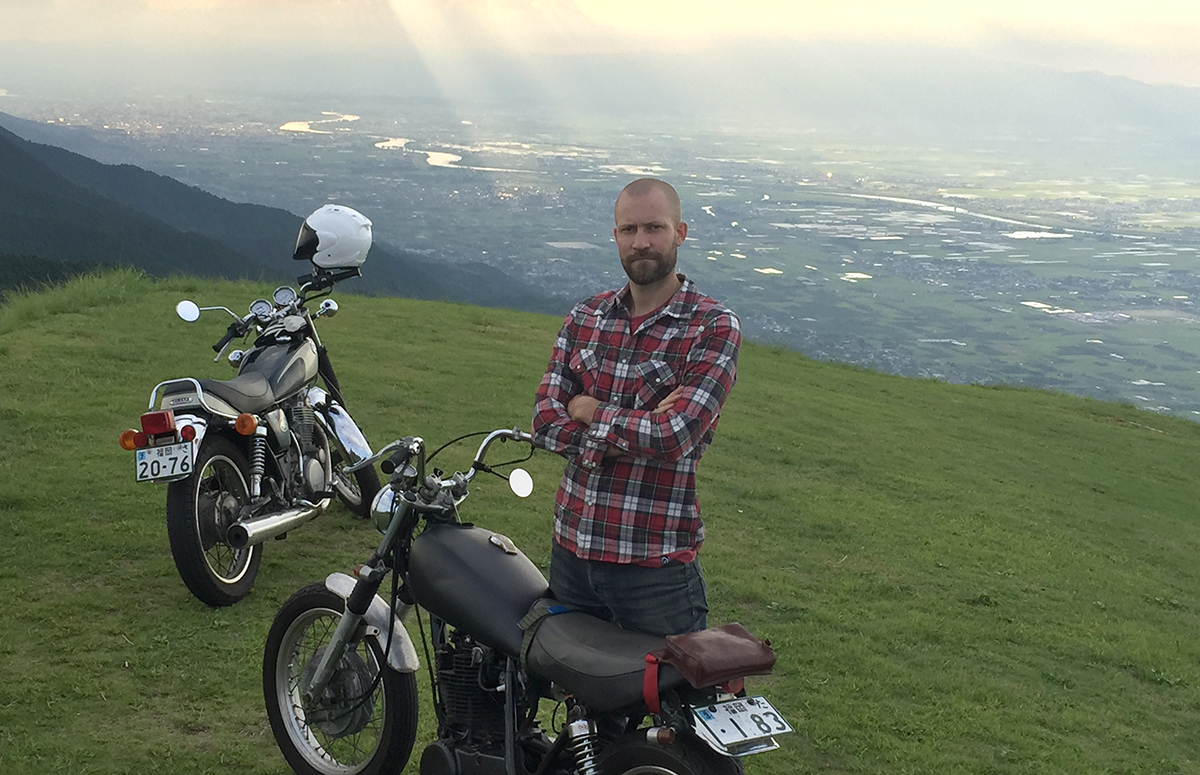
Doug Weber: In college I had a scholarship to do ceramics in Japan. At the end of it, I had to make a decision between going back to find work in Silicon Valley or to stay in Japan and become a potter. [laughs]

It was a big choice at the time, but I decided to go back and work for Apple because I had received an offer from them about a year prior. It was an exciting time then. It was before the beginning of the iPod. When I had interned there previously, I worked on the old iMac that had the articulating display and the G3 tower — things that seem old now, but at the time they were exciting. When I returned to Apple, I started working on the first generations of the iPod. I was lucky enough to have been there when it was still small, when there was one industrial designer, one mechanical designer, one EE guy, and one software person designing a product.

I did the first couple generations of the iPod Nano and had started to work on the first generation of the iPhone when I decided that I wanted to do something in my career that brought me back to Japan. I started the product design team of Asia, which originally was just in Japan but eventually grew to include Taiwan, Singapore, Hong Kong, and China. I did that for about eight years before leaving Apple in 2014 to do the stuff that I’m doing now.

Om: Were you able to apply some of the skills you picked up in your ceramics‑related exploration into your industrial design work?

Doug: Definitely. When I was doing ceramics, I was very much a wheel‑based person. Bodies of rotation is something that I think about a lot.

Ever since high school, I used to draw a center line and then try to come up with symmetrical designs around the center line, things that could be thrown on the wheel. In manufacturing, I had always been particular to lathe‑based processes, which is also bodies of rotation. That also seems to be a pretty central part of what I think we’re doing right now, with Craig.

Om: So how does this guy who’s designing iPods and iPhones end up obsessed with coffee?

Doug: [laughs] Good question. I was lucky to be around in San Francisco when the [specialty] coffee scene was starting to take off. I remember when we were carpooling on the way into work at Apple. In the morning we’d often stop at Ritual Coffee Roasters to get what, at the time, was the best coffee in the city.

There were a couple of other people at Apple then, people who are on the Lyn Weber board now. [laughs] Every time we’d have a meeting, the first 5 to 10 minutes would be about making a cappuccino and talking about things that were wrong with the machine and how much better it could be, and then the next hour and a half would be talking about the iPod, the iPhone, or something else.

Coffee became a good punctuation in the busy days, a five‑minute pause for enjoyment, and it’s always been my vice of choice. It’s one that helps keep you going, and it’s fundamentally delicious. Also, you get to play with cool machines, and there’s a whole bunch of process tuning involved to make it better. All of those aspects have resonated with me from the beginning.

Om: I was in Japan last year around this time and I went to a lot of places in Tokyo for coffee. People take their coffee very seriously there.

Doug: In a sense, almost too seriously. There’s a sternness to it that you don’t get from places in the Bay Area. There are definitely places to have fantastic coffee in and around Tokyo. It’s a different feel for the scene in this country versus in other places.

Om: So how did your company Lyn Weber come together?

Doug: Craig came from the film industry, but he is also a coffee nerd like us and had decided that there was no grinder on the market that suited his needs. He didn’t know about designing and manufacturing but decided to teach himself CAD and put together a product at the time that was called the HG‑1.

We still offer the HG-1 [coffee grinder], but the interesting thing is that I already had some plans in place for my own products, with the idea of making $1,000 hand grinders to start before getting into more niche products. He beat me to it. I remember thinking, “Ah, shit. This guy’s totally doing exactly what I was planning to do as my exit strategy from Apple.” [laughs]

I bought one and it was a nice object, but there were many small details in the materials and the manufacturing that I thought could make it better. I put together a 10- or 15‑page PDF with feedback and wished him good luck. Craig got the email, and while normally he would probably ignore that type of thing, he realized it came from a guy at Apple.

We started talking via email, then met up in San Francisco to talk about what we liked about existing coffee products and what we didn’t like. I think the what‑we‑didn’t‑like category was a lot bigger. We both had our sights set on bigger and more complex things but didn’t want to do it by ourselves in a bubble. It made a lot of sense with our core strengths to put them together.

Om: Why do you think so many people are trying to make better grinders?

Doug: It goes back to the fact that from an equipment standpoint, the quality of your coffee comes down to your grind and your extraction.

If you’re doing espresso, it’s about the quality of your grinder and the quality of your espresso machine and how they work together. It’s an often overlooked part of the process but equally important to everything that comes after it.

When Craig and I look at the incumbents of the industry — we call them the tractor manufacturers — one of the things that is interesting to us is, how can they have been doing this for 50 years and not changed a single thing? And why does the machine go together like this? Why is there crud stuck inside, why can’t you clean it? The list of problems has been there for so long and has stagnated for so long that people have started to accept the problems as the norm. We see these things as fixable problems.

Also, there’s our design ethos: It’s the complete opposite of designing for obsolescence or for a model upgrade in a couple of years. We both feel strongly about that. I felt especially strongly about that after coming from an industry that is focused around consumerism and upgrades every year and every two years.

We make things that are intended to last forever, stuff that will never break. Once you buy a grinder from us, we want it to be the last one you ever buy. We want you and your children to use it.

Om: It seems like this is an expression of your ideas and your designs. Is it also a reaction to all of these products you created at Apple that become obsolete in a couple of years and add to the world’s clutter. Is that right?

Doug: I can unequivocally say yes to that, 100 percent. I loved the stuff we designed and made at Apple. In that industry and in the industry of building cell phones and other things, we used better materials, we built better products, things that were meant to last. It’s an industry where the technology is refreshing so quickly that you have to make new versions every year just to stay up with the key functionality of it. I get it.

That said, the reality is that you’re making things that are meant to last, but people are refreshing every year, every two years. And with things like the cosmetic quality standards that go into creating an Apple product, the waste that’s developed as a result is astronomical.

Even with coffee products, people will happily spend a couple hundred dollars on a grinder that, realistically, is only going to last them a couple years. They’re probably better off buying one from us that will last them their lifetime, and that will create a lot less waste and eliminate the process of repurchasing and having to recycle or throw away. It’s an important part of what we do.

Om: The unfortunate part of electronics is that they were built to become obsolete. I have a wonderful Leica camera, and it may last five, seven years, but it will become obsolete in seven years. I can hold onto it in a more nostalgic fashion, but once you put a chip into something, it’s meant to be replaced. I think it just has a shelf life, which is the reality of our time. Everything is going to be like that.

Doug: When you go back 50 to 70 years ago, and you look at what people were enjoying from coffee then to people who are making coffee right now, has the microchip made the masters of the craft any better? Arguably not. There are ways that you can use silicon to make some things easier, more repeatable, or more convenient. But it’s not necessarily going to improve the quality of what’s in the cup.

We’re very aware of that. At every chance we have, we try to remove the technology and the barriers. We try to remove the things that are going to make our stuff need to be replaced or changed in seven to 10 years’ time. Stuff that we design does have electronics. We’re designing it so that a particular part of it is a module. Even if that blows a fuse in 10 years, it’s replaceable. The last thing we want to have is a high-quality product with the core mechanical bits still functioning well but there isn’t a chip to make it move.

Om: What does the grinder do, and how is it different from what’s out there?

Doug: We looked at what was out there, and the problems with existing grinders, which is that they’re extremely difficult to clean. Other things on the market will take you a good hour to clean, whereas with ours you can pop off a couple parts and clean it in about 20 seconds. We also knew that we wanted to basically get out everything that you put into it. If you put in 18.3 grams, you get out 18.3 grams. Both of these things make a big difference in the process.

Om: For the longest time there was no design in the coffee world. Everything was very Mr. Coffee. Now there is so much innovation. Why do you think that’s happening?

Doug: One thing I find a bit distracting is what’s happening in the coffee industry from an industrial design standpoint. You look at the machines and the products being developed and it’s closer to reskinning than it is to actual reengineering. When you look at reskinned products for, say, an espresso machine, it’s using the same concepts of the core mechanisms that have existed for half a century and putting it into a different shiny box or changing something small.

The design gets in the way of what the thing is supposed to do. We always start with the core of what we’re trying to do and let that drive the design. We start with the heart of the mechanism and then go outward and try to let that dictate the way that everything else falls into place.

Om: Is that the same way Apple designed its products, starting with the core and then going up to the top?

Doug: In a way I’d say yes. I was not sitting around drawing stuff and trying to figure out the look and shape. I was more focused on the technical details together with the [ideas from the] industrial designers at that time.

Apple is clear about that. You have your specific roles. Even though we were working side by side with the industrial designers at Apple, I was very much on the technical end of the spectrum. But, at the same time, I was influenced by the same process that drove the design of all the products at Apple.

Technologies, the parts design, manufacturing — those were closely tied together. The way that Craig and I are designing products, we’re fusing all of those things into a much smaller group. We’re two guys right now that make up the industrial design, the product design, the manufacturing engineering, the marketing. That’s not the long‑term plan, but it certainly enables quick decision-making at this stage.

Om: Your new grinder, the EG-1, is it for professionals, or is it for nerds like me who want it at home?

Doug: [laughs] Good question. From the beginning we’ve been calling the EG‑1 a commercial coffee grinder. We designed it with specific needs that we saw from how people are making single‑dose coffee in cafes.

That said, we can’t dictate who is going to buy our products. There’s been a pretty even mix. I think we have, luckily, a pretty good reputation from the HG‑1 that we’ve already had out on the market for a couple of years. A lot of people who own the HG‑1 and are happy with that at home, the extreme aficionados, have also purchased what we’ve been calling our commercial grinder (EG-1) for home use.

Om: What’s next for you? What other products are you guys going to make at Lyn Weber?

Doug: The first years has been defined by setting up the manufacturing chain, the sales channel, and automating as many things as possible to make the company more efficient. The future is going to be focused on product proliferation, not refreshing stuff that we already have but expanding. One of the obvious ones is espresso machines. That’s much within our sights, as well as products that aren’t limited to coffee.

We intentionally don’t have any references to coffee in the company name. It’s our core focus, especially for now, and something that’s always going to be at the heart of the company, but we don’t want to limit ourselves to that, because there are so many things we want to make.

Om: I’m excited to see what you make of it. Before you go, what are the best products on the market for a fellow coffee nerd? Also, what beans do you like?

Doug: I’ve always been particular to the Olympia Cremina espresso machine. Very old, very untouched, made in the hills in Switzerland. I’ve visited the factory. I own three vintage ones and one new one. It’s a simple and elegant design, and something that I respect.

From a bean perspective, I’m partial to one of my local roasters here in Japan called Honey Coffee. It’s a mom‑and‑pop place. Randomly, they happen to live less than a kilometer away from me. Their son was the World Barista Champion two years ago. That family has coffee running deeply in their veins, and we’ve used them as a sounding board for a lot of our concepts early on.

When it comes to the beans, I’ve had everything around the world. I’ve traveled to Copenhagen for coffee collecting, which I absolutely love, and all the stuff around San Francisco. I have an apartment around the corner from Four Barrel, so I’m partial to them. I love Blue Bottle. There’s a long list of good coffees.

SaveSave

SaveSave

SaveSave

SaveSave

Bradley Price

Om Malik: Tell me about where you come from. How did you fall in love with cars, especially since you live in New York, where there is no car culture?

Bradley Price: I grew up in Evanston, Illinois. My father is a car guy, and he had an old Austin-Healey when I was little, and then later on he sold that and got a Jaguar XK140. Those were the cars I remember from being little, and we used to go to a lot of British car events.

We lived on a busy street. I’d sit by the window and watch all the cars going by, and at a young age, I knew every brand of car. By the sound of them, I could identify different cars.

I was pretty much hooked on it from such an early age. I can’t even tell you where it actually started from, because it’s before I have any memory of it. My brother, incidentally, has no interest in cars, so don’t think it’s just because of my dad [laughs].

10411122_731030436970088_1773448089417702796_nAnyway, my dad also loves vintage Bugattis. We used to build model cars together. One aspect to the watch that ties into my childhood is also that I love miniatures and models. We had a train layout as well. I love this idea, this little object that there’s a whole world inside of it and it’s all these details. You look at something from here, but then when you get closer to it, you have to be even more delighted by it rather than being let down by the lack of detail. Those are all ways that the watches tie back to my childhood.

I went to the University of Michigan after graduating from high school, and I studied the history of art and industrial design there.

OM: History and industrial design — oh my.

BP: Yeah, I have two degrees. It was a five-year program.

OM: That explains a lot.

BP: Yeah. My parents didn’t want me to do just the straight-up art school degree. I wanted to go to art school to be a car designer. My parents were totally right in the end. Learning how to do research, learning how to write — these are things that people don’t put enough value on, especially in the designer world. There are so many people that care about sketching but then can’t even talk about their work.

Then, through my twenties, I was an industrial designer, and I was obsessed with modernism. I am a modernist. I guess you could say I was even a futurist at that time. I was obsessed with pushing the boundaries of technology. I didn’t wear analog watches or any kind of traditional watches. I was wearing futuristic digital watches, if I wore a watch at all.

I was a technology and design person, but I always had a strong interest in the history of design, art deco, modernism, and also, of course, the history of racing. There is this combination of being obsessed with doing the next thing but also almost wishing I’d lived doing the next thing in the 1920s or 1930s. It’s looking backward to go forward.

10470851_703375723068893_7998909996251484843_o
[topic]Early days & roots in Industrial Design[/topic]
OM: What kind of industrial design did you do?

BP: Cell phones, appliances, and furniture. I used to work in a branding agency before; that where I was doing food concepts and branding concepts. But then the next job I had was much more production-oriented, so I learned a ton about engineering constraints and actual production techniques and process. Then my second phase of my work was in producing things, getting things made, working with engineers, working with factories, going to Asia. All that stuff has together informed my starting of this company.

I can’t be thankful enough for the training I had in my twenties of first working in this branding environment where it was all about creating a brand, creating a concept of the story.

OM: Those companies all go to design experts and designers. And then they design the device. This is so different from what Apple does, where engineering and design are in sync and ultimately guide the product. The design can leverage the gains from system-level engineering, and vice versa. I find they have a different view of thinking in products — of vertical integration.

BP: Then all these companies would be like, “We want to be like Apple” or “How can we even more be like Apple” or “We want a product like Apple’s.” I don’t know if it’s still like that, but this was five or eight years ago and Apple could do no wrong. But the thing was, they weren’t looking at the whole process. They were just looking at the end product. They weren’t looking at how that product got to be that way.

The key things that Apple does, aside from what you’ve mentioned, is that the decision-making is a lot more autocratic, and it’s a lot more direction given from specific important people that are tasteful, thoughtful people. That informs the whole world. It’s not just a bunch of middle managers and committees and stuff. You have one guy who was like “This is good or bad” and “I like this” or “I don’t like this.” That’s hard to replicate, but that’s what makes something great versus just OK. You need that person to be the arbiter.

OM: There are only a few watch people close to doing that vertical integration. The engineering, the user interface, the overall design.

BP: I agree. People focus so much on the movement, and they don’t think enough about the other aspects of why a watch is beautiful or special. People get so fixated on specs and not on what is special about these watches as a thing.

That frustrates me a little, because I put so much into the rest of the watch. I don’t have the wherewithal to develop my own movement, as many watch companies don’t. In fact, 98 percent of watch companies don’t have that wherewithal.

Let’s focus on the case finishing, the design of the case, the design of the dial, and the concept. What is the watch trying to say? What is the meaning of the watch? What’s the emotional content? I don’t ever see people internet forums discussing those types of things.

dino

OM: Why don’t people pay attention to the emotional aspect of things we own? If you own a lot, like, there isn’t a lot of emotion around it. But if your ownership is restricted and constrained, it has a lot more emotion. I definitely agree with you that people don’t ask the question why as much as they should, like, “Why are you buying this? How does it make you feel?”

BP: They just snap it up. Having spoken with many of my customers, one thing that is special about this brand is that people get that there’s an emotional content to it and it resonates with specific people. It’s interesting to me, because it’s not just people from one economic background or another.

It could be the guy who has 10 Pateks and he bought one of our watches too, or it could be the college student that saved up for four months to buy the first watch he’s ever owned. Those two guys are from different worlds, but they are linked together on an emotional level about how they respond to this watch and what it says to them. I find that really gratifying to get feedback from customers.
[topic]Apple Watch: What is it good for[/topic]
OM: What do you think about the Apple watch, the concept of it?

BP: It’s beautiful. As someone who designs consumer electronics and watches, the more I looked at it the more impressed I was. It’s got Marc Newson’s fingerprints all over it.

It’s clearly something he designed rather than Jony Ive. It’s funny they announced he was working with them after the watch. But to me that was the Apple way of underhandedly giving him credit for the design without actually saying he designed it. But it seemed to me very Marc Newson.

OM: Why do you say that?

BP: The most obvious giveaway was that the rubber strap had the exact closure method that the Ikepod had. But the way the strap integrates with the case is so him, this sort of inflated square.

Now, obviously any designer could do an inflated square. But Marc Newson’s Ikepod watch is a really influential design. I certainly have been influenced by it. If you look at the Monoposto [Autodromo’s first automatic watch], they’re that sort of bowl-like case. There was a little bit of that Newson flavor in that watch, even though it’s not a modernist watch per se. The Apple watch certainly is in that idiom, a lot like his other work.

Veloce_SS_Hand1

OM: Getting back to your path to making watches, how did you go from what you were doing at ECCO to what you’re doing now?

BP: It’s nothing against ECCO or anything. But after working in a studio environment for 10 years, I was getting the edge to do my own thing and was tired of following orders all the time. I wanted to express my own aesthetic sense.

Also, I’m a lifelong car nut, and I was starting to get upset about not having anything car-related in my life. I started a blog called Automobiliac around 2010, which was partially an outlet to talk about cars with people, because I didn’t know any car people in the city.

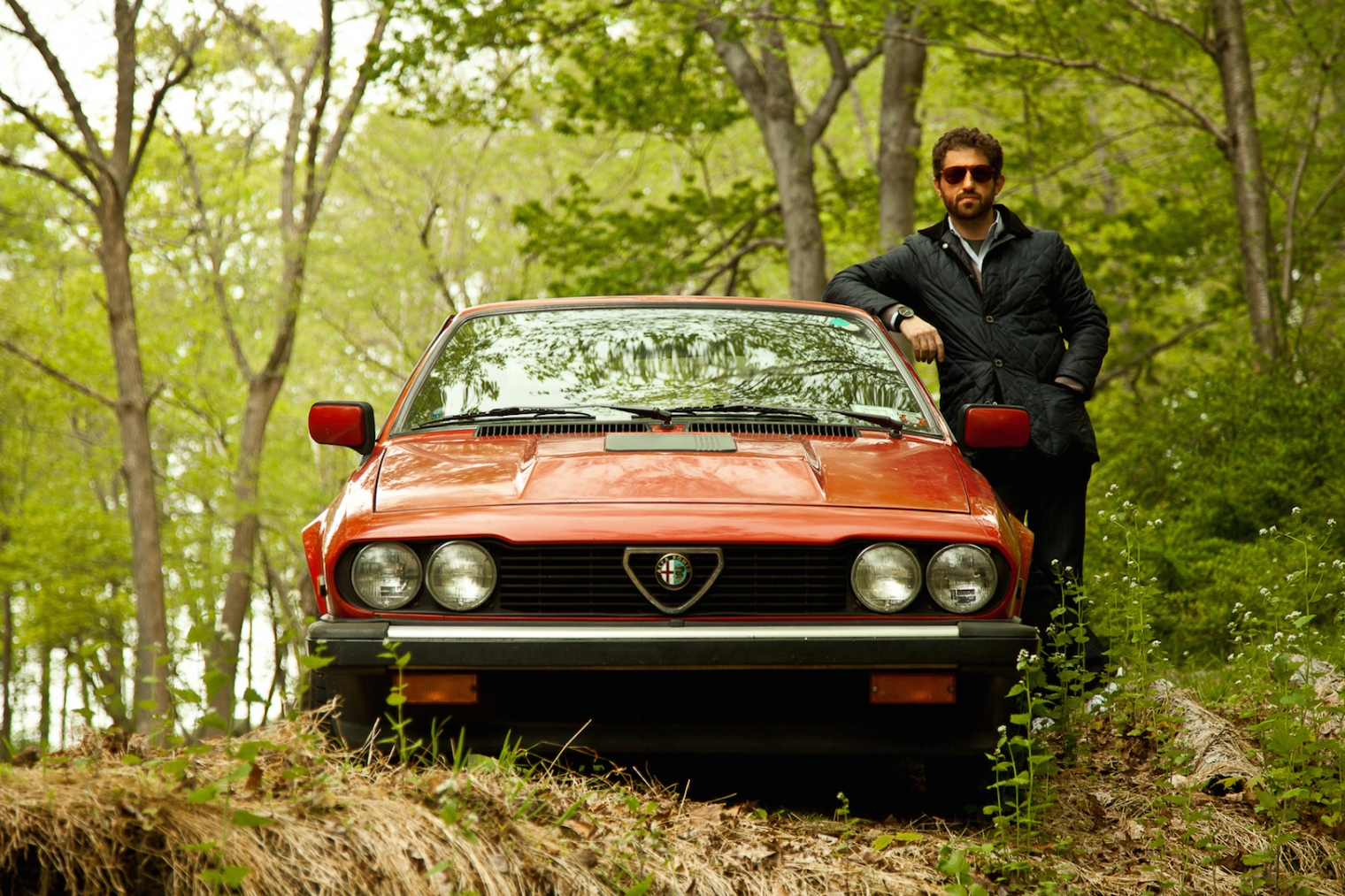
I had recently bought an Alfa Romeo from the 1980s. I was driving and I thought to myself, “I love the typeface on this gauge. It would be such a cool watch gauge.” Then I thought, “Why doesn’t someone make car-gauge-inspired watches?” You have Bell & Ross making aviation-gauge inspired watches. Then I started to research it, and I found no one was doing that well, if they were doing it at all. I feel, personally, that many of the big companies that do automotive-related watches — there is a complete lack of emotional content.
[topic]Products with Emotional Connection[/topic]
OM: I agree. Few watches are emotional. There are few people who make watches that you can actually have a connection with. I have one manual watch that is just basic. It suggests the hour and minute, and no seconds, no numbers, nothing.

BP: Just the essentials.

OM: The iPhone is like that. When it’s shut off and the screen is dark and I don’t have to see the software inside and can just look at it as an object — that’s beautiful. And then push of a button later, it is like magic.But when you look at it as a thing of beauty, it makes you think, How can you make something so amazing, so complex, and yet it is just one thing? It’s like a dark black screen and the metal body, and that’s all you see. It forces you to imagine the amount of work that engineers have put into it. That’s part of the emotional connection with this thing I have. I have emotional connection with a lot of things, mainly when I know who made them. Maybe that’s what we like about Apple — the magic of Steve Jobs and Johnny Ive.

BP: Yes, I completely agree.

OM: So are you a one-man operation?

BP: I have a publicist that helps me, but he’s a consultant. My initial thing is that when I need help with stuff, I can hire consultants rather than taking on a staff member. My wife helps me as well if I’m swamped with stuff.

If I’m really behind, I have a friend who can come over and help me pack things. I am trying to keep it at a pared-down, simple level, and it’s working well. There will be a point to this in the future where I finally get an office space, because I would love to, for example, have people like you over in an office that’s not in my house.

But when you’re running a small business, you need to keep your overhead low. Right now, this is an appropriate site base for what I’m doing. The company is doing well, and we’re profitable, but wasting money can make a huge impact in your bottom line. I’ve had a lot of entrepreneurs say the best time for them was that early stage where they didn’t have the office yet or they didn’t have a whole bunch of people and they were just doing it. Once they started to structure things, it became less fun for them.

BradleyPrice-2

OM: The key to success in life, in my opinion, is not to measure yourself against how society measures success — you know, how famous you are, how rich you are, how big your company is, or how your movies do at the box office. My idea of success is about finding your level of greed. Then it is fairly easy to define. If you’re happy with a one-bedroom house and don’t need a lot of money, you don’t need to be running a $100 million company. There is a fine balance between the struggle of an early-stage company and being a gigantic operation. Finding that level is the most important thing. A lot of founders don’t think about that. They keep chasing this unreal dream without knowing what they are chasing.

BP: They keep chasing easy money. I don’t seek easy money. I own this company 100 percent. It’s completely funded through bootstrapping to cash flow. There’s no borrowed credit at this point. It’s 100 percent owned by me, and it is about being fairly priced. I like that, because I don’t have anyone that can tell me to do this or that. I don’t have anyone questioning me if something’s the best use of money. I can make all my own decisions.

When I go to meet with other entrepreneurs and stuff or whatever — they’re more obsessed about telling you how much capital they’ve raised instead of what the company’s actually producing. It’s like, “Yeah, we just got like $16 million in funding” and they want to have a bigger office and they want to hire more people. Then if they get it, they suddenly have 150 employees and God knows what they all do. That’s the opposite of what I want.

OM: You should do what makes you happy. If you own 100 percent of your company and you pay your bills and you live independently, as long as you don’t feel like you’re missing out or something, then it’s OK. Then you don’t have to worry about what other people think.

BP: I don’t worry about it too much. I mean, I’m a lucky man, to be honest. I’m happy with my life and my lifestyle. It would be nice to have an office, sure. Eventually that will come, though, so I just have to keep going.


parade

[topic]So what’s your story?[/topic]
OM: How long ago did you actually start this?

BP: 2011, so this is my third year in business. It’ll be three years in November 2014.

OM: How did it all get rolling? Was it like, “I’m going to do this,” and you quit your job to chase the dream?

BP: No. That’s the ideal myth. You’re like, “Screw this. Bye!” And then you start your company.

No, I worked in secret for two years. My boss was nice about it when I finally told him what I was doing. He actually let me stay on part-time. I was making money, but I was still afraid to quit my job. He was kind to let me stay there. I went down to part-time at one point and took a bit of a pay cut, but I still had the stability of a paycheck. Eventually, after about six months, I left.

When I say 2011, that’s when the company launched. But I started this project in 2009. I was designing the stuff in secret and went to Asia, to Hong Kong, to the watch fair and all this other stuff. I was doing all that in the evenings. I didn’t tell many people I was doing it and then launched the company in November 2011 with Hodinkee. They wrote the first post about Autodromo ever.

The response was great right out of the door. Within six months, I had made back my initial investment. It’s been going well since then. During the first six months, there was money coming in, but I didn’t pay myself a penny. I was still living off my salary as a designer.

OM: What was your first month like?

BP: The first month was this giddiness of being like, “I can’t believe people like this.” As a designer, you always have this ego. Well, it’s not so much ego. It’s like you put your heart out there. When you design something you’re proud of, you want people to like it, because you’re an artist. You’re a creative person. You want an audience to respond to your work.

To put this work out there and have people buying them. The first holiday season, people bought the watches. It was this giddiness of feeling like, “Wow. I’m actually seeing money coming in. I’m actually seeing people excited about what I did.” That was a great feeling. Never before in my career had I ever gotten any public credit for anything I’d ever done, because I was working for other companies and other people. That was pretty exciting.

rally8-1300x1000

OM: How many watches did you sell in the first month or two?

BP: I’d have to go back and check. It was a couple hundred.

OM: Oh, wow.

BP: I think we did $50,000 of sales for the first holiday season or something. That was a lot of money to me. That made me realize I was onto something.

I still feel like I’ve only scratched the surface of what’s possible in terms of reaching an audience. People know about us now, especially in the watch industry and, to an extent, within the vintage car world, but we’re still an open secret. There are people who know about us, and then there’s still a huge, vast number of people that have never heard of the company. I like it that way, though. I like being the brand you have to know about.

OM: It’s fun to be in that phase, where you’re actually trying to not live up to somebody else’s expectations of you.

BP: We don’t have a legacy to live up to [laughs]. We’re not like AP or something, where we have this whole heritage and anything we do could be a letdown. But I do have pressure now.

We have had a number of successful products, and there have been things that have sold out. When the Stradale [the 2014 model] came out, I felt a lot of pressure about making sure this watch was successful, making sure it would be well-received, doing things I hoped the customers would like.

It was a big investment to do this watch, and it’s our new flagship watch. I’m phasing out the original quartz collection in favor of these automatic watches. Even though it’s a small company, this is a big piece for me. I definitely felt pressure to make sure this watch would be something special.
[topic] Bradley & his Design Process[/topic]
OM: From concept to finished product, how long does it take you?

BP: It takes about nine months from start to finish to have the idea, design it and prototype it and then receive the merchandise after production. I only come out with one new watch a year. I can’t do more than that, because there’s too much and also the investment becomes burdensome. Now that I have more models, I come out with new colors periodically. We’re going to have a new color of protype coming out in November. Then we’re going to have a new special dish and another protype in the spring, which is going to be with another driver. That’s going to be awesome.

OM: What is your design process?

BP: It’s the opposite of the way I was taught to design things. I had always felt like the methodology that I was taught in design school didn’t suit my personality, but that’s how the professional world expected you to behave.

In the professional world, you want lots of options. You want to explore every possibility, and then you want to present all those options to the client. Then they pick one, whatever they think is the best, which may not be the one you thought was the best. Then you refine that from there, and then you go back and forth and finish it.

For me, I don’t do options. I ruminate over things. I don’t draw anything for a while, and I have it tumbling around in my head.

It’s almost like, you know in an old spy movie when there’s a lock tumblr? One tumbler clicks into place, and then the next tumbler clicks in. For months, it’s this thing spinning around, and then the tumbler will click over. I’ll be like, “That’s good.” Then, a while, and then another one clicks over. Finally, this [makes a clicking noise], and then the safe opens.

That’s how the design process is for me. It’s much more about ruminating until there’s this aha moment, and then it becomes easy. Then I start sketching on a theme, and I usually go fairly quickly into CAD from there, because I like to think in three dimensions. Sketches lie, especially with watches. You could have some detail you think is great, but then it doesn’t actually fit, physically, with the scale of the watch or where the movement has to be.

The sooner I go into 3D, the more I can be true to what the watch would eventually be, and from there, I refine the 3D. Then I go away from it again. You can fall in love with your idea, but you need to go away and come back and see, “Does it still excite me? Does it still hold true?”

Maybe I show it to a few people that I trust, to see their gut reaction. For example, I might show it to Ben Clymer [the founder of Hodinkee], or I might show it to a car friend of mine. Sometimes I’ve backed away from something and thrown it away, and then other times, I’m like, “OK.” Even if they say they don’t like it, that doesn’t mean that I’m not going to do it.

It’s information. It’s feedback I can use for my own purposes. It’s not necessarily like I want to know three out of four people like this. That’s not how I think. It’s just, “This person liked it for this reason. This person didn’t like it for that reason. Maybe the right answer is over here.”

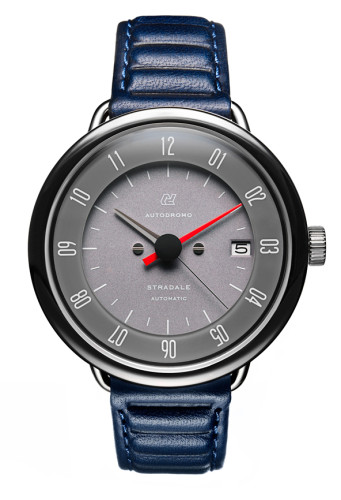
stradale_gray-341x500OM: What’s the thought process behind Stradale? How did you come to this design?

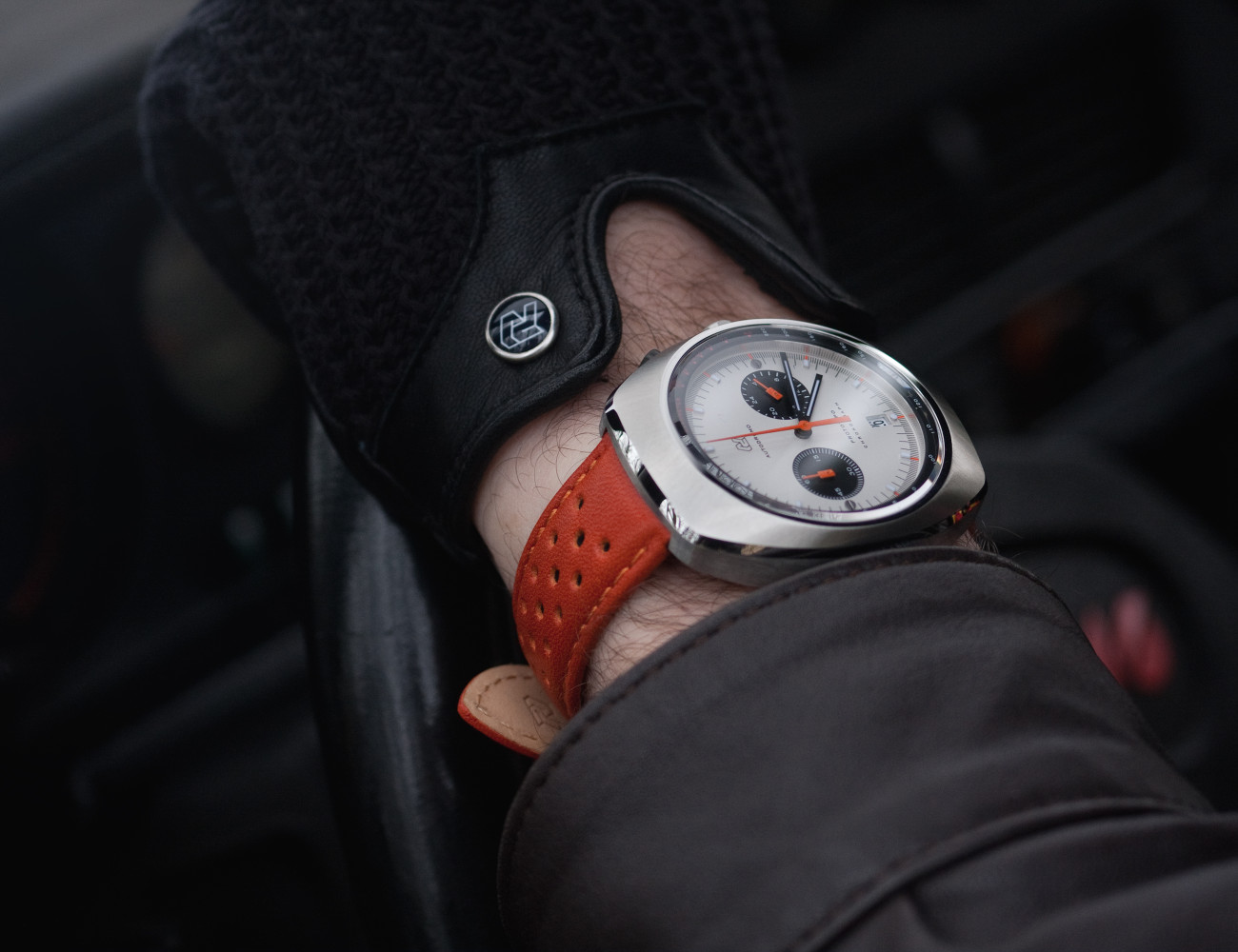
BP: First, from a utilitarian perspective, I knew I wanted to do an automatic watch. I knew I wanted to do something that would be a new flagship watch, and I wanted something that would relate back to the Monoposto, which was my first automatic watch. That was a limited edition of 500 pieces, and it sold out in about seven months. That was the first piece that made a lot of people take us seriously as a watch company, because there was a certain level of refinement. All the things I had learned from the first collection improved the second watch.

With that one, I had so many customers saying, “Please make more of them!” I didn’t want to do another edition of the same watch. I knew I wanted to take elements of the Monoposto, though, that would flavor this new watch, but then I wanted to do something new.

I also wanted to do a gauge-inspired watch, because our previous watch, the Prototipo, was a 1970s racing chronograph, and I didn’t want to do another racing watch. I wanted to do a gauge watch again, because that’s the core of the brand.

I had those basic parameters to start with, and then, from there, it was like, “What time period do I love right now? What kind of cars am I excited about?” I kept thinking about these Berlinettas, which are from the mid 1950s to the early 1960s. It’s a fastback style of Italian sports car.

What’s cool about the Berlinetta is that it’s a car you could drive at high speed across the Continent, race it hard, then throw some water on it, drive it to the finest hotel in whatever town you were in, have dinner in a tuxedo, and drive home. That car represents this high point of sports car design for me and a level of sporting elegance. The Stradale comes out of the aura of that time period and that type of car.

I started looking at gauges from those types of cars. One of the salient features of that time period was these plastic rings that would have the numbers molded into them that floated over the dial. I always loved that three-dimensional effect, and it’s very, very period.

I thought to myself, “What if that was a crystal ring inside the watch? Instead of just printing those numbers on the dial, the ring floats over the dial.” I thought, “Wow. I haven’t seen that done before. I’ve seen watches that have sapphire crystal disks or something, but those are usually expensive watches, like a Harry Winston.”

I thought it would be cool to offer something at our price point that has this crystal ring that floats. That became a central focus of how to execute that, how to make that look the right way. Then there was the packaging. The packaging is always a way to complete the story. As the customer gets this package in the mail, I want there to be this pathway of discovery that you’re drawn into the story as you’re unwrapping the box.

Also, the name Stradale means “road-going.” What I like about that is it implies a road-going car, but it also implies a race car, because usually the name Stradale is given to a detuned race car that’s for the road. If you have a pure race car, then sometimes to homologate them, they would make a barely legal road version. I like the idea of the Stradale because it implies you’re driving around in this high-performance car.

I love the age of Gran Turismo, which we don’t have anymore, the idea that you would drive across Europe and every drive is an adventure. It was a romantic time.
[topic]What Is The Meaning of Time[/topic]
10689943_734505583289240_8828709528042918744_n

OM: New technologies like the internet, the network, airplane travel have accelerated time. All those things we are nostalgic about are essentially about slowing down time to have more meaningful interactions.

BP: Yes. On top of that, the impersonality that comes with the acceleration of time. There was this American who went to Modena in the 1960s. He showed up at the Maserati factory. They were giving him parts, and he started building his own sports car, in a barn, in the countryside, using parts that he would get from Maserati shelves. That would never happen today. I wanted to capture something about that in the watch.

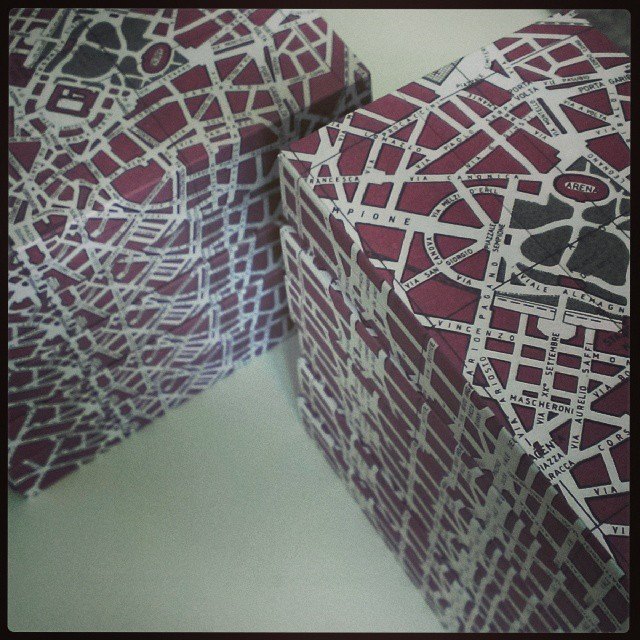
When you start unwrapping the watch, the first thing you see is a vintage map of the city of Milan. I like the idea that you’re basically starting in a town. Then inside the box, you have the instruction booklet, which is now a road map of northern Italy and the French Riviera. The idea that you’re going on this road trip in this Berlinetta and you have this beautiful gauge—I wanted to create this atmosphere about the product.

OM: Of that time.

BP: Of the time and place and the spirit of what the watch means. On the back are maps that are all scanned from period maps, and then I put in my own fake ad, a period ad for Autodromo gloves and sunglasses. Then there’s also the actual instructions themselves. It’s a combination of new elements combined with vintage elements.

OM: Have you thought about starting maybe a website where people can do their own Stradale selfies? They’re driving, and they can upload two minutes of video.

BP: I would love that. I’ve definitely encouraged people to tag us on Instagram with their watches, and some people do. I have customers that send me photos, which we post on Facebook. I wish there was better way. One thing I lack is — I have this artistic side, but I’m not good with the technology. I wish I could make an amazing website that had this clubhouse aspect where customers could log in. It would be like a forum for customers to share stuff, privately. Sometimes when my customers get together in a physical room, it becomes like that.

Black_Closeup-1300x1000

OM: It seems you are a guy who likes to slow down time a little bit, whether it is working alone in your house or making products.

BP: Yeah. My parents always like to tease me that I like to take my time on everything, but it’s more of a sense of doing things right the first time.

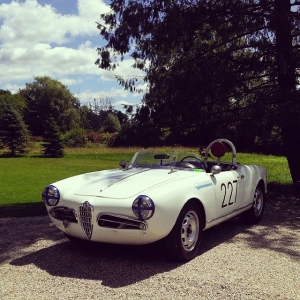
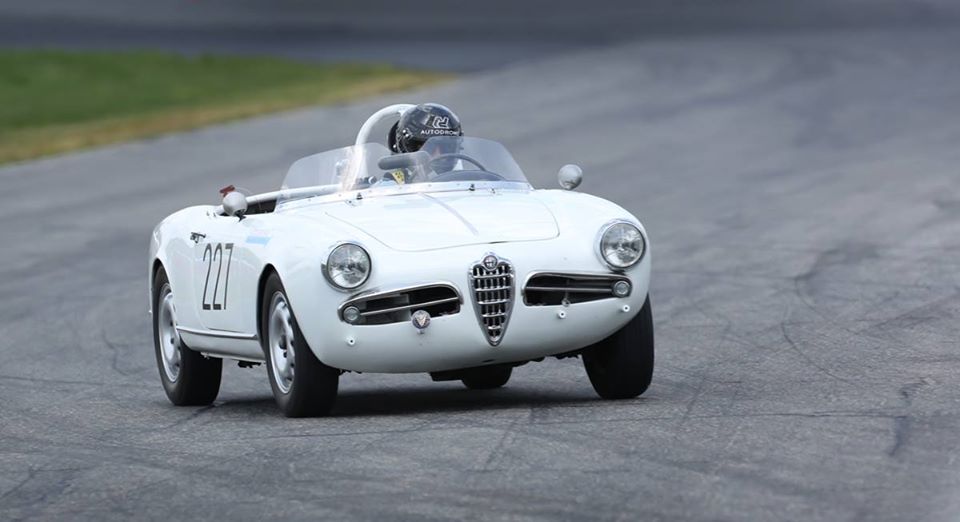
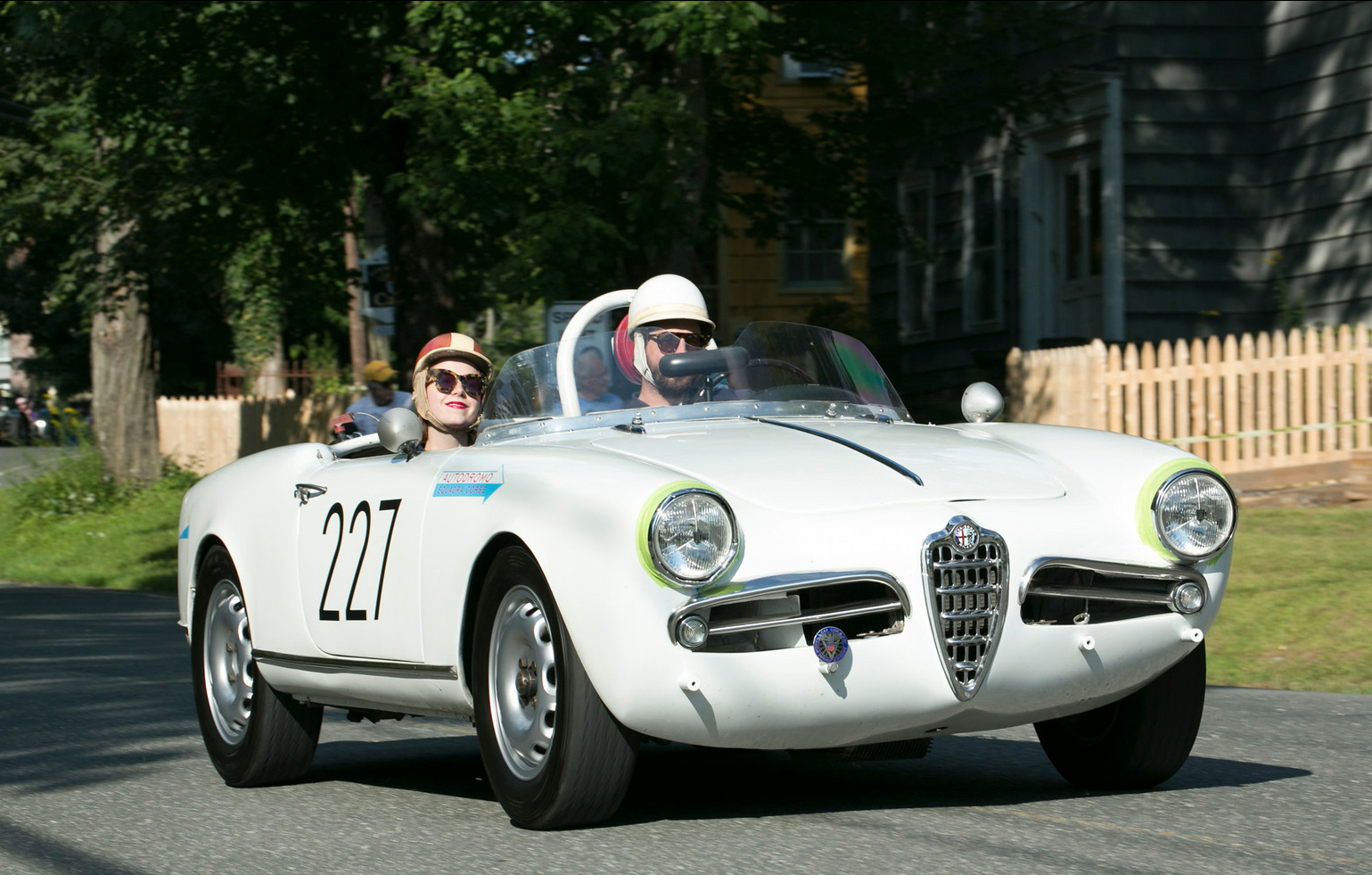
I started racing this year. I have a vintage Alfa that I bought recently, that I’ve been campaigning in the Vintage Racing Series here in the East Coast. One of the things I’ve been doing is historic recreation. It’s not about “I’m going to buy a cool car and race it.” I like to try to live the history of what I’m interested in. I drive the car to the track and race it. A lot of the old-timers are like, “I remember in the ’70s, I used to do that. Then I got a trailer” [laughs].

But I like to put all my stuff in the trunk of the race car. It’s a street-legal car, and I drive it to the track. I drove it for five hours up to Vermont once for a hill climb, and the drive up there was as magical as driving the hill climb. A beautiful mid-summer with mild weather.

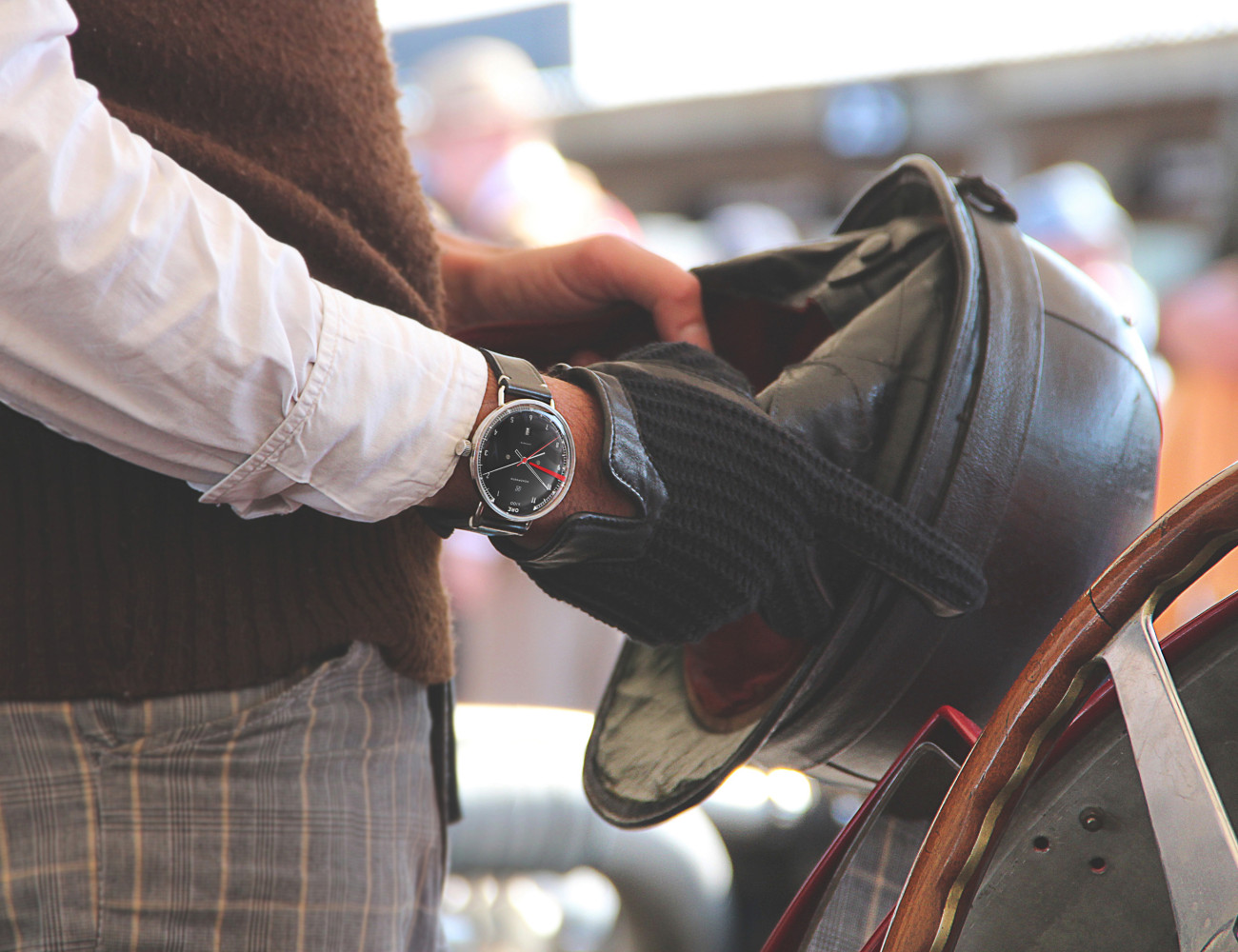
Those experiences inform the work I do. I wear the things I design. The driving gloves we make, I’m wearing them in a 1959 Alfa Romeo while driving to a hill climb, so I’m not making stuff because some marketing survey told me I should make driving gloves.

I make driving gloves that I want to wear in a vintage car. I know when someone else buys these gloves and they wear them, they’re going to love them, because they’re going to know someone made those for them.

Cole Rise

Om Malik: I’ve been fascinated by your work, and I don’t mean the Litely app or the presets. I often go to your website and look at your work. Goddamn, those pictures. Every single time I see them online and on Instagram, I’m like, “What is with this guy? How can one be so amazing?” Anyway, enough of the gushing. Let’s talk about photography.

I’ve been thinking a lot about the iPhone as a camera thing and wondering what it all means. Looking at it from my perspective, four years ago, I did not know how to take pictures. I thought I was just not a visual person. Instagram came and something clicked in me, and I figured out that I can express myself through photos. More recently I have been wondering if we are in the second phase of the phone and camera marriage.

Cole Rise: It’s a renaissance. In 2003, camera phones were just coming out. I forget which exact phone had it, but it was fascinating to see normal people suddenly have a camera with them all the time. Suddenly I was that person. I always had a camera, like a big DSLR. A $1,000 Sony DSC‑F707 five megapixels. Best camera you could have. It was in my hand, basically — it was always with me.

But I also had this little Sony phone for a while in college. I was photographing all the time with this little two megapixel — not even, like, a megapixel. I think it was 320 x 480: tiny, tiny photos. They were so pixelated. But they were gorgeous. They almost looked like a painting, because they were crappy.

Now when I’m at home at Christmas time, it’s like, Mom’s got her iPad out. She was always resistant to it. She’s the one who stuck to those 35 millimeter disposable cameras on trips, because that’s all she knew. Now she has her iPad, and she’s shooting only with that. Our family camera is a tablet. It doesn’t make sense. It’s fascinating to see that.

Going through the Instagram thing and making those filters was a learning experience, because — there’s a couple things there. First, it was giving away what was my signature — how I edited photos — to an app that I selfishly wanted to use to just post my photos on really easily. But then suddenly it became 200 million users using that same style. It’s no longer unique.

At the time phone cameras were crappy. They were five megapixels or three megapixels starting out and weren’t very high fidelity. You had to cover it to make it look good. Hipstamatic was the thing. They wanted to create this vintage feel. You just smattered it and made it look like something else, because the actual photo itself was nothing to marvel at.

It’s different now. The iPads shoot amazing photos. My phone shoots better than what my $1,000 camera did in 2003.

OM: I think 2010 is when I started taking pictures differently. Before that I had BlackBerry and Nokia smartphones and I would take a lot of pictures, but there was no depth to them. The photos were flat. You couldn’t be creative. It was just pictures.

Thanks to the iPhone, post-Instagram, people have started to think in terms of composition, color, and exposure. I think for a lot of people like me — who are not natural-born photographers — all of that was ambient learning. You didn’t know much about how to edit a picture, but you learned by playing with the apps. You saw what other people were doing and you tried to figure it out yourself. It was less about filters and more about changing one’s expectations of photography.
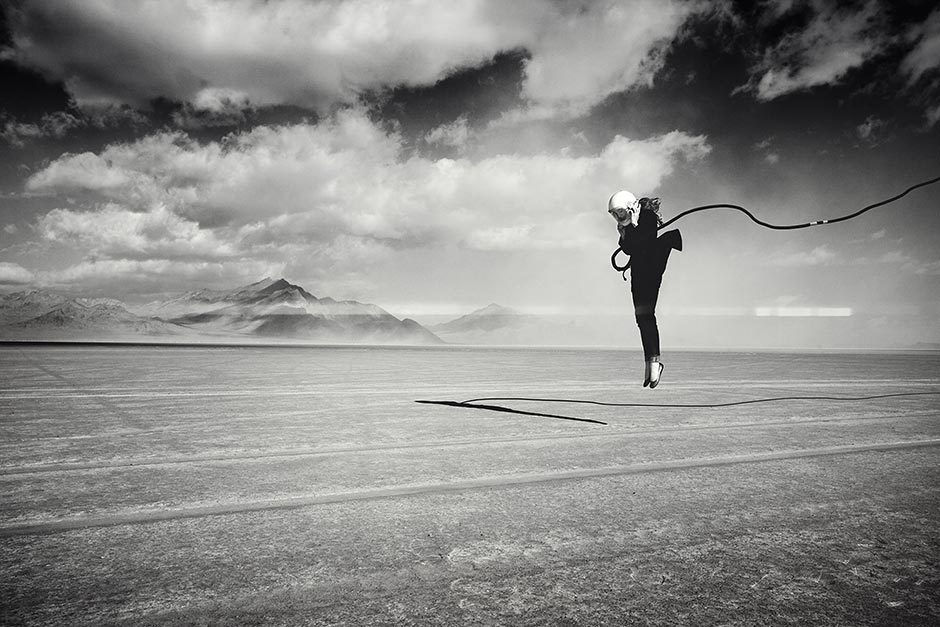
distanthills
CR: That’s a good point. This renaissance is really the democratization of photography. Cameras are a commodity. They’re everywhere. For exactly that reason, it used to cost you a lot of money to get a decent camera to make art. For a long time having a camera in general was like, “What is that person doing? Who are they?” This whole Vivian Maier thing. Have you heard about her?

OM: No.

CR: She’s this undiscovered artist from the ’60s, ’70s, ’80s. She’d been shooting since the ’50s, but after she died they found 300,000 undeveloped negatives that she’d taken, totally unknown to anyone else. Now she’s being hailed as one of the top street photographers of the 20th century. She was always unique. People remembered her because she had a camera. That was rare at the time.

Now everyone has cameras. They’re all pulling out these phones and doing all these things. How do you stand out? How do you comprehend all that data? It’s mind-blowing. These are our memories. These are what people are using every day. We’re remembering more, first of all, because we’re taking more photos.

Also, as an artist, that’s conflicting, because now my little cousin can take a similar photo to mine and edit it like I used to. It would take me days. But she does it instantaneously on Instagram.

[topic]Are memories dead?[/topic]

Are Memories Dead?

OM: One thing I find distressing about the camera revolution is our ability to form memories with the photos, considering that we are always busy taking the picture and forgetting the life unfolding around the picture, which is what gives it so much context. Memories are in your heart and in your mind. I think we confuse photos on our smartphone as memories. The omnipresence of visual sensors has eliminated the idea of memories. There is a payload of emotion attached to memories. Today pictures have none of that. Even though they’re more beautiful, they’re more omnipresent. There are pictures everywhere. But there is little emotional payload to them.

There is a picture of me and my sister. I was five and she was three. Every time I look at that picture I’m taken back to that time. Not because of the picture but because all the stuff that happened that day is still somehow logged in my head. It is a emotional mile marker, and every time I see her, I am reminded of how far we have come. Whereas today we’re constantly taking digital pictures. We don’t have the metadata of emotion from the pictures.

Photo by Helena Price

CR: You’re describing the eternal struggle of a photographer.

Traditionally, a photographer’s job is to document and not partake. I’ve actually written a blog post about this, where I have days of photos and no actual memory of that day aside from the photos that I took. That’s because I’m so lost in the minutia of the camera and trying to get a photo that I’m not participating. I’m hiding behind this machine.

I was with my girlfriend in the Salt Flats in Utah. It was gorgeous. We had a fantastic day, I think, because she was smiling in the photos. But I have no memory of the day. It’s embarrassing. I wrote this blog post called “Don’t Forget the Salt,” because I forgot that day. It was because I was lost behind the camera. How do you balance that out?

One of the main reasons why I call my app Litely is because you can get in and out of the app quickly. I don’t want to spend a lot of time in that app. I don’t want it to be that my girlfriend is driving the car because I’m editing photos for an hour in the passenger’s seat, missing the trip. I’m missing the scenery that’s going by. How do I reconnect with that? So rather than having to send my photos to the [Adobe] Lightroom and bring them back to edit in the way I wanted to, I made an app that quickly applies the edits. And I made the interface easy enough where I don’t have to go, “Tap tap tap tap tap.” I can select it really easily and be done with it.

I actually have a gift for you. The last time we talked was through Twitter, because the iOS 7 camera app crashed on you three times. I felt really bad about that. We learned that iOS 7’s implementation of that camera, at least, if you look at Litely on the iPad, is crap. This is a 3D-printed logo of Litely from Shapeways. My girlfriend has one around her neck. I made three of them. One is on my desk, one is hers. You can have that one as well. I’m sorry that you missed those photos.

[topic]Are filters the new “film”[/topic]

OM: Wow, thanks! This is super cool.

ARE FILTERS THE NEW FILM?

OM: I’ve been using the app, but I still have not figured out how to get the most out of it. Could you write an FAQ or how‑to on what these things are useful for? They’re not all filters. They’re essentially —

CR: Film.

OM: It’d be cool to know what these presets are good for. The variations are subtle, and you have to spend hours trying to figure out what the variation is in many of these presets. Yes, you can see the variation from Whiny to Platinum, because it’s color versus black and white. But it helps to understand, “OK, this is my starting point. See if I like that look, or I don’t like that look.”

CR: You’re right. We tried to describe the Venice preset as, “These are warmer colors, and they’re good for skin tones and portraits.” But the presets are loose. It’s fun to hear you describe them, because it’s like a film stock. Why would you use Fuji versus Kodak?

I like to think of Litely as taking a century’s worth of film stock and putting it on your phone. That was impossible not too long ago. You’d choose one film stock, like [Kodak] Tri‑X. It was one of my favorite films ever. It was unique in its capabilities. People have shot it for that reason. Why Tri‑X? It’s one of those indescribable things. It’s the feeling that you get from it.

As you described it, they are Lightroom presets, and the adjustments that you have in the app are the top four adjustments that I use in Lightroom. As a professional photographer, everything that I need — those four adjustments and those filters — are the 99 percent case when I edit a photo.

OM: So if you understand film, you understand Litely better. If you don’t understand film, you don’t quite understand the nuance of the app.

CR: For most people who shot with Kodak, they didn’t really care too much. They just shot, like, “OK, I’m going to use Kodak,” and it became a favorite for certain photographers because of the results. Most people just stuck with it because they liked the result, and it was a trustworthy result. We’re actually building the store into that app now.

You can learn more about the apps and also buy presets, so you can preview the ones that you don’t own on top of your photo and go, “OK, why should I have that?” There are two more packs coming out. We have 12 new presets in the works, and we’re going to release them over time. We’re also adding push notifications to the app so that when we have a new one, you’ll see an alert.

OM: The whole thing is such a guessing game for me. I’ll keep trying. That is the most frustrating part and the most interesting part at the same time. I figured out everything about Camera Plus on my own. I could have emailed someone and they would have helped me, but I wanted to learn how to do it.

How did you get into photography and ended up starting Litely?

CR: I’ve been shooting photos professionally since 2005. Litely is, in a sense, the merging of my tech side and my photographer side. Photography always been this passionate hobby of mine. It was my diary when I was in high school. I always had a camera with me, and I was always taking photos. I was that weird guy with a bag in American Beauty.

That was me, basically. Everyone used to joke about that, because when that movie came out, it was very much an accurate description. It was my cardboard spaceship, I like to say. When I was little, I would look through the family camera and see through the lens. It would change everything. That was fascinating, and it was technical at the same time.

I started a web company in high school as well, just making websites. The design side happened. I worked at Yahoo doing mobile design in 2007. I was doing a lot of mobile design stuff in general. Finally all the mobile design and all the photography came to a head: I got to design my own photo app. It makes sense. The perfect blend.

It’s fascinating, because these are the presets that I’ve been using personally for a long time. These are the colors that I’ve since graduated from.

[topic]Rise of the Silicon Traveler[/topic]
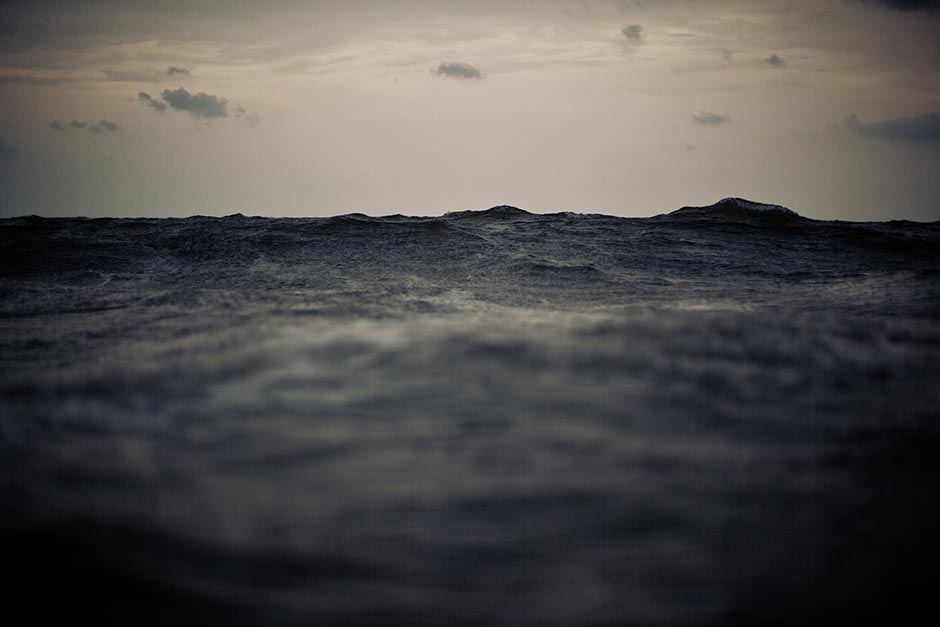
fiftyandtwothirds1

The Rise of the Silicon Traveler

OM: You live here in San Francisco?

CR: Yeah, I live here currently. I haven’t really been back here too much, though. I’ve been traveling since leaving Apple, the last year and a half or so, pretty consistently. They talk about Silicon Valley or this whole Silicon Beach thing. I think that’s already outdated, because I was able to launch Litely and start an entire business remotely. I don’t really need to be here. I currently have guys in New York, building. I go visit them once in a while, but I like this idea of being a silicon traveler, where we’re always connected and where we need to be.

Looking at the work life, the Industrial Revolution, and Henry Ford, who dictated our five‑day work week, our nine-to-five, “Make sure you stamp out 20,000 parts today in your 8 hours” — I don’t think that applies anymore. Especially while trying to live this photographer’s life and doing tech at the same time.

OM: You would love my friend Matt Mullenweg. He’s a big proponent of the distributed workforce. Gigaom itself has always been distributed. We have so many people living in different places.

I think having a distributed company is essentially a mindset. If the founder doesn’t have the mindset, you can never have that. That ability to be flexible about things is important. I loved the idea so much that I started a website called Web Worker Daily, which is the idea of nomads. We used to call them “digital bedouins,” but now they call them “digital nomads.”

CR: “Digital nomads,” yeah.

OM: “Bedouin” is a more real kind of a phrase. You pitch your tent wherever, and you’re good.

CR: It’s fascinating. We have people in Seattle, in Texas, in New York, and here, and we don’t have an office. It’s kind of working. We try to do that, because I think it fuels creativity. Whatever keeps you inspired. For Litely, it’s integral to get out there and experience the world and to perpetuate that brand. We want to turn it into that. That’s what we’re working on right now — having that message out there, in general, and for people to unlock themselves from routine.

So many people ask, “How are you able to travel all the time?” For the most part, I was full-time at Apple. I was just taking photos on the weekends, because I put in the effort. Like, I’m going to drive three hours this morning, wake up a little bit earlier, and be somewhere cool in California and take some pictures. That’s all you need to do. If you can graduate from that, and even freelance a little bit on some level, then you can keep going.

OM: Sometimes I miss out on opportunities to take great pictures in the world around me. I was describing this to a friend of mine. It’s like, you go to a place — like I went to Italy for a few days — and suddenly photos start happening. Sure, they’re not important to other people, but to me, I have a picture of that moment and everything in my head. When I come here, suddenly after four or five days, everything becomes two‑dimensional. I don’t know why that happens. You would think the San Francisco Bay Area is not a place where things would become two‑dimensional.

[topic]Joy of Winging It[/topic]
Photo by Helena Price

The Joy of Winging It

CR: That’s interesting, and people do photo walks for that reason. Then suddenly you’re on a block you’ve never been on, looking at it in a different way. I struggle with that, too, living in a city, because I take pictures of the mountains. How do you stay inspired in someplace like San Francisco?

The way I’ve boiled it down for my own understanding is to trust in the idea of “winging it” and believe in that. You can’t plan a good photo. You have to let yourself find them. Going out and searching for a photo is the wrong way to think about it. You should just have an interesting life and tell the story through hitting a button.

Photos are stories. I don’t care about the visual. It’s more about what it says. If you open yourself up to that thinking and spend five more minutes just walking around and exploring a little bit more, you find things, find moments, that you wouldn’t have found normally.

For example, I got lucky one time. We had an office on the Embarcadero. I heard all these sirens, and I saw helicopters. What was going on? I had a busy day, but I was like, “You know what? Screw it. I’m going to go for a walk and figure out what this is.” I was just following helicopters, blindly.

We came to this area on the Embarcadero. I think it was Pier 19, and it was on fire. Burning like crazy, flames shooting out of the top of the roof. I could have stayed back with the crowd, but I decided to be a little more ballsy. I walked right up to it, as close as I could get.

I could feel the heat and the firefighters around me, it was so soon after it had started. I was supposed to be working. I was like, “I’m going to go just wing it.” I winged it and I got this photo, because I could see that things were starting to fall a little bit. I got it just as it collapsed.

There was a firefighter underneath. I can show you the photo. It was one of those pure moments where I could see everything happening. Ten minutes prior, I would have had no idea that this was going to happen if I hadn’t heard the helicopters. Suddenly I’m watching a building collapse in front of me, almost hitting a firefighter. Thank God he was okay — balls of steel.

That Pier 19 fire, it was the moment that told its own story. I was dumb enough and lucky enough to be close enough to take that picture. That was pure photography to me, because it simply told a story. It wasn’t about the photo. It was more about what was going on in it. The purest form of art is something that you’re not conscious of. You’re just living it, and I happened to have my phone with me, thankfully.

It was an iPhone photo, and it was nuts. It still gets me excited to think about it. I think it’s one of my favorite photos I’ve ever taken. I was so lucky to do it. It’s not because I’m a great photographer. It was just because I was able to push myself to go that extra five minutes and walk in that direction.

OM: Your tip on creativity is to be curious. Forget taking the best picture. Forget thinking about the light or the color. Just be curious about the world and keep going.

CR: There are painterly aspects of photography. It’s forced, and it takes a long time to get there. If you think about what photography’s done for human existence, it’s changed our perspective on war. It’s changed human history.

Since the invention of the camera, the first documented war was the Civil War. We went from this romanticized notion to “charge with our swords” and “war is a beautiful, glorious thing” to thinking, “Wow, war is actually terrible. People are dead, rotting in fields.”

People at home were suddenly witnesses to war. We weren’t oblivious. It wasn’t this big picture in our brains that was puffed up by media. It was a real view of war. Suddenly we see this antebellum movement happen around the same time. We didn’t like war after that, because we realized how horrific it was.

In the ’60s, our view of the earth changed when we saw Earth from the moon. That Earthrise photo changed history, and it started our environmentalist movement. We’re like, “Wow! This little teeny, tiny thing we’re on is fragile, and we’re small. We better preserve it, because it’s not that big.” We’re just looking back at that, the first time we’d ever seen the earth that way.

OM: With so many people taking so many photos, I wonder if we have lost that ability to contextualize.

CR: It’s like the whole Twitter versus Instagram thing. Twitter says you have 140 characters. If a photo’s worth 1,000 words, how many characters is that? A photo says so much more. I feel like Instagram has recently surpassed Twitter exactly for that reason. Psychologically, we get more through photos and Instagram. But we can also get desensitized to it.

I had this thought the other day while looking at these gorgeous photos of Washington, Vancouver, and Canada taken by these guys up there. If I had seen that 10 years ago I would be like, holy crap. But now I don’t even spend the time to Like it. I’m just like, “Oh, that’s cool.” I don’t even double-tap it because I’m so used to it. When you have so many war photos, so many horrific photos, people get used to it.

OM: Sameness?

CR: Visually there are a lot of similar photos. I’ve been posting a lot of Hawaii landscapes. I’m just so bored with them. I have to show other people like, “Hey, is this a good photo?” Because I can’t even tell anymore. I’m just like, “Here you go.” The last photo I posted last night, I had the same thing. It’s cool to see it through someone else’s eyes who hasn’t seen them before. But when everyone sees it and they’re all used to that silly landscape and the entire world is known, what’s next?

I think the truth, actually, is what’s next. The story is all that matters. The memory of it. If that is as impactful as what a pretty photo used to be, then I think you’ve actually taken a good one.

OM: One other thing I’ve often thought about photos is that when you look at all the pictures — like, when I came to New York for the first time, I had seen few pictures of New York. I had only read books about New York. It was all in my imagination.

There was this whole joy of discovery. Like, “Oh, I remember reading that thing, and there it is!” And, “It looks better than I thought it would,” or “it’s less than what I thought.” Your imagination is always in competition with reality.

Now there is little joy of discovery. You go and you’re like, “Damn, I’ve seen this picture. I’ve been there, it seems like.” I went to Berlin last December and January. “I’ve been there” was on a loop in my head, and that just didn’t feel right. I wonder if this is the part of photo revolution that we don’t really talk about, this ability to discover.

CR: Yeah, the magic gets muddled.
[topic]How to spot a fake Route 66 sign[/topic]

Photo by Helena Price

How to spot a fake Route 66 sign

OM: Let’s shift gears. Do you have any advice for budding photographers as to what they should be doing and what they should be looking for?

CR: It’s that extra five minutes or five hours, or that extra ten percent that you put into it. Because most people don’t put in the effort, don’t open themselves up to that sort of thing. You could have an amazing experience five feet away, but if you don’t walk in that direction and put in the effort to do it, you will never have that. It’s trying harder and also opening yourself up to letting the photo find you. Living the story, going places that you’ve never been before, surprising yourself and letting the day dictate what you capture.

I’ll tell you a story. I was in Baker, California. Baker is just outside Edwards Air Force Base, a middle-of-nowhere town with just one intersection. Two roads intersect; there are two gas stations and an antique store. We’re sitting there, kind of bored. We didn’t have to get home too fast so we’re like, “Why don’t we go to the antique store?” We go into the store, and we are looking at all the road signs. And we see this gorgeous Route 66 sign. It looks like a real antique. $300? It’s actually cheap. This old man in the back chimes in. He’s probably 80. He says, “You know those are fake?” What, really?

He walks over and goes on to show us how to tell a fake Route 66 sign from a real one. He’s like, “I’ve got some real ones in the back in my shed. You want to see them?” We follow this guy outside the antique store. He goes into this giant warehouse in the back that we didn’t notice from the street. He slides the door open. What I think he’s going to do is pull out a couple signs from some dusty area. He opens up the door and it’s a freaking museum. He’s got a Chevy ’54, ’57 — these gorgeous cars that he was restoring.

It’s the most well-preserved, deep collection of Americana road signs and cars I’ve ever seen. He’s got missiles from the air force base up on the roof. He’s got a plane in there. He’s a pilot himself. It was gorgeous. We were just like, “How are you hiding this from the world? This should be a museum.” He’s like, “Oh, this is my personal collection. I don’t let people back in here.” This is his man cave.

We spent the next hour trading stories. I took a photo of him, a portrait that I love. It’s the story around his life and how he’s curated everything in there. We learned that the Kansas Route 66 sign is hard to find, so most of them are fakes. If you see a Kansas one, it’s probably a fake, unless it’s got these certain things. Or with Texas, it’s such a short word that it doesn’t span the entire sign. They center “Texas.” Or if it says “Route,” that’s totally not right. It only says “66.” There’s never a “Route” anything on the sign itself. Fascinating.

We spent probably an hour and a half or two hours talking with him and having an incredible day. I took one photo. That was his portrait. That photo meant the most to me that day because of what it actually was. We would have never had that experience had we not gone into that antique store and been open, just winging it. I’ve never planned a single photo in my life. Let me say that. I’ve got a ton of work, and I’ve never planned a single one. I’ve been in forest fires and insane, insane things.

There was this other time when we were driving toward this cloud formation. I was with my best friend from college and his new girlfriend, who was a model. They were in a separate car. We were driving, and I saw this giant plume over the mountains as we were going, snaking through on that road. Intrigued, I decided we should drive toward that and find out what it was. That’s the kind of decision most people don’t make. They look and go, “Gee, I wonder what that is,” and they keep driving. They listen to their radio. We decided to follow the smoke. We ended up getting closer and closer. It was this giant brushfire. We kept going. We got closer, and we went up into the mountains again. I’ll show you the photo.

Earlier that day two guys had taken off on a plane, and they crashed and died. That plane crash started this brush fire. I learned this after the fact. That was really horrible.

But we got so close that ash was raining on us. This DC-10 flew over our heads, probably 500 feet up, and dumped its load through the smoke. You could feel the heat from it. It burned as the ash hit you. We had to leave, but we did a photo shoot right in the middle of it. My friend’s girlfriend was wearing a white dress. She fell in front of this forest fire at sunset. I don’t think I’ll ever forget it because of what we went through. We were afraid that we were going to start burning. I had holes in my clothing because the ash was so hot. That photo found me that day.

twosouls

OM: In your mind, there’s no difference between the lens and your eye, essentially. That’s a good picture, when the lens and the eye are in complete sync. You’re seeing and capturing at the same time.

CR: It’s exactly that. You find this honest moment, where you connect with something, and that’s when you take the picture. That’s all you need to do. It’s enveloping that moment and then putting it somewhere. If you open yourself up, it will allow you to do anything. I’m not a great photographer. I’m just a curator. I know when to hit the button. I leave the rest up to life.

OM: The iPhone isn’t really a camera. It’s like the lens is the extension of your eye.

CR: It is, exactly.
[topic]My iPhone is really me[/topic]
OM: If you let it be, right?

My iPhone is really me

CR: If you connect to my phone via AirDrop, it doesn’t say “Cole’s iPhone.” It says “Cole Rise.” It is me. This phone is everything. It is who I am, because it’s always with me. It’s an appendage, and it happens to record.

The whole Google Glass thing, that’s cute. I think we’ll have something better to be able to capture things all the time. If we can solve the storage problem, then we’ll always be capturing these memories. You still have to decide which one you share, and that’s what we’re doing, currently.

OM: Litely essentially wraps presets into an app. I have another photographer friend, Kevin Abosch. He made the Lenka Cam app. Right now they’re black-and-white. It’s just one style of photography. That’s how he likes to take a black-and-white picture. Do you think more people are going to open up to something similar, where the apps become a wrapper for your interpretation of creativity? Like, it’s less about a tool to take pictures and it’s more about a way to express yourself?

CR: Absolutely. Curation and who curates it are as important as how well it’s built and how easy it is to use. A good example is Lenka Cam, of course, because that’s his style. It’s like paint. If you want to use his style, that’s awesome. I don’t see Litely competing with other apps, because it’s just another alternative. I am the burnt sienna, and he is the magenta. He has his style, people can use it, and that’s awesome. I’ll use his style once in a while if I feel like doing it.

VSCO Cam has its own thing going too. You might feel like using whoever’s style that is. Pretty much, all we have is ourselves and who we are. When you edit photos using Instagram filters [laughs], you kind of go away.

OM: It’s interesting; I started out using filters and now I don’t. The only thing I control on the photo is exposure and contrast. Most of my pictures were slightly crooked, and that is because I had some sight issues. It was Helena Price who pointed out that all my photos were crooked, and I ended up figuring out how to deal with the problem.

CR: They discovered this about Monet. Monet’s artwork became more and more colorful over his lifespan, because his eyes were becoming worse because of macular degeneration or something like that. I forget exactly which way it went, but you can see the progression of his vision through his artwork. That’s beautiful, because you are, in a sense, that filter. I prefer that.

OM: Do a lot of people buy your iTunes presets? Or do they buy the Litely app now?

CR: The Litely app was supposed to spur desktop presets, because the margin is a lot better there. Rather than 70 percent, it’s 98 percent. Both have gone up, but far and beyond it’s the Lightroom app. After the first month, it was easy to see, “Wow. We’re making way more money that way.” It’s cool to be surprised that way. Mobile is certainly here.

OM: Why do you think you’ve been successful?

CR: I’m just like any old other person in the world. I’m just a human being. I’ve tried to live honestly to photography and have cared about it for long enough where Litely isn’t a ploy to make money. It’s a passion. It’s who I am. I’ve been fortunate, through photography, to be able to communicate that message on some level to certain people. I feel that honesty resonates with people. It’s not coming from nowhere. It’s coming from someone who has a message. It’s the same reason why I would buy Lenka Cam versus something like an Aviary. I love what they do, but there’s no one behind it. It’s a business.

OM: That’s what you do with food, fashion, the whole thing. We want to know a story. Somebody wrote about this recently, how customization is the next big wave of the internet. I think it’s the new thing already. People have not figured it out.

CR: I’d love to think of Litely presets as handmade. Although they’re digital, they are made in a place over a span of time with a tool. It’s for a reason that’s more than making money. It’s for making art and telling a story.

Photo by Helena Price

Photos of Cole Rise courtesy of Helena Price.