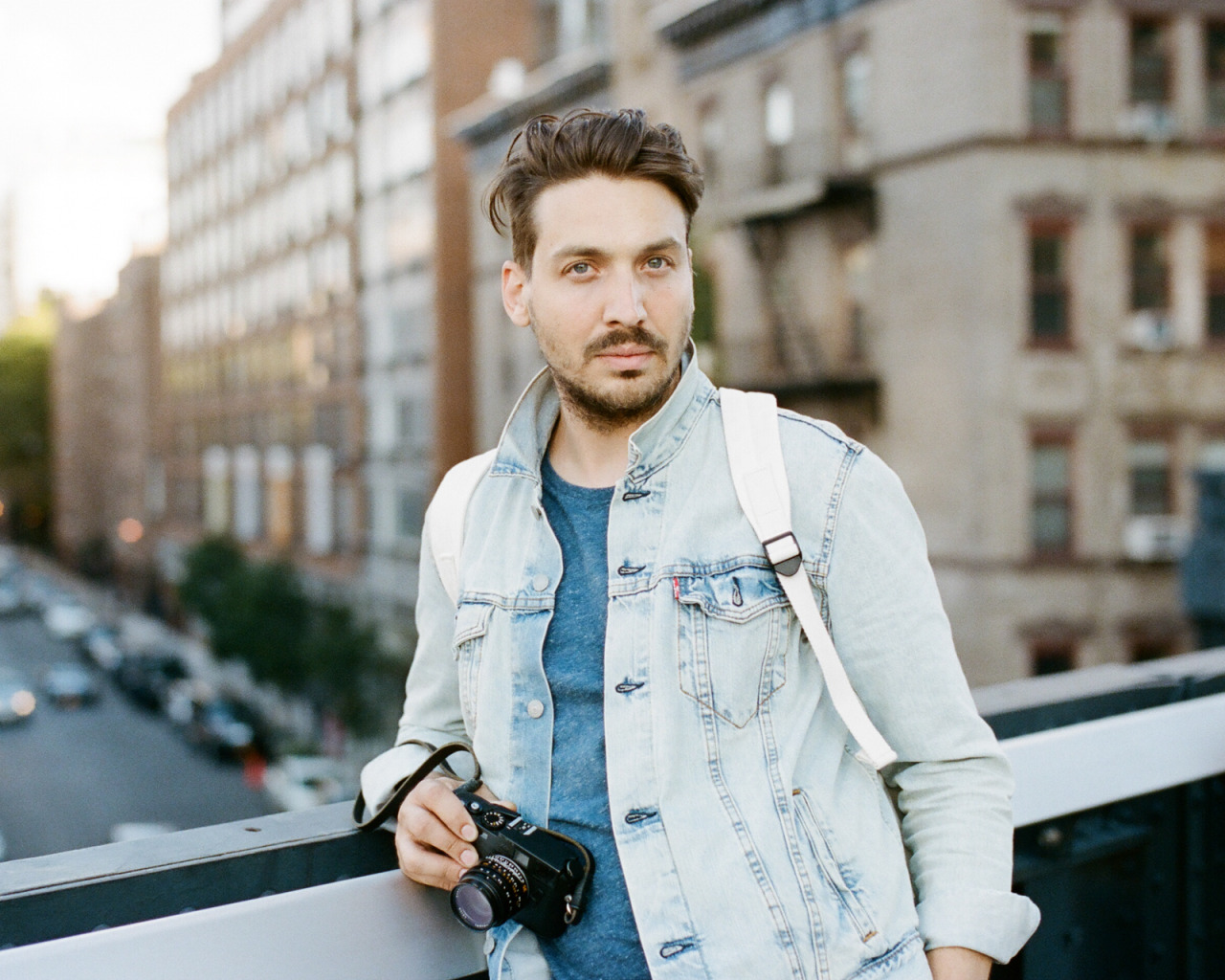
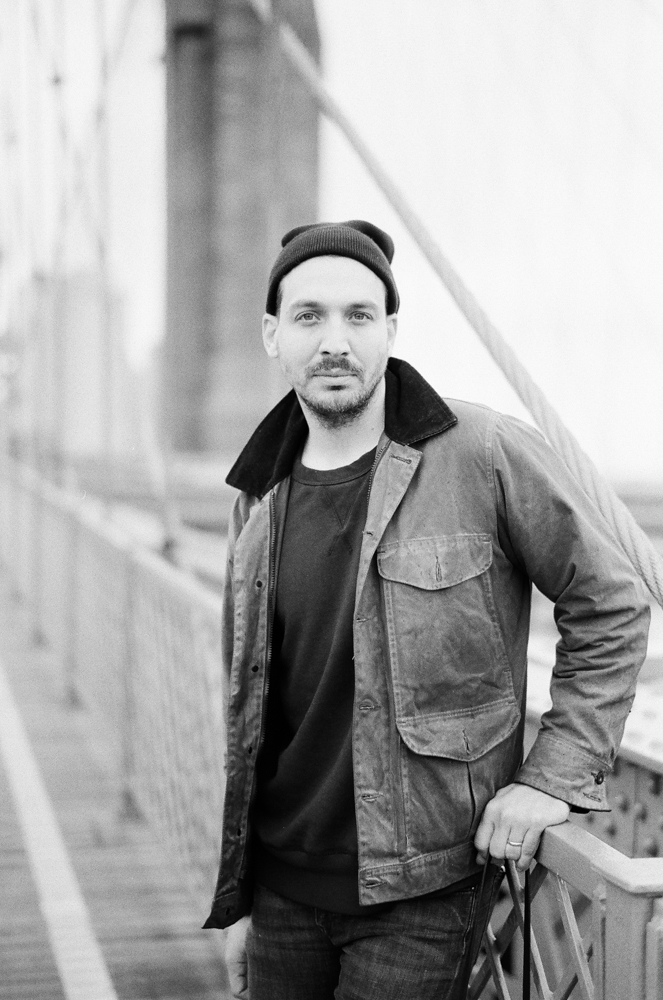
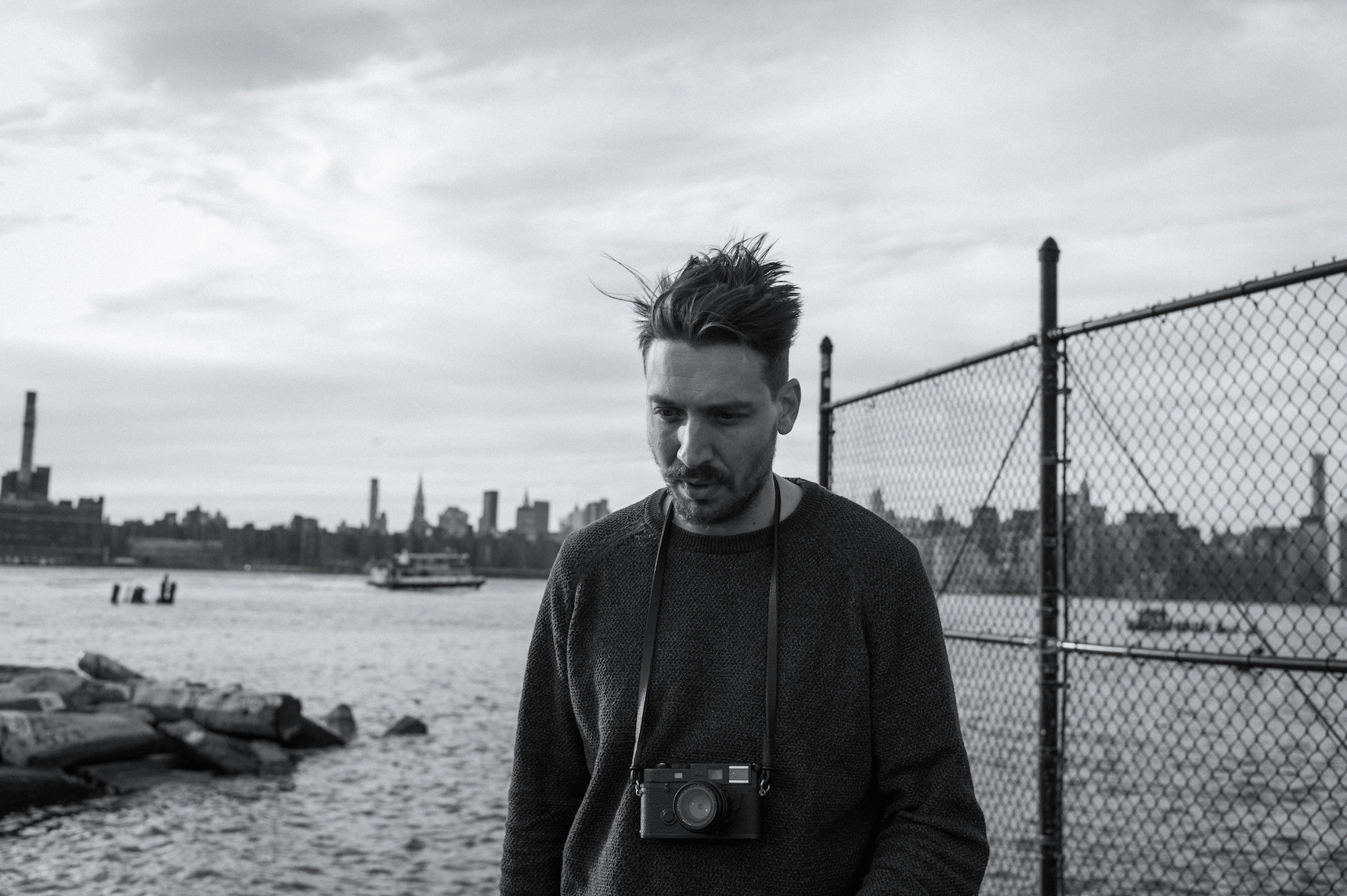
Louis Rossetto

Om Malik: Before we walk down the memory lane, I want to know what you’ve been up to.

Louis Rossetto: And that’s exactly what I’d like to talk about. You did an interview with my good buddy, Erik Spiekermann. Erik and I are publishing my novel, Change Is Good, about the moment in the ’90s when the utopia of the digital revolution was turning into the orgy of the dotcom bubble — in January 1998.

I’ve written a story about six characters, six young people, and their adventures and misadventures in South Park. I wanted to write a story about that period that is probably more real than what you could do if you were writing nonfiction. To try to capture some of the excitement of these pioneers and their mission — to travel west to a new world beyond California called The Future. Erik is publishing the book in Berlin on his own presses using technology he’s developed to reinvent letterpress printing for the turn of the century.

Om: How can we get a copy?

Louis: Appropriately, like we did when we were publishing Wired, it’s not going to be through normal media. I decided I didn’t want to go to New York. I didn’t want to go through normal publishers. I wanted to do what those kids did at the time, which was to go directly out into the world and get direct validation. At the time there wasn’t a way, but there is today — Kickstarter. Kickstarter is a vehicle for finding a market, but also for making a movement. Change is Good is going to come out on Kickstarter, starting the 14th of August, as a limited first edition of 1,000 numbered copies designed by Erik and then printed on his presses.

IMG_9479.JPG

Om: While you were writing this book, were you doing anything else?

Louis: When I finished with Wired, people came to me and said you should write the story of Wired. I said I don’t want to write the story of Wired. That was just too intense, and in some ways, too hard at the time. I didn’t want to relive that time per se, but I did want to tell the story of that moment that Wired was covering because I think that’s more important.
Wired Reunion009 copy 3Back in beginning of the 2000s, in the early aughts, I started writing a fictional story set here, literally outside of our windows in South Park. I was at a place where I was ready to go out to the world with it, and then my life got interrupted by the chocolate company.

One minute, I’m a writer working on a story, and the next minute, I’m investing in and the CEO of a chocolate startup, Tcho. For six years, I got sidetracked doing that. I put the manuscript away and didn’t think about it again until I left the chocolate company. I was wondering what I should do next and remembered that I had this manuscript.

Om: How long did it take you to get over Wired?

Louis: I don’t know if I’m over it now. I was officially fired from Wired in 1998, and the company was sold in 1999, and I basically became a civilian involuntarily, but then embraced it wholeheartedly because I had two young kids. At the time, I had the thing that most American men don’t have — the freedom to spend time with my kids. Not quality time, but to be an integral, daily part of their lives. I devoted the next five years to being with them and enjoyed living that life for a while.

Om: The reason I asked is because I had a similar experience, except in my case, the company shut down entirely and at the time it was a really important piece of my life. It still exists, just somebody else owns it. Someone asked me once why I didn’t write about the whole experience, and ironically, I did write about it in a notebook — pen and paper. It was about a hundred pages or so. And I lost the notebook. I think that was God telling me that maybe it’s time for that to go away. But it does stick with you; it frames your way of looking at the world. Maybe your chocolate company was your notebook in many ways.

Louis: Life is funny, because you’re supposed to — well, at least when I was growing up — you were supposed to have this clear idea of the trajectory of your life, a career that you could envision how it’s going to turn out, and the steps that you would take along the way to make that dream real. My life has been about serial obsessions, which I compare to love affairs. You can’t will yourself to fall in love, but suddenly you find yourself in love, and then it becomes something amazing.

My life has been about serial obsessions, which I compare to love affairs. You can’t will yourself to fall in love, but suddenly you find yourself in love, and then it becomes something amazing.

I think people do their best work when they’re obsessed by something they have to work out. That’s been the story of my life. It certainly hasn’t been linear. It’s been about following passions along the way. Sometimes it’s been about being a journalist, or an editor, or an entrepreneur, and other times it’s been about being a father, or a chocolate company guy. Now it’s about being a writer. Each of these have had their own moment; they’ve each absorbed my full being in order to work out whatever it was I had to deal with.

Wired Reunion056 copy 2

Om: Could I ask you about the world we are living in right now, compared to what it was like at the start of the (tech) revolution, when Wired started? In a way, it captured what was to come. It was the magazine that said, “This is the future; walk on this path and you will get somewhere.” And that somewhere was unknown; every month was a different unknown. Looking back from where we were to where we are now, what do you think? How are you thinking about the revolution now?

Wired Reunion046 copy 2Louis: It’s hard to cast your mind back to 1991 when Jane (Metcalfe) and I moved from Amsterdam to South Park to start Wired. If you look at the statistics, there were one million computers connected to the internet at the time versus 3.75 billion today. It was a zero billion dollar web media market versus a $75 billion market today. It was this empty space that we could fill with any kind of dream.

Meanwhile, it’s also 1992, and we’re just three years after the fall of the Berlin Wall. The cloud that was hanging over the Western world as long as I was alive was suddenly gone. The Cold War and the prospect of instantaneous nuclear oblivion was over. Then you had someone like Francis Fukuyama come along, making his case in The End of History and the Last Man that this time represents the end of history because there’s no counterbalancing power or ideological power to this victorious Western-Liberal-Capitalist-Democracy mob. There will be no more treaty wars, no more Cold Wars, just a future that’s peaceful and prosperous.

In was in this space, this relieved and optimistic head space, that technological developments that had been accruing for the last 20 years — microchips, personal computers, global networks — started to come into fruiton. Arriving in 1992, as naïve as we were, we could see there was a real possibility for using these new tools being created by individuals to impact the world and make change.

Previously, we had been living in an era of mass. Mass market, mass media, mass production — all of which required hierarchy and centralized power and authority. Whereas, with the arrival of personal computers and networks, you could have direct, peer-to-peer, and you could have the power of the computer as your brain appliance actually do stuff that you never could do before. Hierarchies were flattening; people had power to accomplish stuff — and they were. That’s the environment that Wired was trying to represent and describe.

Wired Reunion205 copy 2

Jane and I had come from Europe, where we had started a magazine called Electric Word. Electric Word was for people who were working in advanced word processing or word-based technologies. I didn’t know anything about word technologies or languages or anything like that. I went into it as a post-graduate student and I discovered all these people working on these supercool things in their little silos. And I said, what happens if we can bring these people together and show them how what they’re doing connects to what other people are doing?

That was Electric Word, and that was the same premise for Wired. It was holding a mirror up to all these people who were creating and using technology in their silos, to say to them, “Hey, look at yourselves. You guys are making cool stuff and you’re having a big impact. Revel in that, but also be aware of that.”

For the rest of the world, Wired was a window into a world that was opaque to them because mass media wasn’t covering it at all. If they were, it was as these weird guys with pen protectors and broken glasses — maladjusted adolescents that were doing stuff out in the world.

Instead, I wanted to say to them, to the people on the outside, that these are the most powerful people on the planet today. They’re not the generals, they’re not the politicians, they’re not the priests and they’re not the pundits. They’re the people who are creating and using this technology to revolutionize everything around us. It was an ambitious idea to put forward at the time, because the media wasn’t giving any indication that this was even happening.

Om: Discovering Wired was like finding my Rolling Stone. With Wired, I found my cultural context more than anything else. I didn’t even think I was a nerd. I wasn’t. I was just interested in the future. And that’s what made Wired so special, was that it said, “Look at where we’re going.” The shiny light was there and I think that’s what excited me about everything.

The internet itself was just so amazing at that time. I discovered the internet in early 1990. The infatuation took about 12 months, and your magazine had something to do with that. I’m grateful for that in many ways. When you look at where the world is today, technology is completely pervasive and mainstream. What do you make of that? Did you imagine this future, or has is it exceeded your expectations?

Louis: I think in the abstract you can imagine anything. But then there’s a reality that you stumble into and it’s never quite the same, and the reality is always more.

I don’t think we could have ever understood fully what that meant. A networked world seemed obvious — it was going to happen. The leverage that computers were going to provide individuals in that network world, that was obvious, too. You could watch the curve of the power computing and the power of networking. A lot of things have come to pass, of course. Lots of people have connected to the network. They have supercomputers in the palm of their hands, which used to fill huge rooms in the Pentagon.

I think there’s a level beyond that; something that we are still grappling with, and may never completely comprehend. It’s like, before there was one or two or three or half a dozen or a dozen representations of reality that were shaped by Pravda and the Kremlin, or shaped by a two-square-mile area in Manhattan. You could go to sleep at night thinking that you had an appreciation for how the world really was, and Walter Cronkite used to end his newscast every evening saying, “And that’s the way it is.” There was this comfort of knowing — believing — that must be the way it is.

Today, with so many different nodes on the network, the idea of “that’s the way it is” seems ludicrous, although people adhere to it in this atavistic way of thinking that there is a “that’s just the way it is” reality. There is a real reality. I think everyone of us are touching the elephant and trying to imagine what that reality is. Instead, what’s happening is nobody can get the whole elephant, so there’s this consensus reality that is being generated about that elephant.

IMG_9481.JPG

Om: There is the perception, which is reality, and then there is the reality. Reality to each person is essentially how we are interacting with our daily circumstances. I think that’s reality. Everything is perception. I get confused by a lot things I read. I have to stop reading in order to get a better understanding of what is happening.

Louis: When Walter Cronkite was saying, “that’s the way it is,” you felt a certain security. Today, that security is gone because we don’t really know that’s the way it is on an individual level. The whole tribe has a sense of it in their subconscious, a super conscience way. It’s time, perhaps, to let go of the feeling that there is a security of one reality, although there is only one reality. I guess that brings us back to the question: Where have things come since 1992? In that sense, back then, we were approaching a new space and new ideas that were going to change the world.

Now, 25 years later, we live in a changed world that we don’t understand anymore, and that causes discomfort. Things are out of control. That’s what Kevin Kelly was saying in 1994 when he wrote a book, Out of Control, that this technological biological world we’re in is no longer the safe space; it was an illusion that we were believing in during the Cold War. Today’s world is a very chaotic, dynamic space and there’s going to be certain amount of discomfort in occupying it.

Om: Is it because we are in a transition period from the old industrial way of thinking about things to a new way of thinking, one that is more network centric? What does GDP mean in today’s world? As an individual, you’re buying things from Japan and Canada and all sorts of other places. Isn’t that part of trade? We have these old grand notions of everything. I feel that we are going through a big shift that society hasn’t fully understood yet.

Louis: Absolutely. I would argue that in some ways Trump is the beginning of the 21st century. We’ve been lumbering along with stuff that is a throwback to the ’90s. The ’90s ended with the dotcom bubble bursting.

They also ended in lots of ways with 9/11. The 1990s were about a decentralized, non-hierarchical world where decision-making and changes occurring across this membrane. The movement away from hierarchical control was in fact blocked by the 9/11 tragedy, which prompted a return to and embrace of this idea that there is some central power that can control things benevolently. This went on through the Bush era and the Obama era.

The Bush era was about returning power to the State so that it could defend you against the maniacs out there. The Obama era was about, “If we only got control of the power of the State, we could use it to good ends.” The 21st century is about the breakdown of this idea, which had a fake resurgence over the last two presidencies. I think maybe we’re going back towards the idea of, “Wouldn’t it be better if we worked directly to make the change we want to see, instead of trying to subcontract it out to other people to do?”

That was the power of the 1990s. “We’re not going to subcontract this; we’re going to do it ourselves.” “We’re going to change industries directly by making these new tools or organizing things better.” “We’re going to change this; we’re going to change that; we’re going to change how we start a company.” “We have new technology and we are going give this technology to other people.” All of these things were happening because individuals were working with other individuals to actualize ideas they had, rather than believing that somehow we need to do this on a macro level, which is completely impossible.

“We’re not going to subcontract this; we’re going to do it ourselves.” “We’re going to change industries directly by making these new tools or organizing things better.” “We’re going to change this; we’re going to change that; we’re going to change how we start a company.”

Om: What do you think about a lot these days? What’s on your mind?

Louis: People talk about the hockey stick and how we’re moving up the hockey stick. I think a lot of people here in Silicon Valley think that we’ve moved up the hockey stick quite a bit since the ’90s, but I keep saying that the hockey stick keeps moving down — and we’re still only at the beginning of the hockey stick. All of the technology, the networks, the tools have enabled the creation of the data AI and a lot of other things, such as sequencing genes.

We’re only at the beginning of a new hockey stick as a result of those breakthroughs. The new hockey stick is even more amazing than the last one. The changes are going be even more powerful than before. We need to be addressing the possibilities of the future with the same kind of optimism and critical analysis that we did in the ’90s. I think we would be happier and we’d end up making a better world more likely.

Om: I have two takes on this. One, I definitely believe that we’re just beginning to understand the capabilities of the pieces we have built. At the same time, we as an industry, if you want to call it that, have become very mercantile, very driven by the dollar and very little driven by imagination. Even a lot of the new people who are coming in are less driven by the dream and more by the dollar.

Wired Reunion116 copy 2

How do we get people to think differently about the future? What is it that needs to happen, and how do we shift the focus from dollars?

Louis: I should be asking you that question because you’re the guy with the dollars.

Om: We invest in a lot of those dreams, and that’s what makes me excited about my job, to work with people who are trying to figure out new microbes using data and genomics those who build drone mapping services. I believe in the power of the data and intelligence for better maintenance of our networks, of our machines, of our homes. Why not? So we invest in that future. But I think there is a lot less dreaming going on these days.

Louis: It goes back to this question of attitude, how you perceive the world. I think what I keep coming back to is in the 1990s, the attitude was, the future’s so bright I gotta wear shades. That was literally a song. [Ed.Note: It was a great and fun song, Timbuk3 “The Future’s So Bright, I Gotta Wear Shades” (1986) — though not quite the 1990s.]

We can do anything; anything is possible. We can reinvent the world, every aspect of it. We can make it better with positive change. This optimism is crucial to being an entrepreneur. As an entrepreneur, you can’t not be an optimist. But I think some of the optimism has been lost since then. The was the shock of the bubble bursting, the shock of 9/11, the shock of the financial meltdown in 2008. Then, the intractable war on terrorism, the intractable political issues in the West in general, and the European meltdown as well, which continues.

We live in this Marvel universe where the problems are so large that the planet itself is under attack by alien forces and the only people that can save it are those with superpowers — aka superheroes. But to me, that’s a misrepresentation of the real situation, that the world is getting better. Violence is declining. Lifespans are expanding. Health is better; quality of life is improving. Poverty is decreasing.

Objectively, the indicators are pointing to the fact that things are getting better. Instead, a lot of people are going around angry, frustrated and fearful about a future that they’ve created in their own minds. It isn’t real.

I think approaching the future with optimism is important. If don’t approach the future without optimism, if you don’t think that we can make a better world for your children, then you won’t. You’ll end up in this kind of apres moi le déluge, a catastrophe, let’s indulge ourselves in the moment — as opposed to making this a better world.

I don’t mean, in a Silicon Valley sense, “making a better world” as part of a business plan. If people believed and acted like the relationships they have and the actions they do can directly make things better, the world would get better. I truly believe that. It’s this micro decision-making level of individuals that matters the most. If you treated every other person better than you do now; if you thought about the companies you’re working with, or the products and the ideas you’re working on, as being part of a process and a matrix connected with other people doing that, too; this would have more impact than any specific party capturing the White House, or doing another mammoth supra level event, which isn’t going to result in anything right anyway.

If everybody focused on what they could do, the net result would be even more than what’s happening now, which I think is still pretty good.

Om: What do you read these days in the news and tech media?

Louis: I graze. I don’t really obsess. Again, I think if you look back at when Wired started, there were three national networks, there were a few cable companies. There were still big magazines. Time Magazine had four million copies every issue. Playboy had five million copies. That landscape has changed. I look at the big stuff, I look at the little stuff. I feel like I’m not even close to doing as good a job as I need to, to understand.

The difference between now and then, in some sectors, is that at that time the players were pioneers. Now the players are settlers. The settlers can be doing all sorts of cool things. It’s San Francisco in 1900 versus San Francisco in 1848.

South Park — this park here in front of your office — was built just after the Gold Rush as the first planned community in San Francisco in the 1850s. By the end of the century, all of the settlers coming out here were coming out for something they could see and reference and understand.

Original Wired Cover copyCertainly, it must have been less exciting than those first pioneers who came here wondering, “Am I going to starve, or am I going to find riches?” That is not our world today. Much of what we know has been settled. Yet, there are still frontiers that are being opened. There are old spaces that are interesting. The biological sciences, those areas, I think of all the development that’s happened and still all the development that’s ahead of us. There are numerous spaces there.

Om: I’ve been wondering about something ever since decentralized media came about. I wonder if we will ever have great editors like yourself or Anna Wintour at Vogue?

Louis: Marshall McLuhan was our patron saint, and in Medium Is the Message, he famously wrote about how every medium has its own dynamic — and we’ve seen the emergence of a bunch of new mediums in the past century. Whether it’s been newspapers to radio to television, magazines and books. Now on the web, Twitter, Facebook and Instagram are continuing on. Every time, people believe that it’s the end of history, and the irony is, of course, that it’s not.

The media that we’re immersed in today seems sort of like as far as we can think about how things are going to be. I’m going to guess though that there will be more changes coming as to how we consume, how we connect to the world. I think media has an evolutionary purpose; it’s about doing things to the world. The more successful it is in connecting us to the world, the more it should prosper. Those elements in media that don’t, shouldn’t. I’m guessing that there’s life beyond Twitter and Facebook. There’s always a need for somebody to curate what’s out there.

Om: Talking about what’s not changed is the idea of books. They have survived human history in many ways. Which brings me back to your new book, Change Is Good. Do you think you will write more books?

Louis: It’s hard. Writing long stuff is one thing, and I’ve done that, and people can do that. If you’re writing nonfiction, then you have something that you’re trying to capture that has a basis in reality. You can try to reflect that. You can do it better or worse; I would prefer not. It’s almost external to you.

But a novel on the other hand, I’ve discovered, is something else again. Really what people are paying for is to know you, the inside of you, the inside of your head, the inside of your soul. It’s a different experience than I’ve had in media before.

Being an editor or an entrepreneur putting together a media company, in a way you collect people to represent aspects of what you’re trying to convey. You nudge them, inspire them or browbeat them into something that works to make that expression. You’re shielded. You have designers, you’ve got writers, you’ve got editors and all of the rest who are out there in front of you, doing stuff.

With fiction, it’s the opposite. You’re the one that’s in front of everything. I don’t know if I will or not; it’s been hard. It’ll be interesting to see. It’s a relief in some ways. Yet, it’s scary. I don’t know how people are going to react to it. I can only imagine I’m gonna get shot at, get my arrows as well.

Om: Do you think of yourself as a writer or as an editor? That should answer the question about the book very easily.

Louis: I guess I’m both at this time.

Om: The reason I ask is that, if you’re an editor, you need a medium or a publication or something of that sort. If you’re a writer, you can just write. I often grapple with that question in my head. Am I a reporter or a writer? I think I’m coming to a conclusion that I’m a writer. That’s why I can also ease myself into something which is not the traditional idea of media anymore. I can write my personal blog and be happy about it, and do interviews with folks once in a while.

Louis: The thing about a book, speaking about the medium being a message, is that we live in this world that’s gone down to 140 characters. A lot of people now spend a lot of time writing 140 characters. Little bites, thoughts, perceptions, whatever.

But sometimes, you need to have a longer form to fully express an idea, to fully investigate an idea that can have an impact on people. There’s no better format for doing that than books. A lot of people are going to be out there putting their perceptions into the forms that are available like Facebook, Instagram or Twitter, but there’s still a need to convey big ideas and tell your stories. So books will continue to endure. I think magazines might go away as we know them, except for some specialized ways of using paper, super beautiful magazines.

Om: I suspect books remain as the only text form of consuming information as we go into this world of late voices and such. The next achievements of the world are based on environments. I think most of the verbiage as we know it, which is text and some photographs, goes away and becomes much more visual. It becomes more interactive on a visual plane because I think text and typing is not conducive to the way the human brain works.

Louis: The idea that linear thought stems from books stems from the Gutenberg era. Logic and rationality are an important method of storytelling and conveying ideas, we’re going to need those kind of forms in the future. We can get blase about the mundane, incremental changes that are occurring with ever faster chips or new lasers, or whatever. Still, out there at the lower end of the hockey stick, are these new breakthrough technologies that nobody could have seen five years ago.

I used to joke that there was a “Rossetto’s Law of Media.” The consumption of media is a zero sum game. If you’re on Facebook, you’re not reading The New York Times. If you’re in your VR world, with all these people coming at you with stuff, you’re not on Facebook anymore, either. There will be this ecology, this natural turnover of media, as new ones come along that we haven’t been able to perceive yet.

Photos by Chris Michel, Om Malik. Archival photos courtesy of Louis Rossetto.
Julie Zerbo

Om: Were you interested in fashion when you were growing up?

Julie: Not really. In law school a professor thought I might be interested in fashion law, and it turns out that I was. I didn’t set out to work in fashion or to be a blogger. I was under the impression that I would go to law school, do everything that a traditional law student is supposed to do, which is write on the law review and join the court team and then be summer associate and go into a big firm.

But by the time I was in my first summer of law school, my website had taken off. That took up a lot of my time. I would go home from school and write articles of my own and post them, giving me instant access to readers, which I found to be more interesting than the law review practice with its extensive lag time

Law Review is very well respected and old school. I find it to be dated, though, because the articles are so long and it’s not digestible material. It’s not interesting for everyone, and the audience is somewhat limited. There was something about being able to reach so many people and make these otherwise difficult, complex topics more digestible.

In addition, from the beginning it was selfish. It was a way for me to learn. We didn’t have fashion law classes then at my law school, so I would read and research and write as a way of learning the theory of law.

Om: When I was growing up, it took forever to pay your dues and get to the point of success. Now with the internet age, it seems like you can have an impact at a relatively young age. Do you agree with my assessment that the internet has allowed people to compress the time it takes their careers to unfold?

Julie: I agree completely. While I have been able to build an audience in this area of fashion law, I don’t think that’s even remotely equivalent to the experience of some of the people that I look up to in fashion law. The website and the internet have given me a platform much earlier than they probably should have.

Om: My argument is that the internet compresses time and distance. It’s like a time machine: You fast-forward to what you’re supposed to do much faster, because you find out much faster what you’re supposed to do. One of the things I often think about is the correlation between how we’re always on the internet and fast fashion.

Julie: I lose sleep thinking about the cycle of fashion and about fast fashion. There absolutely is a correlation, especially in terms of time. One of the ways it started was to make these high-fashion garments accessible at every price point, which I think is a noble goal. It just has come with so many abuses, whether it be slave labor, which fast fashion retailers have been accused of, or unsafe garment factories, as we’ve seen multiple times over the past several years, or human rights abuses.

We’ve created this system that is so unbalanced. We’re asking for so much in terms of the quantity of garments, and we’ve come to expect it for so little in terms of price that it’s an unmanageable system.

Practically, it’s cheaper to send X amount of dollars on a PR campaign than to implement a new auditing system for overseas suppliers. It looks prettier. It’s something tangible that shoppers can be a part of. Fashion is meant to look beautiful, and it’s supposed to make you feel beautiful. Part of that is the industry protecting itself and making sure that it always looks good.

JulieZerbo2

Om: How do you, individually, stay away from this magnetic pull of the industry and becoming part of the firmament?

Julie: I consider myself much more in academics than a fashion industry insider, and that gives me some perspective. Not being afraid that I’m going to burn bridges — it’s my biggest asset. I feel stronger about telling the truth, being an objective voice and educating than making friends.

Other publications and blogs can’t get away with that, because advertisers are on top of everyone and censoring what people can say. Luckily, I have advertisers that are largely based in academia.

Om: This is a tough business. There was that big story of you taking on Chanel: It was pretty amazing to see that and that they actually made amends and took the product off the market.

Julie: It was surprising, because I didn’t know that anyone would read my story. At the time, I was still a first‑year law student. I didn’t know that a blogger had that kind of power. I was just writing about what I thought was right. It goes to show that you don’t have to be a CEO of a fashion company or an editor in chief at a huge publication to have an impact.

Om: How would you describe the fashion industry to people who are not into fashion? People ask me, “What is Silicon Valley like?” My simple explanation is that we have thousands of socially dysfunctional, ultra‑smart people in one tiny space, so things happen. We don’t know how, but things happen. That’s it.

Julie: The fashion industry is like high school, but everyone’s better dressed and and everyone ignores any elephant in the room.

Om: The other day at an event for a well‑known brand, I realized that this company has less than $50 million in revenue. Their presence is so much bigger than the reality of their business. My perspective is a bit messed up because I’m in Silicon Valley, where things become big pretty fast. I was shocked by how small many of these operations really are.

Julie: That’s a good point. The perception of the fashion industry is that it’s a lot more glamorous than it is. Designers are made into celebrities. Then you go to their office in the Garment District in New York and realize they have a team of five people. It’s much different than you would otherwise perceive it, when they’re on the red carpet with a celebrity or on TV.

Om: It’s “The Emperor Has No Clothes.” That’s part of social media. Instagram and Facebook help create this projection. It’s the ultimate glorification of an average person, including fashion and tech.

Julie: We forget that the image portrayed on social media is curated. No one’s showing their daily life, by any means. They’re showing this idealized version of themselves.

Most often it’s for the purpose of branding, because in fashion, particularly in high fashion, there’s this ideal that has to be upheld in order to charge $3,000 for a purse. Particularly on social media, I think it’s easy to forget that this is someone’s Instagram page as opposed to a huge brand.

Om: Social media is much more of an equalizer than most people think, so we have a lot of small brands that are getting exposure. I’ve suddenly become aware of a lot more products from Japan and Europe, even South America. Do you feel that this will have an impact in the long term on some of the larger companies like LVMH or Kering? Do you think they’ll start to see some of the attention move away from their brands to these smaller players, or do you think the magazines, TV and advertising will still keep them in tight control of the fashion industry?

Julie: One of the big positive takeaways of social media is that it has given exposure to brands that lack a marketing budget. I’m not sure whether that will ever challenge the truly big guys in the industry.

I’ve been thinking a lot lately about how brands or anyone in their respective avenues can compete with the established system in whatever industry they are in. You have to work within the established system and make it that way, or can you make a system of your own.

I’ve been struggling with this point, and it seems social media has to some extent given people an alternate avenue to make their name. Going outside the norm to compete, and that doing business doesn’t only have to be conducted within the existing system in order to work.

Om: Sometimes I wonder if I want to believe that more than anything else. There was a line from the show The Wire: “The game is the game.” You can’t change that, unfortunately.

Photos by New York based photographer J S Silberman. Follow him on Instagram @jssilberman

Chris Young

The Allure of Sous Vide

Om: What is sous vide, for people who don’t know? What is it supposed to achieve, and why is it interesting?

Chris: If you were to ask people who practice sous vide, you’d get a lot of different definitions. The definition that I prefer — and that makes sous vide different from every other technology we have in the kitchen — is that sous vide is a technology that allows you to add the most important ingredient to any recipe in a measured way.

Heat. If you’re cooking a piece of fish or chicken or vegetables, you’re adding heat energy as an ingredient to that recipe. It’s what takes it from raw to cooked. The problem is, with every traditional cooking technique, you have to time things just right. You have to pull the fish off the pan before it overcooks. You have to stop steaming the asparagus. That’s hard to do, even if you’re a skilled chef.

Photo by Sarah Lovrien

If you’re a professional chef, you master the technique and then you keep everything the same so you can do it over and over. Home cooks are rarely doing the same thing over and over. That’s why home cooks are often fearful of cooking fish or an expensive steak, because there is such a high risk of overcooking. Just a few degrees too much and you’ve ruined the meal.

Sous vide is a different approach to adding heat to a recipe. You might set an oven to 400 degrees Fahrenheit, but you never expect the food to get there. You’re going to pull it out when the food is much cooler than the oven. With sous vide, you have a device that is able to heat and stir water to a very accurate temperature, which is exactly the temperature you want your food to get to.

You are cooking at equilibrium. You can never overcook. As a chef, that was a huge deal, because the ability to add a measured amount of heat made recipes consistent.

Om: Where did sous vide come from?

Chris: In the early ’60s, the Swedish government was trying to improve the quality of hospital food. They wanted to centralize production to gain more efficiencies. You distribute that food back out to the individual hospitals, where it could be reheated and served.

They did some experimentation on an early version of sous vide where they would package the food, usually in vacuum-sealed plastic packaging, because they could maintain a hygienic environment. They would precook the food, add it to the packaging and finish cooking it in a temperature-controlled water bath, which is what sous vide is.

For various reasons, that project eventually ended. I don’t believe it was adopted. The project manager was an American [named Ambrose T. McGuckian]. He worked for Grace, which made Cryovac, the plastic packaging.

In 1970, he took what he had developed with sous vide cooking in Sweden and served it at the Holiday Inn in Greensboro, South Carolina [where he’d gotten a job as the food and beverage director]. The ability to consistently deliver a meal that isn’t going to make a guest sick was a big deal. In the late ’70s, it became a technique that was rediscovered, reinvented even, in France by some of the most famous chefs in the world at the time, the Troisgros brothers.

They developed an approach that looks a lot like sous vide for cooking foie gras. That’s where sous vide became a part of the contemporary high-end kitchen.

DTGFP pic by Geoff Pugh 2/11/2004 Heston Blumenthal the three star Michelin Chef of the 'Fat Duck' in Bray in his 'science lab' where he is using science to help his cooking
Heston Blumenthal, the chef of the three Michelin star restaurant the Fat Duck in Bray, England, in his ‘”science lab” [Photo Credit: DTGFP Pic by Geoff Pugh 2/11/2004]
Om: How did you personally become obsessed with sous vide?

Chris: In the ’90s and in the early 2000s, sous vide became the dominant cooking technique in just about every high-end restaurant around the world, which is where I first started doing it, at the Fat Duck restaurant.

In the last 5 to 10 years, we’ve seen something that started out as a tool for chefs to unlock their creativity but also to afford a lot of consistency — there started to be growing popular interest in this restaurant technique.

It’s a big part of why Nathan [Myhrvold] and I wrote Modernist Cuisine. Originally it was going to be a cookbook about sous vide, because there weren’t any good cookbooks about it.

Fast-forward to 2015 and now there are several sous vide cooking devices on the market at a much lower cost than they used to be. It’s been adopted by early tech enthusiasts, but it hasn’t yet crossed the mainstream. And yet it has the potential to do so.

Om: From your description, it seems that sous vide is like how computing was first the preserve of corporations, the government and then education institutions and now it’s trickled down to every person in every corner of the world through the smartphone. Is food technology on that curve as well?

Chris: I think so, at a slower pace. It always seems like food technology is one of the last areas to innovate. It takes longer for food technology to reach mainstream adoption. Think about the microwave, for example, which is the last (food related) technology to become truly ubiquitous and recognizably modern.

That technology was invented in 1948. It was an outgrowth of the radar program of World War II. During the ’60s, it became an expensive commercial tool; they were $3,000, I believe, in 1960 dollars. Large catering institutions and large hotels were buying them. By 1970, Americans were buying over 1 million a year. It took another 20 or 25 years for microwaves to reach 98 percent of all households, at which point they’ve reached full saturation.

Photo by Sarah Lovrien

Sous vide looks like the first serious technology that might go as mainstream as the microwave. But a few things are going to have to happen for that to be true, if history is any indication.

The microwave wouldn’t have been successful without the national food brands that provided the application for the microwave. By 1970 food manufacturers could leverage the relatively new interstate highway system to take branded products that were refrigerated versus frozen and deliver them to grocery stores. They were ideal for quick, convenient cooking in a microwave.

The Fat Duck

Om: You are an interesting fellow. You have a degree in some kind of science. You’ve been a chef. Tell me about yourself.

Chris: My actual academic credentials are theoretical math and biochemistry. Around 2000, I burned out on a Ph.D. program in biomolecular structure and design. I had this early-twenties crisis, decided that I have always enjoyed cooking, that I will get a job working as a chef for a little while so that I can make a little money and, hey, I’ll become a better cook. I was right about one of those things.

In 2001, I read an interesting interview with a gentleman from San Francisco, Harold McGee, who wrote an important book back in 1985 called On Food and Cooking, which was an exploration of the science of the kitchen. He talked about this chef in England that nobody had heard of called Heston Blumenthal who was trying to apply science in his kitchen to make food more delicious, to do things that other chefs had never done. Sounded great. I flew myself over to England. I had a meal that was completely unlike anything I had ever had.

The Fat Duck is a 600-year-old pub outside London in a town called Bray. Very unassuming. The ceilings aren’t much taller than me, at six feet. It’s minimalist, simple tables.

I might have been one of two or three customers that night. I sat down at the table, and at the start of my meal the waiter rolls up this guéridon, one of those big carts. On top of it was a flask of liquid nitrogen that is boiling away at 200 degrees below zero, Celsius. He picks up a whipping siphon, like you might see for whipped cream at a coffee shop. Flips it upside down in his hand, squirts a dollop of what looks like shaving mousse out of the end of the spoon. Knocks it into the bowl of liquid nitrogen, turns it over, poaching it for exactly eight seconds. Strains it out of the cauldron of nitrogen, dusts a little green tea matcha powder. And you’re asked to eat this all in one bite.

It was remarkable. The shell shatters crisply, giving way to this luscious, unctuous mousse that’s racing with the acidity of lime juice and the slight astringency of the green tea. But the most amusing part is this puff of smog that you get out of your nose that makes you look like a smoking dragon. It was a bit of dinner theater that was a way of saying, “This is not going to be your usual pub fare.”

But it had another purpose I came to learn about. This summed up my approach to cooking and what I learned working with Heston and why I am so passionate about innovation in the kitchen. If you’ve ever had orange juice in the morning after brushing your teeth, it doesn’t taste good, right? Nothing’s changed about the orange juice. Toothpaste residue is alkaline; it’s a high pH. Orange juice is relatively acidic. They neutralize each other. All of sudden what your brain thinks is going to be orange juice doesn’t taste like orange juice, because it’s not as acidic.

Flavor isn’t this external property. Flavor is created by the brain, where the brain sees orange juice and smells orange juice but doesn’t taste the acidity of orange juice. It thinks something’s wrong, and it affects our perception of flavor.

If you’re trying to be the best restaurant in the world and you’re going to serve people 30 courses that you’re trying to wow them with, you’d like to start out with a level playing field. A lot of people brush their teeth before going out to an expensive, fancy meal with their friends. Or maybe they’ve had a pack of chips. Or a cigarette.

Photo by Sarah Lovrien

The lime juice is added to neutralize any alkaline residue from brushing your teeth. The green tea is added because green tea has astringent polyphenols that are good at cleansing the soft tissues of the palate. There is a small amount of vodka, about half a percent by weight, which is just enough alcohol to help disperse any grease or fat in your mouth.

So it’s theatrical mouthwash. And it’s delicious. That’s the important thing: It wasn’t just science. It was fun, it was whimsical, it was delicious. Every dish after that was as calculated to be both performance but also expand the way you can engage all the senses during the meal.

There’s opportunity when you take a skilled chef and enable them with a deep understanding of the science in cooking. You can invent things that never existed before. What makes me particularly captivated by this is, so many people are focused on doing things in the kitchen the way it’s always been done, the way your grandmother cooked. I promise you don’t have to go back many grandmothers before it doesn’t make sense. What was Italian cuisine before the tomato? Somebody’s grandmother did not make a ragù sauce in Italy. What were the various cuisines like in India before the New World ingredients of potatoes and chilies?

Every cuisine is a relic of a previous revolution. It used to be the way we innovated in the kitchen is that we conquered new territories, we found new ingredients, we brought them back. We’ve found all of them now. There is no more to find.

If you want to create the future of the kitchen, you’re going to have to invent it. That’s where the opportunity of bringing science, of bringing technology, opens up interesting possibilities to invent the kitchen of the 21st century.

Om: So you went to Fat Duck and had that meal. Then what happened?

Chris: I ended up saying, “Well, I will work for free for as long as you’re willing to have me.” The fact that the restaurant had no customers and was nearly bankrupt, that was a pretty good deal. I ended up moving over to England [to work there]. About six months into it, Heston came to me and said, “I’ve always wanted to have a kitchen that just works on innovation and new ideas for the Fat Duck that’s separate from service, that’s separate from production, that can be set up to experiment and fail and experiment and fail to figure out something innovative.” He asked me to come back and build that kitchen and open it, and I did that for the next five years, from 2003 until 2008.

Om: And this restaurant was bankrupt?

Chris: In January of 2004, along with Heston, Jocky — James Petrie, our pastry chef — we were in Madrid at this famous chef’s conference called Madrid Fusión. The little-known story was, that we were down there on a Wednesday, and we were going to be bankrupt on Friday. We couldn’t make payroll.

Nobody knew who we were, so they’d slotted us on the last day at 6 PM, when everybody has gone off to their dinner reservations. All the other chefs had seen Jocky and myself prepping for the demo all week, and we were doing things with liquid nitrogen, with centrifuges and stuff. There started to be buzz that it was worth waiting to see whatever it was we were going to do. On Thursday we ended up having a completely packed house in our 6 PM slot, and Heston did the demo.

We showed a bunch of techniques we were working on. We ended up getting a standing ovation at the end in front of [Ferran] Adrià, who at the time was the most famous chef in the world. He jumped up on the stage, grabbed the microphone and declared Heston was the most important chef cooking today.

This was all wonderful, except we were going to be out of business the next day. Then we got a call from Heston’s assistant saying The Daily Telegraph was working on a story about how it feels to be the third restaurant in England ever to get three Michelin stars. We said, “The guide’s not out, so somebody’s pulling your leg.”

His assistant said, “I thought so, so I called the paper back, and they confirmed that a reporter had been assigned to work on this story.” We were all looking at each other, going, “Well, this can’t be true.”

The next phone call was Derek Bulmer, the head of the Michelin Guide, who said, “We normally like to come in and tell you in person, but we understand you’re in Spain and the news has leaked out. So congratulations on getting your third star. If I can give you a piece of advice, just keep doing what you’re doing.”

We were completely gobsmacked by this, and it was a bit of a pat on the back and a kick in the nuts at the same time, because we were about to go out of business. The night we officially knew we had our third star, we had zero customers.

The next day, fully booked. We were getting 3,000 calls a day. Three months later, we were voted best restaurant in the world.

ChrisYoung_JohnsonWalesIMAGE

The Art of Cooking

Om: That’s a crazy story. I’ve eaten at a lot of great restaurants, like Massimo Bottura’s place in Modena, where I can still close my eyes and taste it. That’s how powerful it is. But there are so many restaurants I’ve been to where I can’t remember a lot of dishes.

There is a lot of sameness to them. They may look different and they may use colorful words, but nothing sticks in your mind about a dish.

Chris: That’s an interesting observation, that even at the high end, most restaurants are paint by numbers. Got to have the cheese card, tick. Got to do this, tick. It’s rare to find a chef who’s doing something that’s compelling and evokes emotion and is also delicious.

It’s relatively easy to evoke emotion by making something that’s revolting and shocking but not fundamentally delicious. I can think of four or five people that hit that level for me, where they do things where the concept of what they were trying to achieve was interesting and it was delicious and I would look forward to eating it again a second time. That’s a high bar, and it’s a bit like the art world. Cooking works in movements, too, just like revolutions happen in art.

Every so often there tends to be a a small number of chefs that latch on to some interesting idea, take that idea and expand it, extend and explore it. Then it starts to get copied by lesser chefs and become a parody of itself. You tend to have long periods of time, years even, where everyone has copied the previous revolution. Those ideas are propagating and they are being duplicated at a lower and lower quality. For a new movement to happen, you might have to wait a generation.

The last big movement in cooking was in the late ’90s and early 2000s. Some people call it “molecular gastronomy,” a word I will point out that all the chefs involved in it hate. We called our book Modernist Cuisine for that reason, where you realize that people were legitimate in doing something that they had never done before. At the best places, it could be amazing, thought-provoking and delicious at the same time.

What I see going on right now is great cooking, but I don’t see anybody doing something where you go, “How did they even have the idea to do that?” I’m waiting around for that next big revolution. It’s an interesting question: Will it happen again in my lifetime?

Photo by Sarah Lovrien

Om: Does it happen every 10 years, every 20 years?

Chris: It seems about every 30. If you take the modernist movement, it spread over a number of years, but its peak was ’99 to 2005. The previous revolution that influenced menus all over the world — and that you can look at things even home cooks do today and say it started there — would have been the nouvelle cuisine movement in France.

It changed the way we approached the kitchen. It changed the way chefs even think about food. You have the New Nordic movement, you have locovores. If you have a lot of ideas like that, maybe one of those ideas takes off and becomes the next thing. Most of them seem to be small waves that last a few years but don’t radically alter the way people cook all over the world.

Om: There are a lot of parallels in technology. There is the PC wave and the mobile wave and the social wave, and then you have variations of those.

The Obesity Epidemic

Om: Shifting focus a bit, from my standpoint, the food supply is under duress. There are more people on the planet, the climate is unpredictable, the water supply is stressed. We have a challenge ahead. How do you see these things playing out?

Chris: I don’t have a crystal ball any better than anyone else, but there are things that could affect it that some people are thinking about and I certainly hope become dominant ideas.

Let’s take Americans’ access to food. We have an obesity problem. An obesity epidemic is ultimately a caloric surplus: We have more calories than we need. We live in a land of abundance, and our bodies were designed to live in periods of abundance and scarcity. When you have abundance 24/7, your body is not good at moderating itself. It has a few extra hundred calories every day, and you get fat. Part of that comes from our relationship with food and our relationship with eating.

When you go out to a restaurant — over 50 percent of all food dollars are spent eating out now versus cooking at home, a big difference from even a few decades ago — you have the convenience of infinite selection. It becomes easy in an affluent society to eat out and say, “I’ll have abundance today, thank you. And tomorrow I’ll have some more abundance,” and all of a sudden you have the obesity epidemic. In an attempt to have whatever type of abundance you want, businesses become enormously wasteful. They throw out more than half of their food. They have to, because it’s the cost of losing a customer versus having that option for them. The economics works out.

As a chef, I will tell you, the combination of the time and effort it takes to cook for yourself will make a massive impact on how much food you cook and consume every day. My own experience is cooking at home more instead of eating out as much. I eat healthier. I eat less — that simple thing. Yet the problem is, you’re asking people to do more work, not less.

Om: I will be the skeptic. Now we work differently. We don’t have a nine-to-five work life, and so cooking is not that easy at home.

Chris: That’s where technology offers an opportunity, because I agree with you. There’s so many barriers to why you don’t cook.

The real opportunity in the near term of the food space is to increase the convenience of cooking a lower-impact meal from scratch. I’m not going to tell everybody in America, “Stop eating meat tomorrow.” Because it isn’t going to work. But if I can get them wasting less meat, if I can get them cooking things by making it more convenient and removing the fear of failure. Technology fills in your knowledge gaps.

Just about anything you can do to reduce those barriers that get somebody to say, “OK, I am going to cook” versus “I’m just going to order pizza.” Isn’t that the benefit?

The Once and Future Restaurant

Om: What do you make of services like Munchery and Sprig, the industrial kitchens delivering food to your house? Are they the evolution of the restaurant?

Chris: Some of them are likely going to be an evolution of the restaurant, but maybe not in the way you mean. What you’re seeing is new options. It used to be you had two choices: You could cook from scratch at home, or you could go to somebody who specialized in creating a place that would serve food. We call them restaurants. That was it.

In fact for most of history you didn’t even have that option, because restaurants are a relatively new phenomenon. It used to be you’d cook at home and that was it. Or if you were super wealthy, you would employ a chef to cook for you.

When the aristocracy starting breaking down in the 18th and 19th centuries, a lot of those formerly employed professional chefs opened restaurants, and now people had the option of “cook for myself or eat out at this restaurant.”

With the proliferation of the car, for example, now you have the option of drive-through or delivery. The new technology didn’t displace the restaurant, but it diversified the number of options.

Om: Isn’t it time to rethink the whole idea of the restaurant altogether? What has it become, with all of these on-demand services and everything?

Chris: That’s an interesting point. You’ll start to see the definition of a restaurant become fragmented. You’ll see very high-end restaurants. A few will survive that are able to attract enough wealthy clientele. Then you will also see lots of restaurants that are so-called fast-casual restaurants. They’re conservative, safe. They know how to make their economics work. They know what they can pay.

What you’ll miss are a lot more of the independent restaurants that are doing something interesting or taking a risk, because it will become too risky when you’re spending that much. Where do all those risk-taking chefs go?

You’re seeing what happens. You’re seeing things like food trucks. You’re seeing pop-up restaurants. You’re seeing all of these skilled professionals basically say, “How do I take my skills and find an audience that’s willing to compensate me for my time?” You’ll see more and more ways of somebody preparing a meal for you that, formerly, would have been a restaurant.

Here’s the way I think about what a restaurant really is: A restaurant is a crowdsourced phenomena. Always has been. It’s a matchmaking mechanism.

Pre-internet, a physical space in a reasonably dense environment or in a particular road place was a good place to find a crowd that was willing to back you. But there are so many more ways now to find an audience that is willing to exchange their time or their money for whatever it is you’re doing.

That’s how the restaurant will be revolutionized. If all the restaurant does is match a chef up with an audience that’s willing to pay to have their meal prepared, the physical locale is a liability, not an advantage.

Om: What does the kitchen of the future look like?

Chris: The short answer is, I don’t know, because if I knew we’d already be doing it. The idea is, you’re going to have to go try a bunch of things, fail at most to them to find those things that are actually meaningful.

Augmented intelligence and augmented reality are going to have roles to play in the kitchen. Smartphones are not the best input device for the kitchen. Things like voice and gesture control are going to be much better in terms of ways we interact with tools that can anticipate our needs and help us be more successful. That’s the technology side of it.

The more interesting part to me is the way you start to connect to people to accelerate the pace of innovation, the spread of recipe ideas or even new food product ideas.

[ChefSteps is] helping pair people together so they can exchange ideas and have a market to try them out, which is our community. To me, part of what the kitchen of the future would look like is more creativity, more people trying things that they never tried before, inventing foods that are new to them.

Technology for the Kitchen

MC_authors

Om: You mentioned gestures and voice. What do you think about Amazon Echo?

Chris: Amazon Echo is an interesting technology. It’s certainly one we are paying attention to. One of the most common uses for Amazon Echo is the kitchen timer.

You can totally see why, because in the kitchen, your hands are covered in goo pretty often. Saying, “Hey, set the timer for five minutes” — that’s a pretty nice thing to be able to do. But there is no glance ability. It’s nice to be able to quickly glance over and get those four digits of information to see how things are going. That’s a limitation of this particular implementation.

It’s actually a paradigm shift with how we interact with our kitchen tools. Right now, every tool you have in your kitchen, say the case of an oven or a stove top or even a microwave, requires you to translate your preferences and the outcome you desire.

You should set the oven at 400. Or is it 450? I don’t remember. Should you set the stove to medium-high or high, and what’s the difference between medium-high and high, anyway? How do I set a power level on a microwave? These are user-experience disasters.

The oven gets a pass, because it is the best we can do compared to the coal ovens we were using beforehand. But it’s been 100 years and we are still having to translate. “I would like my steak cooked this way,” “I would like my piece of fish like this.” I have to translate that into engineering parameters. That’s totally lame.

It’s much more interesting to be able to set it and have a tool where you can say, Here is an image. In fact it’s a moving image. It’s a movie of a fish being destroyed under a fork to show you, “Is this what you want?” Swipe that over: “Is this what you want?” You’re now communicating in an inherently human way.

That’s nice, because you can convey information in movies that give you a new way to interact with the tools. That’s state of the art right now, and that’s certainly where I’m racing. But it’s not the end of the line, because at some point you want to be able to do things like say, “Alexa, I want to cook a fish just like last time but a little less done.”

You’ve expressed it in a fundamentally human way using your voice, and then you are going to do a whole bunch of computation to translate what that means, because “just like last time but a little less done” is ambiguous enough but it’s also defined enough that it’s solvable.

I know that last time I cooked a good fish at 45 degrees Celsius. So I’m going to try 44 this time.

[The tool] didn’t give the person, “Do you mean this? Do you mean this? Do you mean this?” [The tool is] not giving them more optionality, which is just adding confusion. You’re allowing computation, all augmented intelligence to try to guess at the intent and get a result that’s good enough.

I think that’s an interesting way to start interacting in the kitchen, to be able to just say, “This is what I want.” You won’t be able to do it for everything, but there are enough cases that are solvable, that are highly valuable enough, that it will start to change behaviors.

Photo credits: Archival photos courtesy of Chris Young. Chris Young’s portraits and photos around Seattle by Sarah Lovrien, a Seattle-based portrait and fashion photographer.

Joshua Allen Harris

Om Malik: I only know you in the context of Instagram. That’s not a nice thing to say, because I skipped over your past life and let this square space define you. I don’t know anything about your journey. Tell me more about yourself.

Joshua Allen Harris: I grew up in Pittsburgh, and I studied graphic design and illustration at the Art Institute of Pittsburgh. It was a two-year program. This was at the time when Photoshop 1.0 was out. It was the beginning of a lot of digital manipulation. I was also still doing a lot of illustration and a lot of painting for graphic design work. I fell in love with painting at that time.

Eventually I entered the School of Visual Arts here in Manhattan, and I dove into what it meant to be a fine artist, a narrative storyteller, and working with concepts and allegory. There I found one of my greater influences in mythology with The Hero with a Thousand Faces, by Joseph Campbell. Joseph Campbell allowed me to step into myth and the idea around following your bliss, the mystery and the involvement that might be on the other side of life. From that and from being an artist, that sort of sparked my imagination and my creativity.

In my senior year, I happened to create the Air Bear project. I was walking down the street, and a piece of trash flew up on a subway grate. I got interested in working with that wind. The subway train would exhaust wind up through the subway and onto the sidewalks through this grating system. I started to attach inflatable sculptures to them in the street. These gorilla sculptures became viral. It went all over the internet.

This was 2008, at the height of election season. Climate change was a topic. I made a polar bear out of recycled materials, which were trash bags, and was using renewable resources, which was the wind on the street. It also came to life, and when the wind ended it would fall down and show a death too.

People would come across them on the street and be extremely surprised, excited and elated. Fortunately, it got into the right hands and I got to show in Istanbul, Amsterdam. I traveled around with these sculptures for a few years.

In between I was working as a stylist for brands such as J.Crew, Abercrombie & Fitch, American Eagle, Aeropostale and Under Armour. That was supplementing my opportunities to grow as an artist. I had stopped painting and sculpting. I was sort of burned out, and I was focused on getting a good job in styling.

Om: Is that how you got into photography and Instagram?

Joshua: My friend showed me Instagram, and I started taking pictures with my iPhone 4. It took some time, and then I started to find myself. My earlier studies with graphic design helped me in composition. With painting it helped me craft my colors and post. With the ideas of myth and storytelling, I started to use the image to interject a narrative.

All of those things came together with the camera. I started with the Fuji X-T1, taking pics on the street and pics of my friends. I started going to photo walks and meeting photographers that I admired. One thing led to another, and I started to have a good support group and fellow artists to bounce ideas off of.

I was asked to join Tinker Street Collective, which is a social-driven, influence-type community, where we work for major brands creating content for social media. I got to work with amazing brands such as Levi’s, Google and Apple and start to hone my skills. I was shooting some commercial work, I was working as a stylist, and I needed my artistic outlet.

JAH-Broadway
Om: How did you go from Instagram and all the things you were doing to working on this new project?

Joshua: In 2014 I started working on a book project that later turned into Broadway. Broadway Street in Brooklyn is a stretch that gets through the heart of the borough. There is a train overpass. There are a lot of commuters, and each corner has a different feel to it and it was starting to gentrify. I was one of the gentrifiers who moved into the neighborhood.

I allowed myself to shoot between two stops and only those two stops and only on Broadway. I like to box myself in. With that pressure and that trust in life and in myself, something will pop, and there will be something crafted there. I put myself in those circumstances.

I learned to shoot film for a year, and I learned to shoot the Leica. I knew I wanted to shoot with a Leica because it has a stealth quality but it also has manual focus. A lot of my photography heroes shot on a Leica, they shot manual focus, and they are some of the best images ever taken. Some of those images shape the human condition, and those are the ones we remember. I knew if they could do it on that system that it was something I wanted to try too.

While I was putting the book together I got an opportunity to film at Belmont Park for seven days. All of a sudden I had a book. It felt like a wonderful companion to the Broadway book. At that point I had to complete the trilogy. I had an opportunity to go to Seattle. We hiked a lot of different mountains. This narrative thread shaped itself as the books were shaping themselves out of nowhere.

I started piecing them together over two years. Throughout all three books there’s a thread. You start on the streets of Broadway, and then you’re transformed and carried in the middle book from Belmont to Tahoma, where you end on the pinnacle of Washington State. It is this sort of transitional story that ends on a high note.

Om: I have been playing around with a film camera these days, and while my photos aren’t great, I like the slow pace of photo-making with film. There is something more spiritual about it.

Joshua: The advantage to shooting film is that you’re not reviewing every photo you take. As a result you have a more optimistic approach, and you’re anticipating doing well and getting back good photos. There’s something in that, that’s nice, where you might shoot a couple rolls of film a day, and you drop them off at the lab. Then there’s that picture in there that surprises you, and you’re like, “Oh, yeah. I remember that moment. Oh, I did get it right.” You can dissect the image and know what aperture you were at or maybe what shutter speed you were shooting at that time.

All of that sinks in at a gut level, and because the process of shooting is stretched out, there’s a certain amount of time that passes that injects itself into the photos and into your memory bank. Then, when you’re out shooting again, you can recall those wins and those losses.

It puts you in a certain mindset and vibration that allows for more surprise or happenstance. You might make a bunch of bad pictures, but that one that you make that’s great sometimes has a lot of power. There’s also a respect level amongst other photographers that you’re willing to make pictures on film still.

Whether there’s a nostalgic feeling to it or not, digital files over the years start to look dated, but a picture on film is going to hold up the rest of our lives.

Om: You’re right about the pictures embedding themselves in the memory bank. Film trains you to not take 20 pictures in a go and just take maybe 2 or 3. And to think before pressing the shutter. How did you start working with film photography?

Joshua: Initially it was the aesthetics of film. I found myself looking at photographs. You start to dissect photographs, and you look at them, and you wonder what’s going on in the picture. I started finding that I liked the dynamic range of film. Film captures more levels of shade and tone. They give the pictures more life.

I don’t know if this sounds crazy or not, but I like to make things harder on myself. I feel like there’s more of a reward in that. I like to play the long game. For me it was like, I’m going to take pictures the rest of my life. I’m in love with photography, and I’m in love with the process of making images. I knew that I needed to learn that skill set, because I felt that it was part of what it meant to be a photographer. The people that I admired were good with film too, and that’s why I started it.

I also wanted to build these projects, these photo essays. I wanted them to be more art pieces than anything. I felt that with film there’s a textural element that almost feels like clay, or like a painting.

JAH-Broadway-3

Om: It has become harder to be a professional photographer in today’s age. And if you’re a professional photographer, you have to work differently in order to stay relevant. Do you agree?

Joshua: The definition of photography is changing too and becoming more of a language: We’re attaching imagery to tweets or text messages, almost like a period at the end of a sentence. It’s enhancing our communication in a whole new way. The term “photographer” is changing.

Science and art have always been in this dance of demand and creativity. What does that new tool provide the artist? There’s always been that duality.

I like to make sure I have one foot in the past and know where the trend came from but also a foot in the present to predict where the trend is going. It is a balance. I like to be able to think that whatever the need of the picture is, that I have the specific tool and the wherewithal to gather it and grab it in a way that helps tell the viewer what it is I’m looking at and how I perceived it.

It is a fine line between these Instagram stars that are taking wonderful photos on the smartphone and high-end, fine art photographers and high-end commercial photographers who are using cutting-edge technology too. You have to be aware of all of them. One’s not more right than the other. They hopefully can inform your process from many different angles.

Josh 3

Om: The challenge from my standpoint is that to many people, a photo is essentially a visual bookmark of a memory. I see people take a photograph of a coffee cup and I’m like, “This must be the 100th million coffee cup with the same latte heart in the middle.”

I think what they’re trying to do is document that they went to this place and checked off an item on their checklist. For the viewer, there is no emotional payload to a photo like that. But the person who took the photo is remembering their life through a set of random photos without any emotional attachment to them.

Joshua: That makes a lot of sense. You mark the moment. You underline the word in that sentence. I understand what you’re saying about it being this opportunity to hold on to some fleeting moment or to stake your claim that you were there.

It’s so nuanced and it’s so layered — what it means to make a picture for lots of different people. Somebody could take a picture of a coffee cup, and they could feel as if it was marking a place in time. They remember going to that coffee shop in San Francisco that day. Another person could take a picture of a coffee cup because they know it will get them Likes on Instagram, and they’re trying to build a brand. Another person could take a picture of a coffee cup because intrinsically it’s warm and comforting and maybe that day they’re feeling a little vulnerable, and the idea of sitting with a nice cup of coffee might be nurturing their spirit.

They are bookmarks in time, but they also represent the emotional state that you’re in when you’re taking it. There’s this wonderful book that I read by Larry Fink, and he beautifully explains how not only are you taking a picture forward but you’re taking a picture backward too.

The image is revealing something about the photographer as much as it’s revealing what object or idea is being captured. If you’re aware of reading the photograph in both ways, you can start to get a feel for more of, not only the image but of the person who was taking the picture and maybe where they were or what they were trying to share and how they might be lying in the image also.

Om: How do you stand out from the crowd in this new world?

Joshua: It’s hard when you work diligently at crafting something that you feel is different from the norm that might influence your community in a different way than the everyday coffee cup. When you see these tons of images of selfies or coffee cups or food, I think it can drain your creative juices, because you’re wondering what it is that everyone’s seeing in these images and why it is that everyone’s taking them.

Those things can pull you down, or they can inspire you. They can define you as an artist. I remember early on in shooting pictures around New York, we were all shooting the Brooklyn Bridge or Central Park. I would take a picture that might have shared a new perspective. Maybe it was over in a specific corner, against a wall or something like that. I would get a certain amount of Likes, but somebody who was higher on the Instagram food chain than me would go out and take the same shot and get more Likes. They never had to reference that they got the idea from me.

I remember feeling so burned, like, “How could you steal my property and claim it for yourself? That’s exactly where I put my camera and I took that exact photo and nobody else had taken it like that before, and now you’re taking credit for it and getting more praise than I did.” It upset me, but that moment in itself defined me as an artist. I said, “You know what? That’s not their fault. That’s just the game.” That’s the situation we’re in, and if I decide to share my photos for free on this platform, then that’s going to be part of the requirement of doing that.

From that point on, I thought, “I need to make images that can’t be copied. I need to make images that are specifically mine.” And that’s where the idea of being a street photographer and a documentarian photographer came into my mindset.

You can’t recreate the moment that I just captured, and there was something in pushing off the coffee cup, selfie image to define who I was. Sometimes you need something that burns you a little bit to push you in the direction that’s more you.

Om: That was the next question I was going to ask you. I have this concept called data Darwinism that I use to look at our world. We started out quantifying products, then services, then people. And more recently people offering those services, like how things happen on Uber and Airbnb. We start to lose the humanity in doing so, and when you think about the economy of Instagram, it starts to etch away at the idea of creativity a little bit. I think it makes that whole notion of data Darwinism apply to creativity also.

I hate to be the guy who brings this up, but Netflix is essentially using data and the viewing patterns of millions of people to figure out what shows they should make and bring to the market. I don’t blame them for doing that, but suddenly the idea of creativity is defined by the Likes and views.

JAHarris-1002795
Photo by Om Malik

Joshua: Instagram has a specific aesthetic, and there are certain pictures that do well on a two-inch-by-two-inch iPhone screen. I got so extremely nervous one day that I unplugged my Instagram for a month, and I didn’t look at any photographs on there.

I ordered a bunch of photo books from Magnum, Alex Webb, David Alan Harvey and Larry Fink, and I got The Americans by Robert Frank. I started to educate myself as a historian of photography. That feeling allowed me to gain a new perspective on why I wanted to make pictures and what pictures I wanted to make and how I wanted to have my own voice amongst all of those greats.

I opened my Instagram a month later. I unfollowed a bunch of people, and I started trying to follow people that were making a different type of image, actually sharing images that they made on DSLR or on film.

There was this real pushback in the early years of the Instagram community to post iPhone-only pictures. I remember this one specific day when I posted a picture from my DSLR and lots of people were like, “I can’t believe it. I thought you were iPhone only.” I lost a bunch of followers. I gained some other people. There was this debate about what it meant to share on that platform.

I think I’ve always had that nervous, anxious feeling when too many people are doing one thing. I want to run in the other direction. Sometimes when I see a lot of people doing one thing, I know that I don’t want to do that either. Though it’s harder, I’d rather fail trying to find a new direction than be following somebody else’s.

JAH-Broadway2

Om: I think people want to conform. But why have we made technology that can lead to so much creativity and yet we aren’t willing to be different?

I also unfollow a lot of people now that it’s become so commercial: everyone I see posting photos that are sponsored by so-and-so. Really? I signed up to see your story. I understand people need to pay their bills, but would they have made that picture if they were not being paid to go someplace? I don’t know. Meanwhile I started following you because you told stories.

How did the photos from Broadway, Belmont and Tahoma become worthy of a book treatment in your mind?

Joshua: I wanted to shoot Belmont as a story before Broadway. I was attracted to the idea of these beautiful light, powerful horses and these gambling stockmen. There was a real dichotomy there: I was intrigued by the person who went to the track every day. There was a desperate mentality. I felt so protective of the horses that are being mistreated and worked in such a way and bred in such a way, whose life is dangerous. They felt like slaves to this human ugliness of gambling, this addictive quality that I could relate to with my own addictions. We’re willing to let it happen, whether it’s the life of this beautiful horse or our addictive qualities. Relating them back to my own addictions. I felt there was something on display there.

I cornered myself again. It took me a good year to learn how to stand with the camera. Learn how to zone-focus quickly and learn how to see certain images unfolding. To watch people moving in and out of my frame and to time things. Broadway was such a big learning experience that it was almost like a boot camp. I went out seven different days, and I came back and said, “I’ve got enough of a story here.” I surprised myself: I thought I was going to have to shoot it for a month.

My good friend called me, and he said, “Hey, the people at Belmont Park just reached out to me about coming behind the scenes and taking pictures for them, but I can’t do it. I know you’re working on the project. Would you want to?”

The day that I got to go to Belmont was gorgeous, and the light was wonderful. It was an October day. I shot everything else in July. October light in New York City is my favorite. It’s warm and crisp, and the shadows go blue. It’s great for black-and-white photography. It was one of those special, serendipitous moments. I got close with the jockeys and got to go back with some of the horses.

It elevated the book to the next level. At that point, it was floating in this, “Oh, I’m not sure if I have it. Yeah, I think I do,” space to, “Oh my God, I can’t wait to share these pictures.” I put them all together; I had more than enough.

I had Broadway and Belmont, and I thought, “Well, that’s great. I’m ready to launch these.” My friends and I decided to do this camping trip in Seattle. I packed 25 rolls of film. We spent four days. I don’t shoot much landscape work, because I’m in New York a lot. I got out there, and my eyes were wiped clean.

JAH-Belmont

Om: What was different about shooting in Belmont?

Joshua: I felt fresh. I felt at home with my friends, and I had a real security about being with them. An adventurous spirit and exploratory. I knew I had all that film in my bag. I didn’t want to go home with anything unexposed, and I gave myself permission to shoot like crazy.

Each morning and each afternoon, we were blessed with such great light and great fellowship that the images just came together. When I got back, I realized I shot 25 rolls of film. I was like, “Man, I might have enough here to complete this narrative.”

Om: How do you think the books relate to one another?

Joshua: The story told itself. I go from the streets of Broadway to the peaks of Washington State. From one side of the country to the other. Here’s unbridled nature, and it felt healing and restorative for me when I was there. It felt like we’d reached a certain pinnacle by climbing the mountain.

I put those pictures together, and those are intimate and different from the other two books, but it felt like that myth that we talked about. It felt like that journey, and I felt like I was photographing my process and it ended up becoming these great stories.

You know when you try to rush stuff in life, and it pushes back, and it’s not working the way you envisioned it? You have to release the process and trust in life. Trust there are other things that play behind the scenes that you might not know about. I did that, and as they started to develop, all of a sudden I had this longer narrative.

I had planned to make one book and then these other two fell in my lap, and I’m glad they did because it does feel like a complete story. Now I’m ready to shoot that next story.

Om: A lot of people like me want to experiment with film and photography. Do you have any advice?

Joshua: I like to play the long game. It gives me space to explore. I don’t like to think I have to solve any problem quickly. I think when you put those pressures on yourself, then you look for either a quick out or quick safety, ideas that make you feel comfortable. Or you’re trying to problem-solve quickly, and you’re failing and you’re getting self-critical. All of those things dissolve the creative vibrations.

For me it’s about, Did I take a better picture today? Did I learn something today? Did that bad picture inform me on how to make my next picture?

My second piece of advice would be, gather a group of like-minded people so you can critique openly and feel safe in a creative environment. If you can find a group of friends who are critical because they care about your work and they care about you as an individual, that’s huge, because we’re all used to hearing, “Awesome photo, great job, love it” on Instagram. That can cloud your development.

The third thing is, look at the masters. Find out what it is about the photographer you love, what it is you love about their work, and dissect images. Sometimes I trace an image that I like, so I see why it is those shapes were in that frame in those specific orders.

You’ve got to go back and see what today was built on. Mix that up with a bunch of friends who are doing the same thing and give yourself the time to explore and give yourself the space to fail and learn from those mistakes.

Don’t even see them necessarily as mistakes. See them as another correcting point to who you are as an artist. Trust yourself. Have fun. Take your time. Get people around you that love to talk about photographs, and look at things that inspire you. Those things will keep you going and sustain you.

Credits: Photos of Joshua Allen Harris, including the cover photo, by Bijan Sabet. Photos of Broadway and Belmont courtesy of Joshua Allen Harris.